Prime Minister Samuel Matekane Explores Fertiliser Partnership With Zambia’s United Capital Fertilizers


Lesotho is exploring new opportunities to strengthen its agricultural sector and improve access to fertilisers following a visit by Right Honourable Prime Minister Samuel Ntsokoane Matekane to United Capital Fertilizers (UCF) in Lusaka, Zambia. The visit took place after the Prime Minister attended the African Union Extraordinary Session in Luanda, Angola, before travelling to Zambia for the inauguration of President Hakainde Hichilema. His engagement with UCF placed agriculture and fertiliser production at the centre of discussions about potential economic cooperation between Lesotho and Zambia. The proposed partnership could support efforts to improve agricultural productivity by developing fertilisers specifically suited to Lesotho’s soils and locally used seed varieties. It also opens the possibility of establishing fertiliser manufacturing capacity within Lesotho, which could have important implications for farmers, food production and the country’s broader agricultural economy.
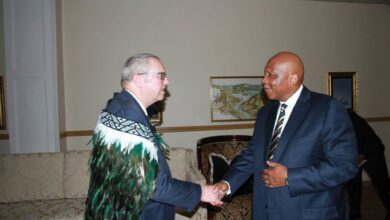
Upon arrival in Zambia, Prime Minister Matekane visited the United Capital Fertilizers facility in Lusaka, where he received a tour from UCF Board Chairperson Mr Chance Kabaye and his team. The visit provided an opportunity for the Lesotho delegation to gain a closer understanding of the company’s operations and its capabilities within the fertiliser industry. Discussions focused on how UCF could potentially work with Lesotho to develop products that respond to the specific needs of local farmers. Fertiliser effectiveness depends on several factors, including soil composition, crop requirements and farming practices, making locally appropriate products important for improving agricultural outcomes. A partnership that takes these factors into account could help farmers make more effective use of fertiliser while supporting increased crop productivity.
One of the key areas of interest is the development and supply of fertilisers suitable for Lesotho’s soils and locally used seeds. Different soils have different nutrient requirements, while crops also vary in the nutrients they need at different stages of growth. A fertiliser programme designed around local soil conditions could therefore offer advantages over a standard approach that does not account for these differences. Working with farmers, agricultural specialists and seed producers could help identify the nutrient combinations that are most appropriate for major crops grown in Lesotho. Such cooperation could contribute to more efficient fertiliser use and potentially improve yields while supporting more sustainable agricultural practices.
The discussions also considered the potential for UCF to establish a fertiliser manufacturing facility in Lesotho. Local manufacturing could represent a significant development for the country’s agricultural supply chain because it could reduce reliance on imported fertiliser products. Producing fertiliser closer to farmers could also create opportunities to improve supply reliability and respond more quickly to changes in local demand. A manufacturing facility could generate employment while creating demand for supporting services such as transportation, storage, maintenance and technical expertise. If successfully developed, the investment could therefore have economic benefits that extend beyond fertiliser production itself.
The prospect of local fertiliser manufacturing is particularly relevant because the cost and availability of agricultural inputs can influence farmers’ production decisions. When fertiliser becomes expensive or difficult to obtain, small-scale farmers may reduce the quantities they apply or delay purchases, which can affect crop productivity. Strengthening local production could provide another option for improving the availability of essential agricultural inputs. However, any manufacturing investment would need to consider factors such as production costs, access to raw materials, energy supply, infrastructure, transport and market demand. Careful planning and collaboration between government and private sector partners would be necessary to ensure that such a facility operates efficiently and remains commercially sustainable.
The proposed cooperation also aligns with wider efforts to strengthen food security in Lesotho. Improving agricultural productivity can help increase domestic food production and reduce some of the pressures associated with dependence on external supplies. Fertiliser is only one component of agricultural productivity, but access to suitable and affordable inputs can make an important difference when combined with quality seeds, good farming practices, irrigation where available and effective extension services. Developing fertilisers suited to local conditions could help farmers use available resources more efficiently. A stronger agricultural input supply chain could also support farmers as they seek to increase production and improve their household incomes.
Beyond agriculture, the proposed partnership has the potential to strengthen economic ties between Lesotho and Zambia. Cooperation between businesses and governments can create opportunities for investment, knowledge transfer and the development of new industrial capacity. UCF’s potential involvement in Lesotho would provide an example of how regional partnerships can address practical economic needs while creating commercial opportunities. Such cooperation could also encourage further investment in agricultural inputs and related industries. Strengthening regional economic relationships can help countries identify solutions that make better use of expertise, technology and investment available within Africa.
The visit also highlights the importance of connecting agricultural policy with industrial development. Lesotho’s agricultural sector depends on a reliable network of input suppliers, producers, processors and distributors. Establishing local fertiliser manufacturing could add an important industrial component to this network while supporting farmers who depend on fertiliser for crop production. It could also provide opportunities to develop local technical skills in areas such as chemical processing, quality control, agricultural science and manufacturing operations. Over time, these capabilities could contribute to broader industrial development and create opportunities for young people seeking employment in technical and manufacturing fields.
Prime Minister Matekane’s engagement with UCF took place as part of a wider programme of regional and continental engagement. His attendance at the African Union Extraordinary Session in Luanda demonstrates the importance of regional cooperation in addressing issues affecting African economies, while his subsequent participation in the inauguration of President Hakainde Hichilema provided an opportunity to strengthen diplomatic relations with Zambia. The visit to UCF added an economic and agricultural dimension to that engagement by focusing on a specific area where cooperation could deliver practical benefits. Agriculture remains central to livelihoods across the region, making investment in productivity and agricultural inputs an important area for cooperation. The discussions in Lusaka therefore demonstrate how high-level diplomatic engagements can also create opportunities to pursue concrete economic partnerships.
For Lesotho, the potential partnership with United Capital Fertilizers could become an important step towards improving the availability of locally appropriate agricultural inputs. The immediate focus is on exploring the development and supply of fertilisers suited to the country’s soils and locally used seeds, but the longer-term ambition could extend to establishing manufacturing capacity within Lesotho. Such an investment could support farmers, create jobs, strengthen local supply chains and contribute to efforts to improve food security. Its success would depend on detailed feasibility assessments, appropriate investment arrangements and sustained cooperation between the relevant stakeholders. The visit by Prime Minister Samuel Matekane has nevertheless opened an important conversation about how regional partnerships and local industrial investment can contribute to a stronger and more productive agricultural sector in Lesotho.
Join 'Lesotho News' WhatsApp Channel
Get breaking Lesotho news — delivered directly to your WhatsApp.
CLICK HERE TO JOIN