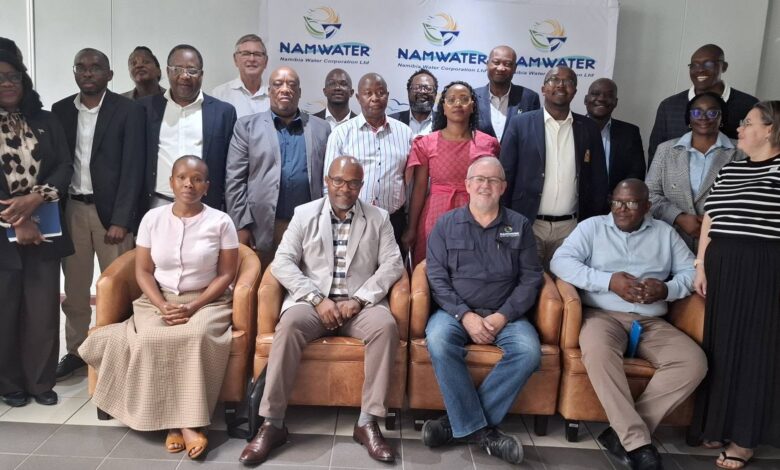
Lesotho is taking practical steps towards strengthening its bulk water infrastructure after the Parliamentary Portfolio Committee for Natural Resources concluded a two-day study tour of the Namibia Water Corporation (NamWater). The visit brought together members of Parliament, officials from the Ministry of Natural Resources, water sector experts and representatives of Lesotho’s water institutions. The delegation used the tour to examine how Namibia manages bulk water supply through a national utility with extensive infrastructure and operational responsibilities. The experience is expected to provide Lesotho with useful lessons as it works towards establishing the Lesotho Bulk Water Authority. The study tour also created an opportunity for the delegation to examine the institutional, financial and technical requirements that could shape Lesotho’s future bulk water system.
The final day of the study tour featured high-level engagements between the Lesotho delegation and NamWater’s executive management. Through detailed presentations and discussions, the delegation gained insight into the structure and day-to-day functioning of Namibia’s national water utility. Particular attention was given to institutional arrangements, financing models, operational systems and long-term strategic planning. These areas are important for Lesotho as the proposed Bulk Water Authority will need to operate within a clear institutional framework while managing major infrastructure and significant financial commitments. The discussions therefore allowed the delegation to move beyond broad policy concepts and examine practical systems that could inform Lesotho’s own approach.
A major focus of the engagement was the technical and logistical framework required to provide bulk water at scale. Bulk water systems require extensive infrastructure, including water sources, treatment facilities, storage capacity, pipelines, pumping systems and distribution networks. They also require effective planning to ensure that water can move reliably from major sources to municipalities, communities and other users. By studying NamWater’s approach, the Lesotho delegation was able to gain a clearer understanding of the coordination required between infrastructure development, operations, maintenance and water demand planning. These lessons could prove particularly important as Lesotho considers how to develop a bulk water institution capable of supporting long-term national water security.
The study tour also highlighted the importance of sustainable financing for major water infrastructure projects. Establishing and operating a national bulk water authority requires substantial investment, not only for the construction of infrastructure but also for maintenance, upgrades and ongoing operations. The delegation therefore examined how NamWater approaches large-scale financing and how its institutional structure supports the delivery of major water projects. Understanding these mechanisms can help Lesotho assess different options for financing its own infrastructure while ensuring that the proposed authority remains financially and operationally sustainable. The lessons gained from Namibia could also contribute to discussions around government funding, revenue generation, partnerships and long-term investment planning.
Chairperson of the Portfolio Committee, Honourable Lebohang Phohleli, expressed satisfaction with the outcome of the mission and the knowledge gained during the visit. He said the delegation was returning home with valuable blueprints that could help accelerate Lesotho’s upcoming bulk water initiatives. His comments underline the practical purpose of the study tour, which was not simply to observe another country’s water system but to identify approaches that could be adapted to Lesotho’s own circumstances. Phohleli also formally thanked NamWater’s leadership for its transparency and hospitality throughout the engagement. The positive assessment suggests that the visit provided the committee with information that can contribute to the next stages of planning for the Lesotho Bulk Water Authority.
Lesotho water sector representative Mr. Mathealira Lerotholi also highlighted the strategic importance of seeing NamWater’s operations firsthand. He noted that the experience gave the delegation a clearer and more realistic picture of the scale of infrastructure that Lesotho intends to develop. This type of direct exposure can help policymakers and technical officials better understand the relationship between institutional planning and the physical infrastructure needed to deliver reliable bulk water supplies. It can also help identify potential challenges before similar systems are designed and implemented in Lesotho. The knowledge gained from the visit could therefore support more informed decision-making as the country develops its own bulk water strategy.
The establishment of the Lesotho Bulk Water Authority represents an important step in the country’s efforts to strengthen the management and delivery of bulk water. A dedicated authority could provide a structured platform for managing major water infrastructure while supporting more coordinated planning across the water sector. However, its effectiveness will depend on clear responsibilities, strong technical capacity, sound financial planning and effective governance. The experience of NamWater gives Lesotho an opportunity to consider these issues before finalising its own institutional and operational model. The study tour has consequently provided more than a snapshot of Namibia’s water utility, it has offered practical lessons that can inform the design and implementation of Lesotho’s future bulk water system.
The conclusion of the two-day NamWater study tour marks an important point in Lesotho’s efforts to advance its bulk water plans. The delegation returned with greater insight into the institutional, technical, financial and operational demands associated with managing a national bulk water utility. These lessons can now be considered as Lesotho moves towards establishing the Lesotho Bulk Water Authority and developing the infrastructure required to support reliable water supply. The success of this process will depend on how effectively the country adapts the lessons from Namibia to its own water resources, infrastructure needs and national priorities. The study tour has provided a strong foundation for that work by giving policymakers and water sector officials a practical understanding of what is required to build and operate a sustainable bulk water system.
Join 'Lesotho News' WhatsApp Channel
Get breaking Lesotho news — delivered directly to your WhatsApp.
CLICK HERE TO JOIN