UNFPA Lesotho Supports Disability Inclusion Seminar at the National University of Lesotho

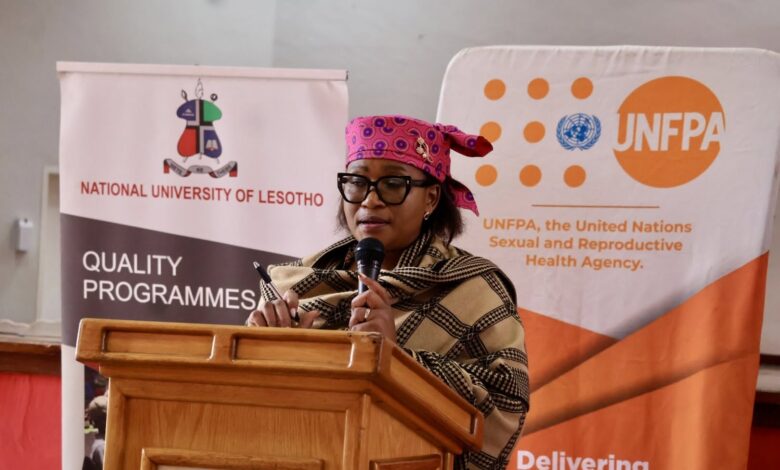
UNFPA Lesotho has reaffirmed its commitment to disability inclusion after supporting a seminar at the National University of Lesotho (NUL) held under the theme “Teaching Inclusion beyond Awareness.” The seminar brought together key stakeholders to examine practical ways of strengthening disability inclusion within higher education and society more broadly. The discussions recognised that inclusion requires more than simply increasing awareness about the experiences of persons with disabilities. It requires accessible systems, meaningful participation, respect for dignity and equal opportunities. Through its support for the seminar, UNFPA Lesotho contributed to an important conversation about building an education system where persons with disabilities can access information, services and opportunities on an equal basis.
A central part of the seminar focused on the rights and needs of persons with disabilities within higher education. Participants explored the barriers that can prevent students with disabilities from fully participating in academic life, including physical, communication, technological and institutional barriers. Addressing these challenges requires universities and other institutions to consider accessibility throughout their policies, facilities, teaching methods and support services. Inclusive education should enable students to participate meaningfully rather than simply provide them with access to a classroom or campus. The seminar provided an opportunity for stakeholders to consider how universities can move from general awareness of disability issues towards practical measures that improve the daily experiences of students and staff with disabilities.
UNFPA Lesotho contributed to the programme through a session dedicated to Disability and Sexual and Reproductive Health and Rights, commonly referred to as SRHR. The session highlighted the importance of ensuring that persons with disabilities can obtain accurate and accessible information about their sexual and reproductive health. Access to SRHR information and services forms an important part of an individual’s ability to make informed decisions about their health and wellbeing. People with disabilities should receive the same quality of information and services as everyone else, with reasonable adjustments made where necessary. The discussion therefore placed disability inclusion within a broader human rights framework that recognises access to health information and services as an essential part of equality and dignity.
Making SRHR services accessible requires healthcare providers and institutions to understand the different needs of persons with disabilities. Some individuals may require information in alternative formats, additional communication support or physical access to healthcare facilities. Others may encounter social attitudes or assumptions that can make it difficult to seek information or services confidently. Training, accessible communication and appropriate institutional policies can help address some of these barriers. Strengthening inclusive SRHR services can also help ensure that persons with disabilities have the information they need to make informed choices about relationships, reproductive health and their overall wellbeing.
The seminar also examined disability rights and the importance of protecting the dignity and equal treatment of persons with disabilities. A rights-based approach recognises persons with disabilities as active participants in society rather than people who should only receive assistance. This perspective is particularly important in education, where students should have opportunities to learn, participate and contribute without unnecessary restrictions. Institutions have a responsibility to identify barriers and take reasonable steps to remove them. Promoting disability rights within universities can therefore contribute to a culture that values diversity and gives every student a fair opportunity to reach their potential.
Inclusive education was another important issue addressed during the event. Inclusion means creating learning environments that accommodate different abilities and allow students to participate effectively in academic and social activities. This can involve accessible buildings, appropriate learning materials, assistive technologies, flexible teaching approaches and support services. Educators also need the knowledge and resources to respond to different learning and communication needs. By strengthening inclusive education practices, higher education institutions can help reduce barriers that may otherwise affect students’ academic progress and participation.
Assistive technology was also highlighted as an important tool for improving accessibility. Depending on an individual’s needs, assistive technologies can support communication, mobility, learning, accessing information and participating in academic activities. However, technology can only make a meaningful difference when students can afford, access and use the appropriate tools. Institutions therefore need to consider both the availability of assistive technology and the support required to use it effectively. Greater investment in accessible technology could help universities create more inclusive learning environments and provide students with disabilities with greater independence.
The concept of reasonable accommodation formed another important part of the seminar’s discussions. Reasonable accommodation involves making appropriate adjustments that enable persons with disabilities to participate on an equal basis, provided that those adjustments do not create a disproportionate or undue burden. In an educational setting, this could include changes to assessment arrangements, learning materials, communication methods or physical access. The appropriate accommodation will differ depending on the individual and the barriers they face. Ensuring that students can request and receive reasonable accommodation through clear institutional processes is an important part of creating an inclusive university environment.
The seminar also considered intersectionality, which recognises that disability can intersect with other aspects of a person’s circumstances and identity. A person with a disability may face several overlapping barriers that affect access to education, healthcare and other services. These experiences cannot always be addressed effectively through a single approach to disability inclusion. Understanding different lived experiences can help institutions develop policies and programmes that respond to the actual needs of the communities they serve. Including diverse voices in discussions about disability can also ensure that solutions are informed by the people who experience these barriers directly.
The lived experiences of persons with disabilities were an important component of the seminar because effective inclusion depends on understanding the realities faced by individuals. Policies and programmes can have limited impact when they are developed without meaningful consultation with the people they are intended to support. Listening to persons with disabilities can reveal practical barriers that may not be immediately visible to policymakers, educators or service providers. Their experiences can also help institutions identify where existing systems work and where improvements are needed. Meaningful participation should therefore remain an important principle in efforts to strengthen disability inclusion across Lesotho.
UNFPA Lesotho’s involvement in the seminar reflects the importance of partnerships in advancing inclusion and access to essential services. No single institution can address all the barriers faced by persons with disabilities, particularly when those barriers involve education, healthcare, infrastructure, technology and social attitudes. Collaboration between universities, government institutions, development organisations, disability organisations and communities can support more coordinated responses. Partnerships can also create opportunities to share expertise and develop practical solutions that respond to local needs. Continued cooperation can help move disability inclusion from policy discussions towards changes that people can experience in their everyday lives.
The theme “Teaching Inclusion beyond Awareness” captures an important message from the seminar. Awareness is a necessary starting point because people need to understand disability rights and the barriers faced by persons with disabilities. However, awareness alone does not remove inaccessible buildings, improve communication, provide assistive technology or guarantee access to healthcare services. Action requires institutions to examine their systems and make practical changes that support participation and equality. For higher education institutions in particular, this means creating environments where accessibility and inclusion form part of everyday operations rather than occasional programmes.
UNFPA Lesotho’s continued focus on disability inclusion also highlights the importance of ensuring that development efforts reach everyone. Access to sexual and reproductive health information and services should not depend on whether a person has a disability or faces other barriers to accessing services. Similarly, students with disabilities should have meaningful opportunities to pursue higher education and participate fully in academic life. Achieving this requires sustained attention to accessibility, dignity, rights and equal opportunity. The seminar at the National University of Lesotho provided a valuable platform for stakeholders to strengthen their understanding of these issues and consider practical approaches to creating more inclusive institutions.
The commitment expressed by UNFPA Lesotho points towards an approach to inclusion that goes beyond awareness campaigns and focuses on measurable action. Improving accessibility, strengthening inclusive education, expanding access to assistive technology and ensuring inclusive SRHR services can help create better opportunities for persons with disabilities. Continued partnerships will be important in maintaining momentum and ensuring that disability inclusion remains part of broader development priorities in Lesotho. The seminar demonstrated the value of bringing stakeholders together to examine both the challenges and the practical solutions needed to promote equality. By continuing to champion accessibility, dignity and equal opportunities, UNFPA Lesotho and its partners can contribute to an inclusive Lesotho where persons with disabilities are able to participate fully and no one is left behind.
Join 'Lesotho News' WhatsApp Channel
Get breaking Lesotho news — delivered directly to your WhatsApp.
CLICK HERE TO JOIN