Lesotho MPs Reject Motion to Adjourn Debate on University of Health Sciences Bill, 2026

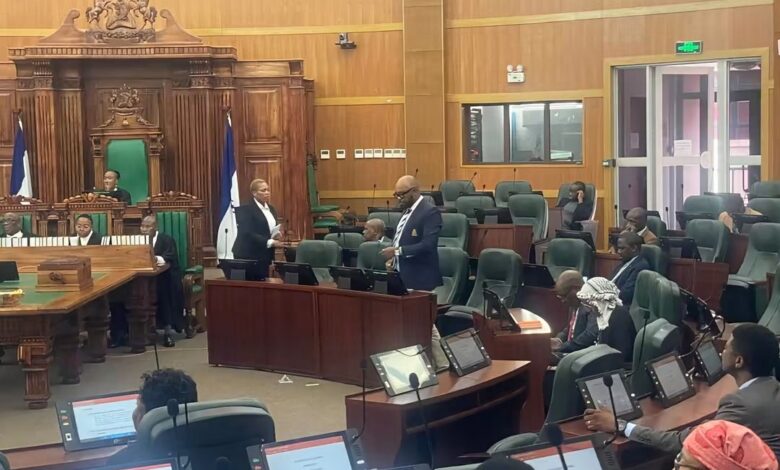
Members of Parliament (MPs) in Lesotho’s National Assembly have rejected a motion to adjourn debate on the Lesotho University of Health Sciences Bill, 2026, following disagreements over the time needed to examine the Bill’s financial implications. The motion was brought forward on Tuesday, during the second day of debate on the adoption of the Portfolio Committee on the Social Cluster’s report on the proposed legislation. MPs who supported the adjournment argued that Parliament needed sufficient time to study the costing document before proceeding with meaningful deliberations. However, government MPs voted against the motion and outnumbered their opposition counterparts, resulting in its defeat. The outcome allowed debate on the proposed Bill to continue, bringing renewed attention to questions about the country’s capacity to establish and sustain a specialised higher education institution for health sciences.
The motion to adjourn the debate followed a proposal by Advocate Lekhetho Rakuoane, who invoked Standing Order 41 in support of allowing MPs additional time to consider the financial implications of the proposed institution. His argument centred on the need for Lesotho to assess its financial and institutional capacity before making decisions that could have long-term implications for public resources. He questioned whether establishing another institution should take priority over strengthening existing higher education institutions, particularly the National University of Lesotho (NUL). His position highlighted the importance of evaluating the country’s ability to support new institutions while ensuring that existing universities and training centres receive adequate resources to fulfil their responsibilities. The proposal also raised broader questions about national development priorities, institutional efficiency and the sustainability of public investments in higher education.
MPs who supported the motion maintained that the costing document was an essential part of the legislative process and should be examined before Parliament proceeded with the debate. They argued that understanding the financial requirements of the proposed University of Health Sciences was necessary to assess whether the government could afford its establishment and long-term operations. Establishing a university involves more than approving legislation, as it requires resources for infrastructure, staffing, academic programmes, equipment, administration and ongoing operational costs. Without adequate consideration of these financial commitments, MPs argued, Parliament could struggle to make an informed decision about the proposed institution. They therefore believed that additional time would allow members to scrutinise the financial implications and evaluate whether the proposed model offered value for public expenditure.
Despite these concerns, the government side secured enough votes to defeat the motion, allowing the debate on the Bill to resume. The voting outcome demonstrated the government’s support for continuing consideration of the proposed legislation without further delay. However, the disagreement reflected different views among MPs about the appropriate approach to addressing Lesotho’s shortage of health professionals and improving medical education. While some members emphasised the need for careful financial scrutiny and the strengthening of existing institutions, others supported the proposed institutional transformation as a way of improving the country’s capacity to train health professionals. These differences are central to the wider debate about the future of health sciences education in Lesotho and the institutional arrangements needed to support the national healthcare system.
During the resumed debate, the Minister of Agriculture, Food Security and Nutrition, Mr. Selibe Mochoboroane, clarified the government’s intention behind the proposed legislation. He explained that the Bill seeks to transform the National Health Training Centre (NHTC) into an autonomous institution or university rather than establish an entirely new medical school. His clarification provided important context for MPs who had raised concerns about the creation of another higher education institution. The proposed transformation is intended to give the existing training centre a different institutional status and strengthen its capacity to deliver health sciences education. This distinction is important because the debate is not simply about introducing another institution, but about changing the governance, administration and operational framework of an existing health training establishment.
Minister Mochoboroane also explained that neither the National Health Training Centre nor the Lesotho Agricultural College falls under the regulatory framework governing higher learning institutions. This observation highlighted a gap in the current institutional arrangements for specialised training in the country. Bringing the NHTC under an appropriate higher education framework could provide an opportunity to strengthen its governance, academic administration and institutional autonomy. It could also support the development of more structured health sciences programmes and improve the recognition and relevance of qualifications offered through the institution. However, the proposed transformation will need to establish clear regulatory and institutional arrangements to ensure that the new university operates within appropriate academic and quality assurance standards.
The debate also highlighted the economic and practical importance of training medical doctors within Lesotho. The Leader of the Lesotho Congress for Democracy (LCD), Mr. Mothejoa Metsing, argued that local medical training would help reduce the costs associated with sending Basotho students abroad to pursue medical education. Sending students to other countries for professional training can involve substantial expenditure on tuition, accommodation, travel and other living costs. Developing domestic capacity to train doctors could help reduce some of these expenses while creating opportunities for more Basotho students to access medical education within their own country. Local training could also strengthen the connection between medical education and the specific healthcare needs of Lesotho’s population. Graduates trained within the national health system may gain a better understanding of local health challenges and the realities of delivering healthcare in different communities.
However, the proposal to transform the NHTC into a university also raised concerns about possible duplication of programmes and institutional responsibilities. The Leader of the Basotho Action Party (BAP), Professor Nqosa Mahao, questioned whether establishing the proposed institution would duplicate the existing Faculty of Health Sciences at the National University of Lesotho. His concern focused on the need to clarify the respective roles of the two institutions and determine whether the country would benefit more from creating a separate university or strengthening existing academic structures. This question is particularly important given Lesotho’s limited public resources and the need to ensure that investments in higher education produce clear national benefits. If the proposed university and the existing faculty offer overlapping programmes without effective coordination, the country could face unnecessary administrative costs and competition for lecturers, infrastructure and other resources.
The relationship between the proposed University of Health Sciences and the National University of Lesotho will therefore be an important consideration in determining the future direction of medical and health sciences education. Both institutions could potentially contribute to addressing the shortage of health professionals, but their respective mandates would need to be clearly defined. Effective coordination could create opportunities for collaboration in teaching, research, clinical training and professional development. It could also help ensure that public investments strengthen the overall health education system rather than create competing structures. Parliament’s consideration of these institutional questions will be important in determining whether the proposed university offers a distinct and sustainable contribution to national development.
The Lesotho University of Health Sciences Bill, 2026, seeks to address several challenges affecting the country’s health sciences training system. Among its key objectives are improving governance, strengthening administration and enhancing the delivery of health sciences education. The proposed legislation also seeks to respond to the persistent shortage of human resources for health services in Lesotho. This shortage includes gaps in the number of available professionals, the quality of training and the relevance of professional skills to the country’s healthcare requirements. An effective health education system must produce professionals who can respond to the needs of hospitals, health centres and communities while adapting to changing healthcare demands. The proposed institutional reforms are therefore linked to the wider national objective of improving access to quality healthcare through a stronger and more capable health workforce.
The shortage of health professionals remains an important challenge for healthcare systems, particularly where the demand for services continues to place pressure on available personnel and facilities. Training more doctors, nurses and other health professionals within Lesotho could contribute to improving the availability of skilled personnel over time. However, increasing the number of training institutions alone will not automatically resolve workforce shortages. The country will also need adequate teaching staff, clinical training facilities, modern equipment, sustainable funding and effective partnerships with healthcare institutions. Graduate retention will be equally important, as the benefits of local training will depend partly on whether qualified professionals remain in the country and contribute to national healthcare delivery. A comprehensive approach must therefore connect medical education with workforce planning, recruitment, professional development and improved working conditions.
The debate surrounding the Bill reflects a broader policy question about how Lesotho should invest in higher education and public healthcare. On one hand, transforming the National Health Training Centre into an autonomous university could create opportunities to strengthen specialised health sciences training and address existing institutional weaknesses. On the other hand, MPs have raised legitimate questions about financial sustainability, possible duplication and whether existing institutions could deliver similar benefits through targeted investment. These concerns demonstrate the importance of ensuring that major institutional reforms are supported by clear objectives, realistic financial plans and effective implementation strategies. Parliament’s responsibility is to examine whether the proposed legislation provides a sustainable solution to the country’s healthcare workforce challenges. The costing document, institutional arrangements and relationship with existing universities will remain important considerations as the legislative process progresses.
The rejection of the adjournment motion has allowed debate on the Lesotho University of Health Sciences Bill, 2026, to continue, but the issues raised during the proceedings remain central to the future of the proposed institution. The discussion has brought attention to the need for stronger health sciences education, improved institutional governance and a sustainable approach to training medical professionals locally. It has also highlighted the importance of balancing new institutional developments with the responsible use of public resources and the strengthening of existing universities. Ultimately, the success of the proposed reforms will depend on whether they improve the quality, availability and relevance of health professionals in Lesotho. As Parliament continues considering the Bill, the key question will be whether the proposed University of Health Sciences can provide a practical, financially sustainable and effective response to the country’s long-standing healthcare workforce needs.
Join 'Lesotho News' WhatsApp Channel
Get breaking Lesotho news — delivered directly to your WhatsApp.
CLICK HERE TO JOIN