Lesotho Innovators Mathibela Tsoeu and Neo Malefane Represent the Country at Ethiopia’s UniPods AI Bootcamp

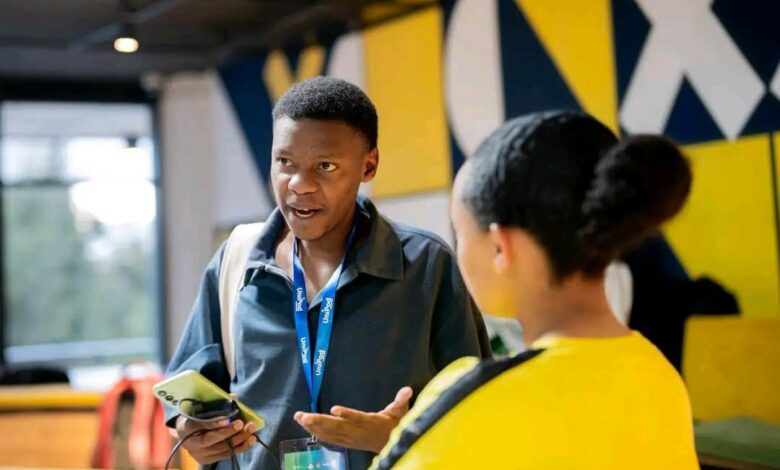
Two young innovators from Lesotho, Mathibela Tsoeu and Neo Malefane, are representing the Kingdom at the UniPods Artificial Intelligence (AI) Bootcamp in Ethiopia, highlighting the growing potential of Basotho talent in technology and innovation. The two innovators from Sebopi Unipod have joined 50 selected participants in Cohort 1 of the programme hosted at the Ethiopian Artificial Intelligence Institute. Their participation provides an opportunity to showcase innovative ideas, exchange knowledge with other African technology developers and explore how artificial intelligence can address practical challenges. The bootcamp brings together innovators working on solutions in areas such as agriculture, healthcare, food testing and advanced manufacturing. Their involvement marks an important achievement for Lesotho and demonstrates the contribution young Basotho entrepreneurs can make to Africa’s growing digital and technological economy.
Tsoeu and Malefane are participating in a programme designed to encourage innovation, strengthen technical capabilities and support the development of practical technology-based solutions. Through the UniPods AI Bootcamp, participants have an opportunity to engage with emerging technologies and explore how artificial intelligence can improve products, services and business operations. The programme also creates an environment where innovators can share experiences, receive feedback and learn from people working on different technological challenges. Bringing together 50 innovators creates opportunities for collaboration and the exchange of ideas across different backgrounds and areas of expertise. For the two representatives from Sebopi Unipod, the experience offers valuable exposure to a wider African innovation network.
During the programme, participants showcased solutions covering several important sectors, including smart agriculture, digital healthcare, AI-powered milk testing and advanced manufacturing. These areas demonstrate how artificial intelligence can support practical improvements in industries that affect everyday life and economic development. Smart agriculture, for example, can use digital technologies and data analysis to help farmers make better-informed decisions about production and resource management. Digital healthcare solutions can support improved access to health information and services, while AI-powered milk testing can contribute to more efficient analysis of milk quality. Advanced manufacturing also offers opportunities to improve production processes through automation, intelligent systems and other emerging technologies.
The focus on smart agriculture is particularly relevant to African countries, where farming remains an important source of livelihoods and economic activity. Farmers face challenges involving changing weather conditions, production costs, access to information and the need to improve productivity. Artificial intelligence can help address some of these challenges by analysing agricultural data, supporting crop monitoring and improving decision-making. Technology-based agricultural solutions can also help farmers identify potential problems earlier and use available resources more efficiently. By exploring smart agriculture innovations, participants at the Ethiopian AI Bootcamp are examining ways technology can contribute to stronger and more productive agricultural systems.
Digital healthcare is another important area represented at the bootcamp. Technology has the potential to improve how people access health information, communicate with healthcare providers and manage certain aspects of healthcare delivery. Artificial intelligence can assist with analysing information and supporting healthcare professionals, although such systems must meet appropriate standards for accuracy, privacy and safety. For countries working to improve healthcare access, digital solutions may offer additional ways to address service delivery challenges. The participation of innovators exploring digital healthcare demonstrates the importance of developing technology that responds to real community needs.
AI-powered milk testing also attracted attention as one of the solutions showcased by participants. Milk quality testing plays an important role in dairy production because it helps determine whether products meet required quality and safety standards. Artificial intelligence can potentially support faster analysis and more consistent testing when combined with suitable equipment and reliable data. Such innovations could be relevant to dairy farmers, processors and other businesses involved in the milk value chain. The inclusion of this technology at the bootcamp highlights how AI development can extend beyond conventional digital services into agriculture, food production and industrial applications.
Advanced manufacturing formed another part of the innovations presented during the programme. This sector increasingly relies on technology to improve efficiency, product quality and production processes. Artificial intelligence can support manufacturing through data analysis, automated systems and predictive maintenance, depending on the application. These technologies can help businesses identify production problems, reduce unnecessary delays and improve the use of equipment. Exposure to advanced manufacturing concepts can also help African innovators explore opportunities to develop solutions that support industrial growth and economic diversification.
Beyond presenting their ideas, the participants are exploring opportunities to take their innovations to international platforms, including the 10th Tokyo International Conference on African Development (TICAD 10). Such opportunities can help African innovators introduce their work to wider audiences and engage with potential partners interested in technology and development. International exposure can also create opportunities to exchange knowledge, build professional relationships and explore possible investment or collaboration opportunities. For emerging innovators, presenting solutions beyond their home countries can provide valuable feedback on their relevance, potential applications and readiness for wider adoption. The possibility of engaging with platforms such as TICAD 10 therefore adds an important international dimension to the experience.
The participation of Tsoeu and Malefane also highlights the role of innovation hubs such as Sebopi Unipod in supporting local talent. Innovation spaces can provide environments where young people develop ideas, experiment with technology and work towards practical solutions. They can also help connect emerging innovators with training opportunities, networks and wider innovation programmes. For countries such as Lesotho, strengthening these spaces can contribute to building a stronger technology ecosystem and encouraging young people to pursue entrepreneurship. The involvement of Sebopi Unipod representatives in the Ethiopian programme demonstrates the importance of creating opportunities for local innovators to engage with continental initiatives.
Lesotho’s participation in the bootcamp comes at a time when artificial intelligence and digital transformation are becoming increasingly important to economic development across Africa. Governments, businesses and educational institutions are exploring ways to use technology to improve productivity, strengthen public services and create new economic opportunities. However, the successful adoption of AI requires more than access to digital tools. Countries also need skilled people, supportive innovation environments, reliable infrastructure and opportunities for technology developers to turn ideas into sustainable products and services. Programmes that connect innovators across countries can help strengthen these foundations by encouraging cooperation and sharing practical knowledge.
For young Basotho innovators, opportunities such as the UniPods AI Bootcamp can also help demonstrate that locally developed ideas have the potential to contribute to wider African development. Participation in an international programme exposes innovators to different approaches to problem-solving and allows them to learn from people working in diverse technological fields. It can also encourage them to assess how their solutions could be adapted to meet the needs of different communities and markets. This kind of experience is valuable for innovators seeking to move beyond the development stage and explore wider applications for their work. Continued support and access to resources will be important in helping promising ideas develop into practical solutions with lasting impact.
The achievement of Mathibela Tsoeu and Neo Malefane is a proud moment for Lesotho and an encouraging example of the talent and creativity within the country. Their participation among the 50 innovators in Cohort 1 of the UniPods AI Bootcamp places Basotho innovation within a broader African technology conversation. Through their engagement with solutions in smart agriculture, digital healthcare, AI-powered milk testing and advanced manufacturing, they are gaining exposure to technologies with potential applications across different sectors. Their exploration of international opportunities, including TICAD 10, further demonstrates the importance of connecting local innovation with continental and global platforms. As Lesotho continues to develop its digital economy, supporting young innovators and strengthening initiatives such as Sebopi Unipod will be essential in turning local ideas into practical solutions that can compete and make a difference across Africa and beyond.
Join 'Lesotho News' WhatsApp Channel
Get breaking Lesotho news — delivered directly to your WhatsApp.
CLICK HERE TO JOIN