Lesotho Journalist Pascalinah Kabi Meets EU Ambassador Mette Sunnergren to Discuss the Future of Journalism and the Fight Against Misinformation

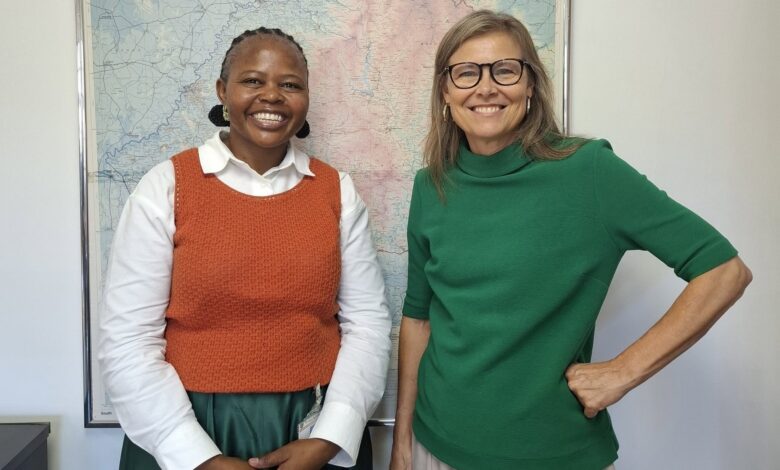
The future of journalism, the growing influence of artificial intelligence and the fight against misinformation took centre stage following a significant discussion between renowned Lesotho journalist Pascalinah Kabi and European Union Ambassador to Lesotho, Mette Sunnergren. Fresh from the European Union’s Connecting Media Communities 2026 conference in Brussels, Kabi sat down with the EU Ambassador to explore some of the most pressing challenges facing journalism and the global information landscape. Their discussion highlighted the importance of independent journalism, responsible reporting, media literacy and accurate information in an increasingly digital world. As artificial intelligence continues to transform how people create, distribute and consume information, journalists face growing pressure to protect the credibility of their work. The conversation also reinforced the importance of supporting media professionals who play a central role in keeping citizens informed and strengthening democratic societies.
The Connecting Media Communities 2026 conference brought together approximately 80 journalists, fact-checkers, media organisations and content creators from different parts of the world. The gathering provided an opportunity for media professionals to exchange experiences, discuss emerging information trends and examine the changing responsibilities of journalism in the digital age. Participants explored the importance of media literacy, the role of independent journalism and the need to strengthen information ecosystems. These discussions were particularly relevant at a time when digital platforms allow information to spread across borders within seconds. The conference also created space for conversations about how journalists and media organisations can work together to protect the public from misleading information and manipulation.
One of the major issues highlighted during the discussion between Pascalinah Kabi and Ambassador Mette Sunnergren was the growing threat of artificial intelligence-generated deepfakes. Deepfake technology uses artificial intelligence to create or manipulate audio, images and videos in ways that can make fabricated content appear authentic. Although the technology has legitimate applications in areas such as entertainment, education and creative production, it also creates opportunities for malicious actors to deceive audiences. Manipulated videos can make public figures appear to say things they never said, while fabricated audio recordings can imitate familiar voices. Such content can damage reputations, influence public opinion and undermine confidence in legitimate news reporting.
The growing availability of artificial intelligence tools has made it easier for people with limited technical knowledge to produce convincing manipulated content. This presents a serious challenge for journalists, editors, fact-checkers and media organisations that must verify information before publishing it. Traditional methods of checking photographs, recordings and eyewitness accounts may no longer be sufficient on their own. Newsrooms increasingly need to develop digital verification skills and use appropriate tools to examine the authenticity of online material. Journalists must also remain cautious when dealing with viral content, particularly when the material concerns political developments, public figures or sensitive national issues. Accurate reporting requires a commitment to verification rather than simply publishing information because it is attracting attention online.
Fact-checking emerged as one of the most important tools in protecting the public against misinformation. Professional journalists have a responsibility to establish whether information is accurate, identify misleading claims and provide audiences with reliable context. This process involves examining original documents, verifying images and videos, consulting credible sources and checking claims against available evidence. Fact-checking also requires transparency because audiences should understand how journalists reach their conclusions. When media organisations consistently apply these standards, they help build public trust and reduce the influence of false information. In an environment where fabricated stories can spread rapidly, rigorous verification remains essential to responsible journalism.
The conference also examined foreign information manipulation and interference, commonly known as FIMI. This refers to deliberate efforts by foreign actors to manipulate the information environment and influence public understanding, debate or decision-making. Such activities can involve coordinated disinformation campaigns, misleading narratives, fake accounts and the strategic distribution of manipulated content. Digital platforms can make these campaigns difficult to identify because misleading information may appear to come from ordinary users or seemingly independent sources. FIMI can threaten democratic institutions by creating confusion, deepening social divisions and weakening confidence in public information. Addressing this challenge requires cooperation between governments, journalists, technology companies, civil society organisations and independent fact-checkers.
Independent journalism remains particularly important in protecting democratic values and ensuring accountability. Journalists investigate matters of public interest, examine decisions made by those in positions of authority and give communities access to information that affects their lives. Their work allows citizens to make informed decisions about public policy, governance, elections and social development. However, independent media organisations often operate under difficult conditions, including financial pressures, threats to journalists, limited resources and increasing competition from unverified online content. Protecting press freedom therefore requires more than recognising the importance of journalism. It also requires creating an environment in which reporters can work safely, investigate issues freely and publish accurate information without intimidation or improper interference.
Media literacy was another important theme at the Connecting Media Communities 2026 conference. In today’s digital environment, audiences need the ability to evaluate information, recognise misleading content and distinguish reliable reporting from fabricated claims. Access to social media and online news platforms does not automatically mean that people can identify credible information. Readers and viewers must learn to examine where information originates, consider the evidence supporting a claim and recognise warning signs such as manipulated images or sensational headlines. Media literacy is particularly important for young people who increasingly encounter news and public information through digital platforms. Strengthening these skills can help communities become more informed and less vulnerable to misinformation.
The meeting between Pascalinah Kabi and Ambassador Mette Sunnergren also highlighted the importance of international cooperation in strengthening journalism. Information manipulation is not restricted by national borders, and false narratives can move between countries through interconnected digital platforms. Journalists in different regions often face similar challenges, including attacks on press freedom, limited access to reliable information and the growing influence of artificial intelligence. International conferences provide opportunities for media professionals to exchange knowledge, develop professional relationships and identify practical responses to shared problems. Such cooperation can also strengthen the ability of independent media organisations to investigate complex issues that affect multiple countries and communities.
For Lesotho, these discussions carry particular relevance as the country’s media sector continues to operate in an increasingly connected information environment. Journalists play an important role in reporting on governance, public services, economic development and issues affecting ordinary citizens. The spread of misinformation can complicate public debate and make it more difficult for people to distinguish verified news from speculation. Strengthening professional journalism, investing in digital skills and promoting media literacy can help address these challenges. Lesotho’s media organisations also have an opportunity to benefit from international partnerships and professional exchanges that expose journalists to new verification methods and emerging reporting practices. The experiences shared at international gatherings such as Connecting Media Communities 2026 can contribute to broader conversations about the future of journalism in the country.
The European Union has reaffirmed its commitment to supporting independent journalism, media literacy and the important role reporters play in democratic societies. This commitment recognises that access to trustworthy information is essential for meaningful public participation and accountable governance. Supporting independent media can involve strengthening professional skills, encouraging responsible journalism and promoting conditions that allow journalists to report without intimidation. Media literacy initiatives can also help citizens develop the knowledge needed to assess information critically. The EU’s engagement with journalists and media organisations reflects the importance of building resilient information ecosystems that can withstand manipulation and misinformation.
The discussion between Pascalinah Kabi and EU Ambassador Mette Sunnergren offers an important reminder that the future of journalism depends on trust, accuracy and professional responsibility. Artificial intelligence will continue to change the media industry, creating new opportunities for reporting while introducing challenges that require careful attention. Journalists must adapt to these developments without abandoning the principles of verification, fairness and accountability. Fact-checking, independent reporting, media literacy and international cooperation will remain central to protecting the integrity of public information. The Connecting Media Communities 2026 conference in Brussels provided an important platform for advancing these conversations and strengthening relationships among media professionals from around the world. As misinformation and AI-generated deepfakes become increasingly sophisticated, the need for credible journalism has never been more important.
Join 'Lesotho News' WhatsApp Channel
Get breaking Lesotho news — delivered directly to your WhatsApp.
CLICK HERE TO JOIN