Lesotho Strengthens Community Participation Through Access and Benefit-Sharing Capacity-Building Workshop
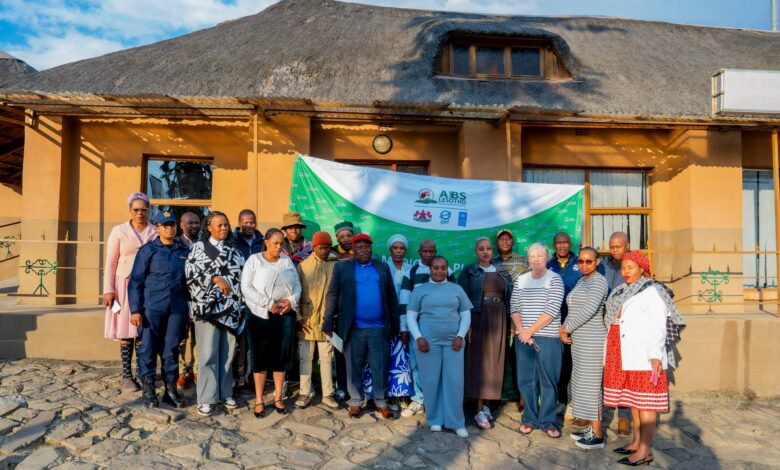
Lesotho has begun a four-day capacity-building workshop aimed at strengthening community participation and understanding of Access and Benefit-Sharing (ABS) principles. The first day of the workshop focused on building knowledge among local committees, traditional authorities and conservation stakeholders who play an important role in managing and protecting the country’s biological and genetic resources. The ABS Project is supported by the Global Environment Facility (GEF) and implemented by the United Nations Development Programme (UNDP) in partnership with the Ministry of Environment and Forestry. The training is designed to help communities understand their rights and responsibilities when decisions involve indigenous biological and genetic resources. It also seeks to ensure that communities can participate meaningfully in processes that affect their traditional knowledge, natural resources and potential economic benefits.
A key focus of the opening day was Free, Prior and Informed Consent (FPIC), an important principle for ensuring that communities have a meaningful role in decisions involving their resources and traditional knowledge. FPIC requires communities to receive relevant information and have an opportunity to consider proposed activities before giving or withholding their consent. The approach is particularly important where biodiversity resources or traditional knowledge may be used for research, commercial development or other purposes. By strengthening understanding of FPIC, the workshop can help local stakeholders identify situations where community consultation and consent are necessary. It also gives communities greater capacity to engage with external institutions and decision-makers on matters that may affect their interests.
Participants were also introduced to the Nagoya Protocol, an international agreement that establishes a framework for access to genetic resources and the fair and equitable sharing of benefits arising from their utilisation. Understanding the protocol is important for stakeholders involved in biodiversity conservation because it connects the use of biological resources with questions of rights, responsibilities and benefit-sharing. For communities, the framework can provide a basis for seeking fair recognition when their resources or associated traditional knowledge contribute to research, innovation or commercial activities. Effective implementation requires stakeholders to understand the rules governing access and benefit-sharing and how those rules apply in practical situations. The workshop therefore provides an opportunity to translate broader international principles into knowledge that local stakeholders can use in their communities.
Community participation forms another central element of the capacity-building programme. Communities often have detailed knowledge of local ecosystems, plants, animals and traditional practices developed over generations. This knowledge can contribute to biodiversity conservation and sustainable resource management when communities have meaningful opportunities to participate in decision-making. Participation also helps ensure that conservation measures reflect local realities rather than relying solely on external perspectives. Strengthening the capacity of local committees and traditional authorities can therefore support more effective engagement between communities, government institutions and conservation organisations.
The workshop’s focus on indigenous biological and genetic resources also highlights the importance of protecting Lesotho’s biodiversity. Biological resources can have ecological, cultural and economic value, while genetic resources may have potential applications in areas such as agriculture, research, medicine and biotechnology. The sustainable use of these resources requires appropriate safeguards to prevent exploitation and ensure that benefits are shared fairly. Communities that have traditionally relied on local biodiversity may have important knowledge about how resources are used and conserved. Protecting both the resources and the knowledge associated with them is therefore an important part of sustainable development.
Participants also explored Biocultural Community Protocols (BCPs), which can help communities document and communicate their values, customary practices, rights and expectations concerning biological resources and traditional knowledge. These protocols can provide communities with a structured way to explain how outsiders should engage with them when seeking access to resources or knowledge. They can also help clarify community decision-making processes and establish expectations around consultation and benefit-sharing. By strengthening the ability of communities to define their own priorities, BCPs can support more balanced relationships between local communities and external researchers, businesses or institutions. Their inclusion in the workshop reflects a broader emphasis on giving communities practical tools for protecting their interests.
Another important topic was the use of Grievance Redress Mechanisms (GRMs). Effective grievance mechanisms provide communities with ways to raise concerns, seek clarification and pursue remedies when they believe that agreements, rights or established procedures have not been respected. Such mechanisms can strengthen accountability and provide an alternative to allowing disputes to remain unresolved. For biodiversity and resource management projects, clear grievance procedures can help build trust among communities and implementing institutions. Training stakeholders on how these mechanisms work can therefore support more transparent and accountable ABS processes.
The workshop is also relevant to efforts to protect traditional knowledge. Traditional knowledge can include information about plants, natural resources, agricultural practices and other forms of knowledge developed and maintained by communities over generations. Such knowledge may have value beyond the communities where it originated, particularly when it contributes to research or the development of products and services. Protecting this knowledge requires mechanisms that recognise community rights and establish appropriate conditions for its use. Strengthening awareness of ABS principles can help communities understand the importance of documenting, protecting and negotiating the use of their traditional knowledge.
Fair and equitable benefit-sharing is another key objective of the ABS Project. When biological or genetic resources are used for commercial or research purposes, communities and other relevant stakeholders should have appropriate opportunities to benefit from that use. Benefits can take different forms depending on the circumstances, including financial returns, technology transfer, capacity-building, training or other agreed contributions. Transparent agreements can help ensure that expectations are clear before resources or knowledge are accessed. Building local capacity to understand these processes can improve the ability of communities to participate in negotiations and protect their interests.
The involvement of traditional authorities is particularly significant because they can play an important role in community governance and local decision-making. Traditional leaders often have knowledge of customary practices and community structures that can help inform conservation and resource management initiatives. Their participation can also support communication between technical institutions and communities when discussions involve complex legal or environmental issues. However, effective community participation requires engagement that extends beyond leadership structures and includes the people directly affected by decisions. The workshop’s broader participation therefore creates an opportunity to strengthen collaboration across different levels of community and conservation governance.
The partnership between the Global Environment Facility, UNDP and Lesotho’s Ministry of Environment and Forestry demonstrates the importance of collaboration in strengthening environmental governance. Biodiversity management involves scientific, legal, social and economic considerations that require expertise from multiple institutions. Capacity-building initiatives can help bridge gaps in knowledge and give local stakeholders greater confidence when engaging in these processes. They can also contribute to stronger implementation of national and international frameworks governing biodiversity and genetic resources. Continued cooperation will be important if the knowledge gained through the workshop is to translate into practical improvements at community level.
The four-day programme provides an opportunity to move beyond theoretical discussions and focus on how ABS principles can work in real community settings. Participants can use the training to consider how FPIC, the Nagoya Protocol, BCPs and GRMs apply to situations involving local resources and traditional knowledge. Practical understanding will be essential because communities may encounter researchers, conservation initiatives or other actors seeking access to biological resources in the future. Clear processes can help ensure that these engagements take place with appropriate consultation, transparency and respect for community rights. The capacity developed through the workshop could therefore contribute to stronger and more equitable biodiversity governance in Lesotho.
The first day of Lesotho’s ABS capacity-building workshop marks an important step towards strengthening the role of communities in decisions concerning biodiversity and genetic resources. By focusing on FPIC, the Nagoya Protocol, community participation, Biocultural Community Protocols and Grievance Redress Mechanisms, the programme addresses several practical issues that can influence how resources and traditional knowledge are accessed and used. The initiative also reinforces the principle that conservation and sustainable development should include the communities who live alongside and depend on the country’s natural resources. As the workshop continues, participants will have an opportunity to deepen their knowledge and develop practical approaches for protecting community rights while supporting sustainable biodiversity use. Its lasting success will depend on how effectively the lessons from the training are applied, but the initiative provides a strong foundation for more inclusive, transparent and equitable management of Lesotho’s biological and genetic resources.
Join 'Lesotho News' WhatsApp Channel
Get breaking Lesotho news — delivered directly to your WhatsApp.
CLICK HERE TO JOIN