Lesotho ABS Project Strengthens Field Assessment Skills for Sustainable Use of Priority Plant Species
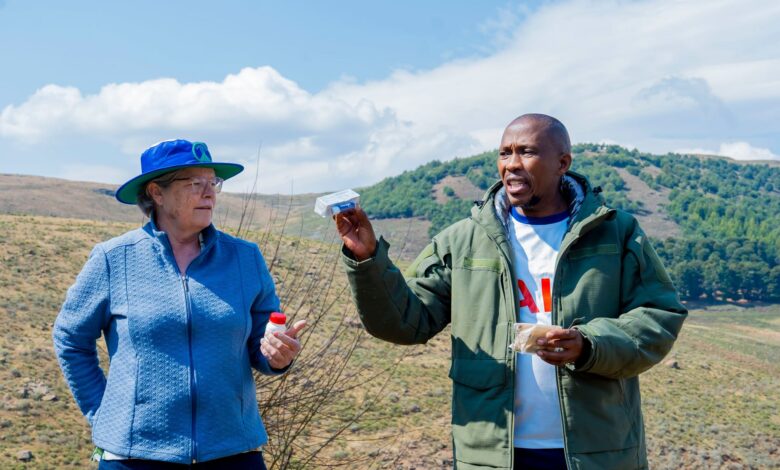
Day 2 of the four-day capacity-building workshop under Lesotho’s Access and Benefit-Sharing (ABS) Project has focused on strengthening practical skills for ecological field assessment and species distribution. Supported by the GEF Small Grants Programme and implemented by UNDP in partnership with the Ministry of Environment and Forestry, the workshop is helping designated field assessors and PMU field coordinators develop the technical knowledge needed to assess important biological resources. The training places particular attention on Khoara, scientifically known as Pelargonium sidoides, and Moli, known as Hypoxis hemerocallidea, which are two priority species central to the project. These plants have ecological and potential economic value, making reliable information about their populations important for future management decisions. By combining classroom knowledge with practical field techniques, the workshop is building a stronger foundation for sustainable resource management and fair benefit-sharing in Lesotho.
The Access and Benefit-Sharing Project forms part of wider efforts to ensure that biological resources are used responsibly while communities and other relevant stakeholders can benefit from their sustainable utilisation. Effective ABS systems require accurate information about biological resources, including where species occur, how abundant they are and how harvesting or other forms of use may affect their populations. Without reliable field data, decisions about the management and use of natural resources can be based on assumptions rather than evidence. The capacity-building workshop therefore provides an important opportunity to strengthen the skills of people responsible for gathering and managing ecological information. The knowledge gained through the programme can contribute to better conservation planning, improved resource monitoring and more informed decisions around access and benefit-sharing.
A major focus of Day 2 was the practical assessment of Khoara and Moli. Field assessors received training on how to identify the two species accurately and distinguish them during ecological surveys. Correct species identification is essential because inaccurate identification can affect the quality of the data collected and ultimately influence conservation and harvesting decisions. Participants also examined methods for determining species distribution and abundance in different areas. These skills will allow field teams to build a clearer picture of where priority species occur and the population conditions they face.
The training introduced participants to several field sampling methods used to collect ecological information systematically. These included transects and quadrats, which provide structured approaches for examining vegetation and recording species within defined areas. Transects can help assess how species are distributed across a landscape, while quadrats allow assessors to measure the presence and abundance of plants within specific sampling plots. Using standardised methods makes it easier to compare information collected from different locations and at different times. Consistent sampling is particularly important when monitoring species that may face pressure from harvesting, environmental changes or other factors affecting their natural populations.
Biomass assessment was another important component of the training. Measuring biomass can provide useful information about the quantity of plant material present in a particular area and can help researchers understand the condition and productivity of populations. For species that have potential harvesting value, this information can support assessments of whether current or proposed levels of utilisation are sustainable. Participants were therefore trained to gather information that can contribute to a more detailed understanding of the biological resources being assessed. Reliable biomass data can also provide a baseline against which future changes in plant populations can be measured.
Data management also formed part of the capacity-building programme because field assessments are only useful when the information collected is properly recorded, organised and analysed. Field teams need to ensure that observations are captured accurately and that information from different locations can be combined into a reliable dataset. Good data management can reduce errors and make it easier for project teams and decision-makers to identify trends in species distribution and abundance. It can also improve the long-term value of field surveys by creating records that can be compared with future assessments. Strengthening these skills ensures that field observations can translate into useful evidence for conservation and resource management.
The focus on Khoara and Moli reflects the importance of understanding priority biological resources before making decisions about their use. Pelargonium sidoides and Hypoxis hemerocallidea are plant species that require careful assessment when considering harvesting, trade or other forms of utilisation. Their distribution and abundance can vary across landscapes, making location-specific field data important for understanding their status. Monitoring these resources can help identify areas where populations appear healthy as well as areas that may require additional protection or management. Scientific evidence can therefore help balance the potential economic value of biological resources with the need to maintain healthy ecosystems and viable plant populations.
The workshop also highlights the importance of developing local technical capacity for environmental management. Training designated field assessors and PMU field coordinators means that knowledge and practical skills can be retained within the institutions and teams involved in the ABS Project. This can reduce reliance on external expertise for routine field assessments and strengthen the ability to conduct monitoring over the longer term. Skilled assessors can also help improve the consistency of information collected from different parts of the country. Building this capacity is particularly important for projects that require continuous monitoring rather than one-off assessments.
Sound ecological evidence will be critical when Lesotho considers future decisions relating to harvesting and benefit-sharing. Access and Benefit-Sharing systems are designed to address how biological resources and associated knowledge are accessed and how benefits arising from their use can be shared fairly and responsibly. To make such systems work effectively, authorities and stakeholders need dependable information about the resources involved. Field assessments can provide the evidence required to understand whether a species can withstand particular levels of harvesting and what safeguards may be necessary. This approach can help ensure that economic opportunities do not come at the expense of long-term ecological sustainability.
The involvement of UNDP and the Ministry of Environment and Forestry, with support from the GEF Small Grants Programme, also demonstrates the value of collaboration in strengthening environmental governance. Different institutions bring distinct expertise to the process, from project coordination and capacity development to environmental management and field implementation. Cooperation can help ensure that technical training is connected to practical policy and conservation needs. It can also create stronger links between field-level evidence and decisions made by institutions responsible for managing biological resources. Continued collaboration will be important as the project moves from training and assessment towards applying the information generated through these activities.
Day 2 of the four-day workshop has therefore provided more than technical training in plant identification and ecological sampling. It has strengthened the practical ability of field teams to generate reliable information about two priority biological resources while reinforcing the importance of standardised data collection and management. The skills covered through transects, quadrats, species identification, biomass assessment and distribution studies can contribute directly to better monitoring of Khoara and Moli. This information can support decisions that balance conservation with sustainable use and ensure that future harvesting considerations are based on evidence. As the ABS Project continues, the capacity developed through the workshop can play an important role in strengthening Lesotho’s ability to manage its biological resources responsibly while supporting fair and sustainable benefit-sharing.
Join 'Lesotho News' WhatsApp Channel
Get breaking Lesotho news — delivered directly to your WhatsApp.
CLICK HERE TO JOIN