Lesotho Intensifies Fight Against Human Trafficking Through Stronger Stakeholder Action

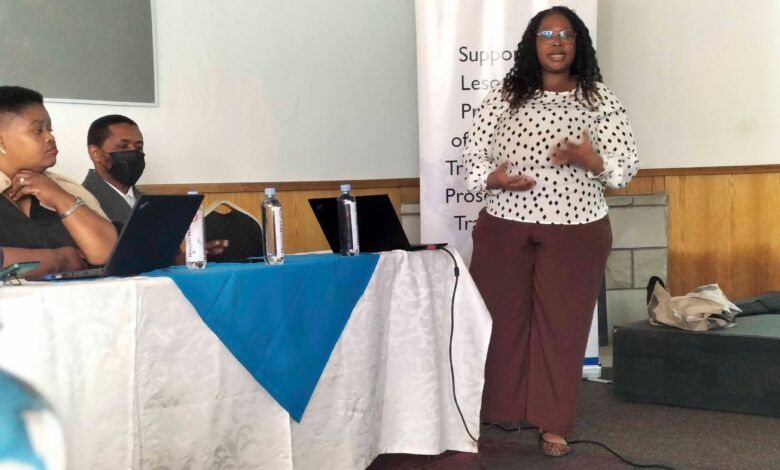
The International Organization for Migration (IOM) is stepping up efforts to raise awareness about Trafficking in Persons (TIP) in Lesotho and encourage stakeholders to take stronger action against the crime. The organisation held a one-day workshop with Heads of Departments in Berea on Tuesday as part of its ongoing work to strengthen the identification, prevention and prosecution of trafficking cases. The workshop brought together representatives from government institutions, law enforcement and social services to discuss the risks faced by vulnerable people and the importance of coordinated intervention. Poverty and vulnerability were highlighted as major factors that can push people to leave their families and communities in search of employment and better opportunities. These circumstances can create opportunities for traffickers to deceive, exploit and control people who are seeking a better life.
Briefing participants, IOM representative Ms. Rethabile Sechache explained that poverty and vulnerability remain important factors that can increase people’s exposure to trafficking. People who have limited access to employment, income and social protection may become more willing to accept seemingly attractive opportunities elsewhere. Traffickers can exploit this vulnerability by promising jobs, better living conditions or other opportunities before subjecting victims to exploitation. Migration itself does not mean that a person will become a trafficking victim, but unsafe migration pathways and limited awareness can increase the risks. Strengthening public awareness is therefore an important part of helping people recognise suspicious recruitment practices and seek assistance before exploitation occurs.
IOM launched a project in 2023 to strengthen the capacity of the Government of Lesotho and civil society organisations to prosecute trafficking cases and protect victims. According to Sechache, the project focuses on improving the ability of law enforcement agencies and the judiciary to deal effectively with TIP-related matters. This includes strengthening skills in case identification, intelligence gathering, investigation and prosecution. The initiative also aims to improve cooperation between law enforcement agencies, justice institutions and civil society organisations at both national and district levels. Better information sharing, reporting and joint action can help authorities respond more effectively to trafficking cases while ensuring that victims receive appropriate protection.
An important part of the project involves ensuring that victims receive immediate and specialised assistance from trained service providers across all 10 districts of Lesotho. IOM is working with stakeholders to promote survivor-centred and trauma-informed approaches that take into account the physical and psychological effects of trafficking. Sechache said victims require specialised care and support, particularly because trafficking can leave survivors facing serious emotional, social and physical challenges. She explained that victims should receive assistance aimed at restoring their wellbeing before they are reintegrated into their communities. Access to justice is also an important part of the response, as victims should be supported throughout the legal process rather than being treated only as sources of information for investigations.
IOM has also supported the Government in reviewing TIP cases and reports, while joint inspections of foreign-owned businesses have been conducted by the Department of Labour, police and immigration authorities. These inspections are intended to establish whether workers have the necessary documentation to remain in the country and to identify potential signs of exploitation. Workplace inspections can play an important role in identifying situations where workers may be subjected to unfair or abusive conditions. Authorities must also remain alert to circumstances where workers are isolated, underpaid, threatened or prevented from leaving an employer. Sechache stressed that the lives and rights of all migrants matter, whether they are foreign nationals or local residents, making routine inspections an important part of protecting people from exploitation.
Border monitoring has also become part of efforts to identify people who may be vulnerable to trafficking. In partnership with the Beautiful Dreams Society, IOM has established a transit monitoring programme that uses specialised personnel at border gates to identify suspicious movements and potential trafficking victims. Border points can be important locations for detecting trafficking because victims may be moved across communities or national boundaries as part of an exploitation process. Trained personnel can help identify warning signs while ensuring that people are treated with dignity and receive appropriate assistance. Effective border monitoring also requires cooperation between immigration authorities, police, social workers and other organisations that can respond when a potential victim is identified.
Police Head Office Anti-Trafficking Department representative Ms. Itumeleng Monane explained that trafficking in persons involves three essential elements, namely acts, means and purpose. These elements can include the recruitment, transportation, transfer or harbouring of a person through force, coercion, abduction or fraud for the purpose of exploitation. Trafficking does not always involve the movement of a person across an international border, meaning exploitation can also occur within a country or community. Victims may be recruited through apparently legitimate employment opportunities before discovering that the conditions are significantly different from what they were promised. Understanding the different ways trafficking can occur is essential for law enforcement officers, government officials, communities and service providers who may encounter potential victims.
Monane said trafficking victims can experience severe restrictions on their freedom and may have little or no ability to negotiate their working conditions. Some victims can be forced to work for long hours over extended periods while receiving little or no payment for their labour. Traffickers may also take away identity documents, making it more difficult for victims to travel, seek employment elsewhere or access services. Isolation can further increase a victim’s dependence on the trafficker, particularly when the person is unfamiliar with the area or does not speak the local language. Victims may also be threatened, coached on what to say and prevented from leaving their living or working environment because they fear violence or other consequences.
The vulnerability of trafficking victims can continue long after they have been removed from an exploitative situation. Ministry of Social Development Social Worker Ms. Lerato Ncheke said survivors are normally categorised as vulnerable depending on the trauma they have experienced. She emphasised that support should extend beyond rescue and temporary shelter and should focus on helping survivors rebuild their lives and become independent. This requires cooperation between different sectors, including health, education and justice, so that survivors can access the services they need. A survivor-centred approach recognises that every person has different experiences, needs and recovery goals.
Ncheke also stressed that recovery from trafficking is not a linear process and that every survivor’s journey is different. Service providers therefore need to maintain case management and conduct follow-ups instead of assuming that a survivor’s needs end once they leave a shelter or receive initial assistance. Ongoing psychosocial support can help survivors deal with trauma and adjust to life after exploitation. Support plans should also take individual goals and cultural circumstances into account to ensure that interventions remain relevant and practical. Long-term assistance can improve the chances of successful reintegration while reducing the risk of survivors becoming vulnerable to further exploitation.
The importance of community awareness was also highlighted during the workshop. Speaking on behalf of the District Administrator’s Office, Mrs. Malehola Moeketsi described the workshop as an eye-opening experience and said the knowledge gained would help participants identify signs of trafficking and people who may be vulnerable to exploitation. She encouraged participants to share the information with others so that awareness can extend beyond government offices and into communities. Public awareness can help people recognise suspicious job offers, understand the risks associated with unsafe migration and identify situations where another person may be experiencing exploitation. Communities that know the warning signs are better positioned to report concerns and connect potential victims with the appropriate authorities and support services.
The need for stronger action is reinforced by cases reported by Berea Police Station. The station has recorded eight TIP-related cases, including two cases involving people from other districts who were allegedly promised jobs in Berea before being exploited. These cases demonstrate how employment promises can be used to attract people away from their communities and place them in situations where they become vulnerable to abuse. Berea Police Station also reported that a foreign national was sentenced to eight years in prison for trafficking in 2022, while another case remains under investigation. A separate investigation involves a boy who was allegedly lured by a close family member to work as a herder in South Africa, highlighting how trafficking risks can involve children and people who are targeted by individuals they know and trust.
The cases reported in Berea show why combating trafficking requires sustained cooperation rather than isolated interventions. Government departments, police, immigration authorities, labour officials, social workers, civil society organisations and communities all have different roles to play in preventing trafficking and protecting victims. Training can help frontline officials recognise warning signs, while better information sharing can improve investigations and referrals. At the same time, communities need reliable information about safe migration, recruitment practices and the channels available for reporting suspected trafficking. Stronger coordination can help ensure that potential victims are identified earlier and that traffickers face effective investigation and prosecution.
IOM’s continued engagement with stakeholders in Lesotho reflects the need to address both the causes and consequences of Trafficking in Persons. Poverty, unemployment, vulnerability and unsafe migration can create conditions that traffickers may exploit, while inadequate awareness can make it harder for potential victims and communities to recognise danger. Strengthening law enforcement and judicial capacity remains essential, but effective action also requires accessible victim support, community education and cooperation between institutions. The workshop in Berea provided an opportunity for officials and service providers to strengthen their understanding of TIP and improve their ability to respond to cases. Continued efforts across all 10 districts will be important to ensure that people at risk receive protection and that those responsible for trafficking are held accountable.
Join 'Lesotho News' WhatsApp Channel
Get breaking Lesotho news — delivered directly to your WhatsApp.
CLICK HERE TO JOIN