Lesotho Finance Minister Dr Retselisitsoe Matlanyane Participates in Financing the SDGs Dialogue 2026 in Madrid

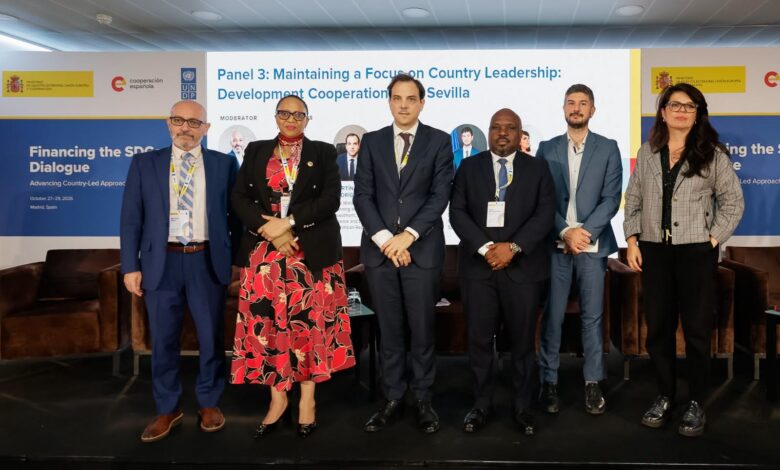
Lesotho is strengthening its commitment to sustainable development financing as the Minister of Finance and Development Planning, Dr. Retselisitsoe Matlanyane, participates in the Financing the Sustainable Development Goals (SDGs) Dialogue 2026 in Madrid, Spain, from 27 to 29 October. With support from the United Nations Development Programme (UNDP), the Minister is joining representatives from countries and development partners to discuss practical ways to mobilise financial resources and accelerate progress towards sustainable development. Held under the theme “Advancing Country-Led Approaches to Financing Sustainable Development,” the dialogue focuses on strengthening national leadership, improving financial coordination and developing innovative funding solutions. The discussions are particularly relevant to countries such as Lesotho, where effective financing is essential to addressing development challenges and delivering public services. Dr. Matlanyane’s participation reflects the Government of Lesotho’s commitment to ensuring that financial resources support national priorities and contribute to achieving the Sustainable Development Goals.
The Financing the SDGs Dialogue 2026 provides a platform for governments and development partners to exchange ideas on how countries can secure and manage the resources needed to achieve their development objectives. The Sustainable Development Goals are a set of 17 global goals adopted by United Nations Member States in 2015 to address challenges such as poverty, inequality, health, education, environmental protection and economic development. Achieving these goals requires substantial and sustained investment from public budgets, private businesses, international development partners and other sources of finance. Many countries face competing spending demands, limited domestic revenue and difficulties attracting investment into sectors that are essential for long-term development. The Madrid dialogue creates an opportunity to examine these challenges and explore financing approaches that can help governments turn development commitments into measurable results.
A central focus of the dialogue is the promotion of country-led approaches to financing sustainable development. This approach places national governments at the centre of determining development priorities, coordinating financial resources and ensuring that investments respond to the needs of their populations. Rather than relying on separate funding arrangements that may operate independently, countries can strengthen coordination between public budgets, development assistance, private investment and other financing sources. Integrated national financing strategies can help governments identify funding gaps, improve the use of available resources and establish clearer links between national plans and financial decisions. For Lesotho, strengthening this approach could help ensure that limited resources are directed towards priorities that support economic growth, improve public services and advance the country’s wider development objectives.
The dialogue also seeks to advance the implementation of the Sevilla Commitment and the Sevilla Platform for Action. These initiatives emerged from the Fourth International Conference on Financing for Development, held in Seville, Spain, in 2025, and form part of broader international efforts to address the financing challenges facing sustainable development. They emphasise the importance of strengthening international cooperation, improving access to development finance and supporting countries in mobilising the resources needed to achieve the SDGs. Their implementation requires sustained engagement from governments, international institutions, development partners and private sector participants. Through discussions on these frameworks, the Madrid dialogue provides an opportunity to consider how international commitments can support practical action at national level.
For Lesotho, mobilising adequate finance is essential to pursuing its development priorities and improving the well-being of its citizens. National development requires investment in areas such as infrastructure, healthcare, education, agriculture, energy and employment creation. These sectors often depend on long-term funding, effective public financial management and cooperation between government institutions and external partners. A well-coordinated financing strategy can help identify the resources available, determine where additional funding is needed and improve the alignment between spending decisions and development targets. Dr. Matlanyane’s participation provides an opportunity for Lesotho to engage in discussions on financing approaches that reflect its national circumstances and support its development ambitions.
One of the key priorities highlighted by Lesotho’s participation is the mobilisation of domestic public finance. Government revenue plays an important role in funding public services, maintaining infrastructure and supporting programmes that improve living conditions. Strengthening domestic resource mobilisation can help countries reduce funding gaps and build greater capacity to finance their own development priorities. This requires effective revenue administration, responsible fiscal planning and careful management of public expenditure. It also involves ensuring that public resources are used efficiently and that spending decisions deliver clear benefits for citizens.
Private sector investment is another important component of sustainable development financing. Businesses can contribute capital, expertise, technology and employment opportunities across a range of economic sectors. However, attracting investment often depends on factors such as policy stability, reliable infrastructure, access to skilled workers and a clear regulatory environment. Governments can support investment by improving these conditions and identifying areas where private capital can complement public funding. For Lesotho, stronger cooperation between the public and private sectors could help expand productive economic activity, create jobs and support the development of industries that contribute to long-term growth.
International development finance also remains important, particularly for countries that need additional resources to address infrastructure gaps and strengthen essential services. Development partners can provide financial support, technical expertise and assistance with institutional capacity building. However, effective development financing requires coordination to avoid duplication, improve accountability and ensure that funded programmes align with national priorities. Country-led financing strategies can help governments establish clearer expectations for development partners and assess how external resources contribute to national objectives. Lesotho’s engagement in Madrid underscores the importance of building partnerships that support national ownership while promoting transparency and effective use of development finance.
The role of integrated national financing strategies is particularly important in bringing different funding sources together. These strategies help governments assess their financing needs, understand the opportunities and risks associated with different sources of capital and coordinate financial decisions across sectors. They can also support stronger links between national development plans, annual budgets and long-term investment programmes. When properly implemented, integrated financing strategies can improve planning, strengthen accountability and help policymakers identify areas where resources are being underused or where funding gaps remain. For Lesotho, this approach offers a framework for connecting financial planning with measurable progress towards national development priorities and the Sustainable Development Goals.
Support from the United Nations Development Programme is an important part of Lesotho’s participation in the dialogue. UNDP works with countries on sustainable development, institutional capacity, governance and efforts to achieve the SDGs. Its support can help national institutions engage in international policy discussions, exchange knowledge and explore approaches suited to their development needs. Cooperation between Lesotho and UNDP also reflects the value of partnerships in strengthening the country’s ability to plan, mobilise and manage development finance. While international support can provide valuable assistance, the long-term success of financing strategies depends on national leadership, effective institutions and consistent implementation.
The Financing the SDGs Dialogue 2026 also highlights the importance of linking financial decisions to measurable development outcomes. Mobilising money alone does not guarantee progress if resources are not directed towards effective programmes or managed responsibly. Governments need reliable information, clear spending priorities and monitoring systems that show whether investments are delivering the intended results. Strong coordination between ministries and development partners can help identify implementation challenges and improve the use of available funding. These measures are essential to ensuring that development finance contributes to real improvements in people’s lives rather than remaining limited to policy commitments and planning documents.
Dr. Retselisitsoe Matlanyane’s participation in the Madrid dialogue reinforces Lesotho’s efforts to strengthen economic planning and improve the financing of sustainable development. By engaging with other countries and development partners, Lesotho can explore new approaches to mobilising public, private and international finance while strengthening the alignment between financial resources and national priorities. The dialogue also provides an opportunity to consider how the Sevilla Commitment and the Sevilla Platform for Action can support stronger financing systems and more effective implementation of the SDGs. The value of this engagement will ultimately depend on how the lessons and partnerships developed during the discussions are translated into national policies, financing plans and practical programmes. Sustained country leadership, responsible financial management and coordinated investment will remain essential to ensuring that Lesotho’s development ambitions lead to lasting improvements in economic opportunity, public services and the well-being of its people.
Join 'Lesotho News' WhatsApp Channel
Get breaking Lesotho news — delivered directly to your WhatsApp.
CLICK HERE TO JOIN