Lesotho Hands Over African Union Digital Communications Chairmanship to Ghana at Sixth Ordinary Session in Libreville

Lesotho has officially handed over the Chairmanship of the African Union Specialized Technical Committee on Communication and Information Technologies (STC-CICT) to Ghana during the Sixth Ordinary Session held in Libreville, Gabon. The transition marks an important step in strengthening continental cooperation on digital transformation, information and communications technologies and the development of Africa’s digital economy. During its tenure, Lesotho contributed to advancing key African Union initiatives aimed at improving digital connectivity, promoting responsible artificial intelligence and strengthening cybersecurity across the continent. Although the country has transferred the chairmanship to Ghana, it will continue to play an active role in the committee’s leadership through its appointment as Rapporteur in the new Bureau. This continued involvement reflects Lesotho’s commitment to supporting Africa’s digital transformation agenda and ensuring that continental decisions translate into practical benefits for citizens, businesses and public institutions.
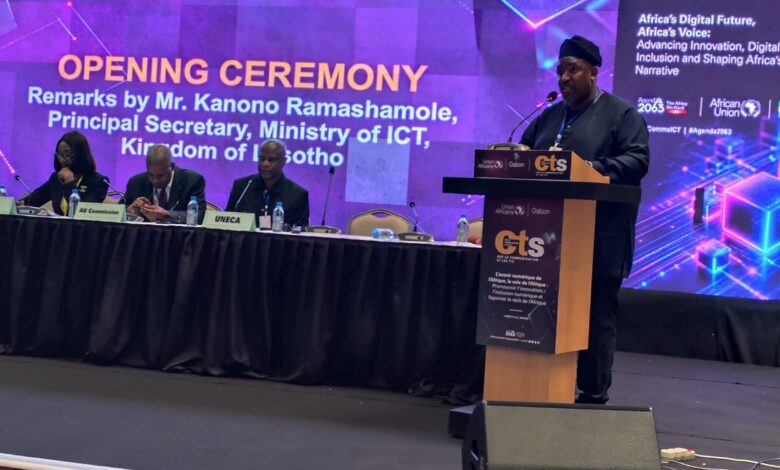
Lesotho was represented at the Sixth Ordinary Session by Mr Kanono Ramashamole, Principal Secretary of the Ministry of Information, Communications, Science, Technology and Innovation. His participation highlighted the importance Lesotho places on regional collaboration, digital policy development and the effective implementation of African Union priorities. The STC-CICT provides a platform for African Union Member States to discuss shared challenges, coordinate policy approaches and develop strategies for the advancement of communication and information technologies. These discussions are increasingly important as African countries work to expand internet access, improve digital public services, develop technology skills and create an environment that supports innovation. Through its participation in the committee, Lesotho has contributed to collective efforts to ensure that Africa can respond effectively to emerging technological opportunities and challenges.
One of the major achievements during Lesotho’s chairmanship was its contribution to the Continental Artificial Intelligence Strategy and the African Digital Compact, which were endorsed in June 2024. These initiatives form part of broader efforts to establish a coordinated approach to digital development across African countries. Artificial intelligence has the potential to support improvements in healthcare, education, agriculture, public administration and other important sectors, provided that countries have the necessary infrastructure, skills and safeguards. A continental approach can help African governments address shared concerns, including data protection, ethical AI development, unequal access to technology and the need for locally relevant digital solutions. Lesotho’s contribution to these frameworks demonstrates the value of cooperation in shaping Africa’s approach to emerging technologies while promoting innovation that responds to the continent’s development priorities.
Lesotho also supported the advancement of the Digital Transformation Strategy for Africa, which provides a framework for using digital technologies to promote inclusive economic growth and sustainable development. An important milestone during its chairmanship was hosting the 2025 implementation review in Maseru, which brought attention to the progress and challenges associated with putting the strategy into practice. Such reviews help Member States assess implementation efforts, identify gaps and strengthen coordination around agreed continental objectives. Digital transformation requires more than access to technology because it also depends on supportive policies, reliable infrastructure, skilled people and effective institutions. By facilitating discussions on implementation, Lesotho helped reinforce the importance of measuring progress and ensuring that digital development strategies remain responsive to the needs of African communities.
Cybersecurity, data governance and the development of secure digital ecosystems were also important areas of progress under Lesotho’s leadership. As governments, businesses and individuals increasingly depend on digital platforms, protecting information and maintaining trust in technology systems have become essential priorities. Cyber threats can disrupt public services, expose sensitive information and undermine confidence in digital transactions, making stronger cybersecurity measures necessary across all sectors. Effective data governance is equally important because it helps establish clear approaches to collecting, managing, protecting and using information responsibly. Through its work within the STC-CICT, Lesotho supported efforts to strengthen continental cooperation in these areas and promote digital environments that enable innovation while protecting users and institutions.
Another notable achievement was the promotion of strong African representation in the G20 Digital Economy Working Groups during 2024 and 2025. Participation in international digital policy discussions gives African countries an opportunity to communicate their priorities, contribute to global debates and advocate for approaches that reflect the continent’s development needs. Issues such as affordable connectivity, digital skills, artificial intelligence, cybersecurity and cross-border digital cooperation require engagement beyond national borders. African representation in these discussions is important to ensure that international policy decisions consider the circumstances and ambitions of countries at different stages of digital development. Lesotho’s leadership helped support the broader objective of strengthening Africa’s voice in global conversations about the future of the digital economy.
Building consensus among African Union Member States with different digital priorities was another important part of Lesotho’s chairmanship. African countries face varied challenges in developing their digital economies, including differences in infrastructure, funding, technical expertise and institutional capacity. Some countries prioritise expanding basic connectivity, while others focus on advanced technologies, digital trade, cybersecurity or the modernisation of public services. Reaching common positions requires constructive dialogue, flexibility and a shared understanding of the long-term benefits of continental cooperation. Lesotho’s efforts to bring Member States together helped support a collaborative approach to digital policy development and reinforced the importance of regional solidarity in achieving common objectives.
In his opening remarks, Mr Ramashamole emphasised that the success of Africa’s digital transformation agenda should not be measured solely by the adoption of strategies and policy frameworks. He stressed that the real measure of progress lies in implementing these commitments in ways that improve the lives of African citizens. This message highlights a central challenge facing digital development across the continent, where ambitious strategies must be supported by adequate resources, effective coordination and measurable results. Policies must lead to practical improvements, such as better access to public services, more opportunities for young people, stronger support for businesses and improved access to information. By focusing on implementation, Mr Ramashamole reinforced the need for African governments to turn continental commitments into meaningful social and economic outcomes.
Mr Ramashamole also called for greater investment in artificial intelligence, digital skills, connectivity, cybersecurity and interoperable Digital Public Infrastructure. These areas are closely connected and play a significant role in determining whether countries can benefit from digital technologies. Investment in connectivity can help more people access online services, while digital skills programmes can prepare citizens to participate in an increasingly technology-driven economy. Strong cybersecurity systems and responsible AI policies can support public confidence and encourage innovation, while interoperable Digital Public Infrastructure can help different digital systems work together more effectively. Together, these priorities can contribute to more efficient public administration, stronger economic participation and wider access to essential services, particularly when governments design their initiatives around the needs of the people they serve.
The call for stronger participation by Member States and improved monitoring of continental decisions was another important message from the session. Agreeing on common strategies is an important first step, but implementation depends on the willingness and ability of countries to follow through on their commitments. Regular monitoring can help governments identify delays, assess the effectiveness of programmes and determine where additional technical or financial support may be needed. Stronger participation can also improve accountability by ensuring that Member States remain engaged throughout the policy development and implementation process. These measures are particularly important for continental initiatives that require cooperation across borders and sustained investment over several years.
Following regional consultations, Lesotho has assumed the position of Rapporteur in the new STC-CICT Bureau. This role allows the country to remain involved in the committee’s leadership and contribute to continuity as Ghana takes over the chairmanship. The transition demonstrates that leadership within the African Union can continue through shared responsibilities and sustained cooperation among Bureau members. As Rapporteur, Lesotho will remain part of the collective effort to advance discussions and support the committee’s work within its agreed mandate. Its continued participation provides an opportunity to build on progress made during its chairmanship and help maintain momentum on priorities such as digital inclusion, cybersecurity, artificial intelligence and effective implementation of continental strategies.
The handover also provides Ghana with an opportunity to build on the progress achieved under Lesotho’s leadership and guide the committee’s work during the next phase of Africa’s digital transformation. The Ministry of Information, Communications, Science, Technology and Innovation has congratulated Ghana on assuming the chairmanship and expressed appreciation to the African Union Commission, the Government of Gabon, fellow Bureau members and technical experts for their partnership. This recognition reflects the collaborative nature of the STC-CICT and the importance of sustained engagement among countries and institutions. Continued cooperation will be necessary to address shared challenges, mobilise resources and ensure that digital policies remain aligned with Africa’s development priorities. The successful transition of leadership reinforces the value of working together to strengthen the continent’s technological capabilities and expand opportunities for its people.
Lesotho’s handover of the African Union STC-CICT Chairmanship to Ghana marks the end of one leadership term and the continuation of a shared continental commitment to digital development. During its chairmanship, Lesotho contributed to important policy frameworks, supported the implementation review of the Digital Transformation Strategy for Africa, promoted cybersecurity and data governance, strengthened African participation in global digital discussions and helped build consensus among Member States. Its continued role as Rapporteur will allow it to contribute to the committee’s work while supporting Ghana’s leadership. The priorities highlighted by Mr Ramashamole also serve as a reminder that Africa’s digital future will depend on sustained investment, stronger cooperation and effective implementation. Ultimately, the success of the continent’s digital transformation will be determined by its ability to turn policies and technological advances into accessible services, better economic opportunities and lasting improvements in the lives of African citizens.
Join 'Lesotho News' WhatsApp Channel
Get breaking Lesotho news — delivered directly to your WhatsApp.
CLICK HERE TO JOIN