UNDP Lesotho and Coca-Cola Beverages Explore Stronger Partnership on Waste Management

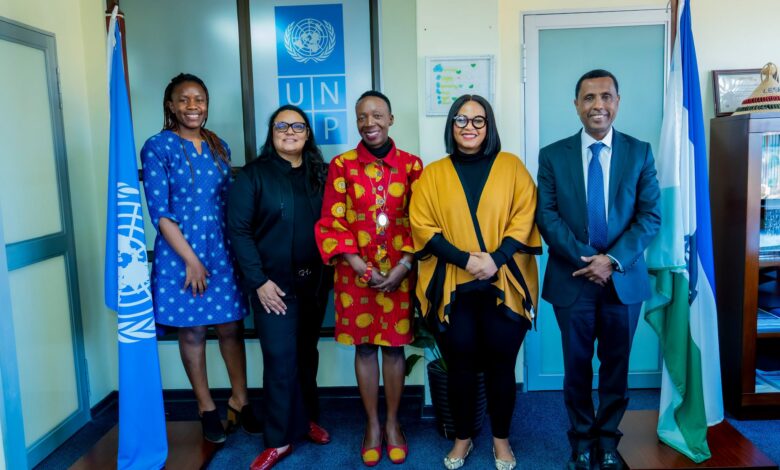
UNDP Lesotho and Coca-Cola Beverages are exploring opportunities to strengthen and sustain collaboration in support of the Government of Lesotho’s waste management priorities. The engagement focused on practical ways to address waste challenges while creating opportunities for innovation, recycling and improved environmental management. The discussions reflect growing recognition that effective waste management requires cooperation between government, development organisations and the private sector. By bringing together different areas of expertise and resources, partnerships can help develop solutions that respond to environmental challenges while delivering social and economic benefits. The discussions also reinforce the importance of collective action in building a cleaner, greener and more sustainable Lesotho.
Waste management remains an important issue for communities, businesses and public institutions because the way waste is collected, processed, recycled and disposed of directly affects the environment. Poorly managed waste can contribute to pollution and create pressure on communities and public infrastructure. Effective waste management can help reduce these challenges by encouraging responsible disposal, increasing recycling and supporting systems that keep valuable materials in productive use. The engagement between UNDP Lesotho and Coca-Cola Beverages provides an opportunity to consider how private-sector capabilities can complement government priorities in this area. A coordinated approach can help move waste management from a basic disposal challenge towards a broader opportunity for environmental protection and economic development.
The discussions highlighted practical opportunities to reduce the amount of waste generated and improve how materials are managed after use. Waste reduction can begin with more efficient production and consumption practices, but it also depends on systems that make it easier for people and businesses to separate and recover recyclable materials. Strengthening recycling efforts can reduce the volume of waste that ends up in disposal sites while creating demand for collection, sorting, processing and other related services. Developing these activities can also support new business opportunities for individuals and small enterprises. The collaboration being explored therefore has the potential to connect environmental objectives with practical economic opportunities.
Innovation was another important part of the discussions between UNDP Lesotho and Coca-Cola Beverages. New approaches to waste management can help communities and businesses find more efficient ways to collect, sort, reuse and recycle materials. Innovation does not always require complex technology, as improvements in collection systems, community participation and recycling networks can also make a significant difference. Partnerships can provide a platform for testing new ideas, identifying approaches that work in local communities and expanding successful initiatives. Encouraging innovation can help Lesotho develop waste management solutions that are practical, scalable and suited to the country’s specific needs.
The focus on livelihoods adds an important social and economic dimension to the waste management conversation. Recycling and waste recovery can create income opportunities through activities such as collection, sorting, processing and the development of products from recovered materials. When properly supported, these activities can become part of local economic systems while contributing to cleaner communities. Creating livelihoods through environmental initiatives can also encourage more people to view waste as a resource rather than something with no further value. The potential to combine environmental improvement with income generation makes sustainable waste management relevant not only to conservation but also to broader development priorities.
Stronger collaboration between development organisations and businesses can help mobilise resources, knowledge and networks needed to advance these objectives. UNDP brings experience in sustainable development and supporting development priorities, while Coca-Cola Beverages has a direct connection to consumer products, packaging and supply chains. Combining these strengths can help identify practical interventions that support waste reduction and recycling. Cooperation can also help ensure that projects are linked to broader government priorities instead of operating separately from national plans. Sustained partnerships can create a stronger foundation for developing initiatives that deliver measurable environmental and community benefits over time.
The engagement also reflects the importance of supporting the Government of Lesotho’s waste management priorities through coordinated action. Government has a central role in establishing policies, standards and systems that guide waste management across the country. However, effective implementation can benefit from the participation of private companies, development partners, communities and civil society organisations. Each group can contribute different resources and capabilities to address specific parts of the waste management challenge. A collaborative model can therefore help create stronger connections between policy objectives and practical solutions on the ground.
Reducing waste and increasing recycling can also contribute to wider sustainability goals. Recovering materials for reuse or recycling can reduce pressure on natural resources and help limit the environmental impacts associated with waste disposal. Better waste management can improve the cleanliness of public spaces while supporting more responsible consumption and production patterns. Over time, stronger recycling systems can also help build public awareness about the value of separating and managing waste responsibly. These improvements can contribute to communities that are healthier, cleaner and better positioned to manage environmental pressures.
For collaboration to deliver lasting results, initiatives will need to focus on practical implementation and long-term sustainability. Projects should consider how waste will be collected, who will participate, how recycled materials will be processed and how economic opportunities will be maintained after initial support ends. Clear responsibilities and measurable objectives can help partners track progress and identify areas that require improvement. Community involvement will also be important because residents and local businesses play a direct role in waste generation and disposal. Building solutions around local participation can increase ownership and improve the likelihood that successful initiatives will continue over time.
The engagement between UNDP Lesotho and Coca-Cola Beverages presents an opportunity to turn shared interest in sustainability into practical action. Reducing waste, expanding recycling and developing innovative livelihood opportunities can address several challenges at the same time. Strong cooperation can help connect government priorities with private-sector expertise and development support while creating solutions that benefit communities. The discussions demonstrate that sustainable development requires more than individual organisations working independently. By strengthening partnerships and focusing on practical outcomes, Lesotho can make progress towards more effective waste management and a cleaner environment.
Building a sustainable future for Lesotho will require continued cooperation, investment and commitment from different sectors of society. The engagement between UNDP Lesotho and Coca-Cola Beverages shows how partnerships can create opportunities to support national waste management priorities while promoting recycling, innovation and livelihoods. Turning these opportunities into measurable impact will require sustained implementation, community participation and a clear focus on solutions that can grow over time. Effective waste management can protect the environment while also supporting economic activity and creating opportunities for communities. Through collective action and stronger partnerships, Lesotho can continue working towards a cleaner, greener and more sustainable future.
Join 'Lesotho News' WhatsApp Channel
Get breaking Lesotho news — delivered directly to your WhatsApp.
CLICK HERE TO JOIN