Young Farmers Inspire Agricultural Growth as Extension Team Visits Motloheloa Producers

The Agricultural Extension Team, working in partnership with the Masianokeng Agricultural Centre, recently conducted a field visit to farmers in the Motloheloa area as part of its ongoing efforts to strengthen agricultural production and support local farmers. The visit, which took place on June 30, 2026, highlighted the importance of regular engagement between agricultural officials and farming communities. Extension services continue to play a vital role in improving productivity by providing technical guidance, monitoring progress and encouraging farmers to adopt sustainable farming practices. Through these visits, agricultural officers are able to assess challenges on the ground while offering practical advice that can help farmers improve their operations. The initiative also demonstrates the government’s commitment to supporting agriculture as an important contributor to food security, employment and rural economic development in Lesotho.
According to the field supervisor, Ms. Manthethe Raotsi, the purpose of the visit was to follow up on the progress being made by local farmers while providing motivation for them to continue expanding their agricultural activities. She explained that regular interaction with farmers allows extension officers to understand their needs, monitor crop performance and provide timely recommendations that can improve yields. Such visits also create opportunities to recognize successful farmers whose achievements can inspire others within their communities. Encouraging farmers through direct engagement helps strengthen confidence while promoting a culture of continuous learning and improvement. This hands-on approach has become an important part of agricultural extension services aimed at increasing productivity across the country.
Among the farmers visited were young agricultural entrepreneurs Neo Koalepe and Seabata Motsoeneng, who are actively involved in cabbage production. Their work reflects the growing participation of young people in agriculture, an encouraging trend as the sector seeks to attract a new generation of producers. Youth involvement in farming is increasingly being recognised as essential for ensuring the long-term sustainability of food production and rural development. By investing their time and energy in vegetable farming, these young producers are not only creating income for themselves but also contributing to local food supplies. Their dedication demonstrates that agriculture can offer meaningful economic opportunities for young people who are willing to embrace modern farming practices and innovation.
Cabbage production remains an important agricultural activity because it provides a reliable source of nutritious vegetables while generating income for small-scale farmers. Successful vegetable farming requires careful planning, proper soil management, effective irrigation and continuous monitoring to protect crops from pests and diseases. Support from agricultural extension officers helps farmers improve these practices through technical advice and practical demonstrations. As a result, producers are better positioned to increase both the quality and quantity of their harvests. This kind of support contributes to stronger agricultural value chains while improving food availability within local communities.
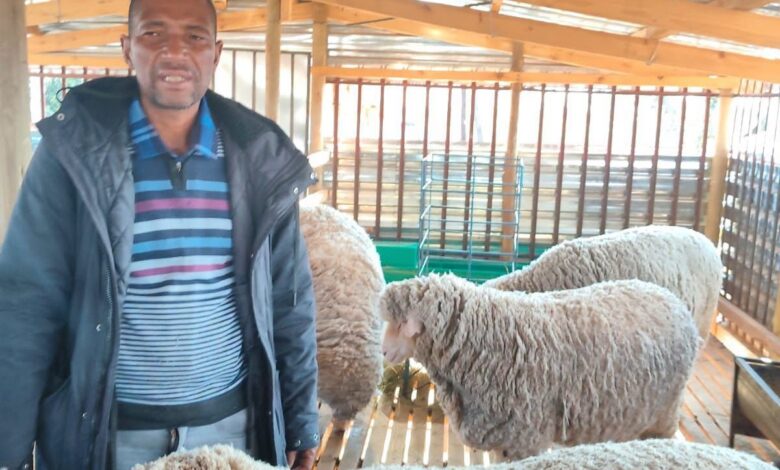
Following their visit to the young vegetable farmers, the Agricultural Extension Team travelled to the farm of Mr. Ramakoatla Sekoala, a well-known producer of Farelane and Seiboko sheep who has also established himself as a successful Merino breeder in both the Maseru district and the country. During the visit, Mr. Sekoala demonstrated the progress that has been made in developing his livestock enterprise and showcased the continued potential of Farelane and Seiboko farming. His achievements serve as an example of how dedication, proper livestock management and continuous investment can transform farming into a sustainable business. By maintaining healthy breeding programmes and applying sound management practices, livestock farmers can improve productivity while contributing to the country’s wool and mohair industries. His success illustrates the opportunities that exist within Lesotho’s livestock sector for farmers who remain committed to excellence.
Merino sheep continue to play an important role in Lesotho’s agricultural economy because they produce high-quality wool that is valued in both domestic and international markets. Livestock farming also supports household incomes, creates employment opportunities and strengthens rural economies through the sale of animals and related products. Farmers who invest in quality breeding programmes help improve the overall standard of livestock production while preserving valuable genetic resources. Agricultural extension services provide important guidance in areas such as animal nutrition, disease control and breeding management to ensure that farmers achieve better production outcomes. These partnerships between farmers and extension officers contribute to the long-term growth and sustainability of the livestock sector.
The visit by the Agricultural Extension Team also demonstrated the value of continuous collaboration between government institutions and farming communities. Regular field visits enable extension officers to identify challenges early, monitor the effectiveness of farming practices and recommend practical solutions based on local conditions. At the same time, successful farmers become examples that encourage others to pursue agriculture with greater confidence and commitment. Knowledge sharing among farmers helps spread innovative practices that improve productivity across different agricultural sectors. Such collaboration strengthens rural development by ensuring that farmers receive ongoing technical support throughout their production cycles.
The field visit to the Motloheloa area highlighted the important contributions being made by both young crop producers and experienced livestock farmers in strengthening Lesotho’s agricultural sector. The commitment shown by Neo Koalepe, Seabata Motsoeneng and Mr. Ramakoatla Sekoala demonstrates that agriculture continues to offer significant opportunities for economic growth, employment and food security. Through the continued support of the Agricultural Extension Team and the Masianokeng Agricultural Centre, farmers are receiving the guidance and encouragement needed to improve their productivity and expand their businesses. These efforts not only benefit individual farmers but also contribute to the broader development of rural communities and the national economy. Continued collaboration between agricultural institutions and producers will remain essential in building a resilient and productive agricultural sector capable of meeting the country’s future needs.
Join 'Lesotho News' WhatsApp Channel
Get breaking Lesotho news — delivered directly to your WhatsApp.
CLICK HERE TO JOIN