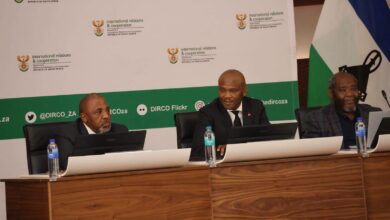
National Accountability Summit Focuses on Practical Solutions to Accelerate Lesotho’s Economic Growth


The second day of the National Accountability Summit is underway with renewed focus on identifying practical and sustainable strategies to accelerate Lesotho’s economic growth and improve the lives of its citizens. The discussions have brought together representatives from government, the private sector, civil society and other key stakeholders to explore collaborative approaches to addressing the country’s development priorities. By encouraging open dialogue and shared responsibility, the summit aims to develop solutions that are realistic, measurable and capable of delivering long-term benefits. The gathering reflects the growing recognition that national development cannot be achieved by government alone but requires active participation from every sector of society. As the sessions continue, participants are examining how stronger partnerships can unlock economic opportunities, improve service delivery and build a more resilient economy.
A major focus of the day’s programme is improving equitable and sustainable economic growth while creating more employment opportunities through private sector leadership. Discussions are examining how industries such as mining, manufacturing, tourism, agriculture, sports and recreation, as well as the creative sector, can contribute more effectively to national development. These sectors each possess significant potential to stimulate investment, generate income and create jobs for Basotho across the country. Participants are exploring ways to remove barriers that limit business growth while encouraging innovation and entrepreneurship within these industries. By strengthening these sectors, Lesotho can diversify its economy and reduce dependence on a limited number of economic activities.
Private sector-led job creation remains one of the summit’s central priorities because sustainable employment is widely recognised as a key driver of economic stability and poverty reduction. Businesses play a vital role in creating opportunities for young people, increasing productivity and expanding the country’s tax base. Participants are discussing policies that encourage investment, improve the ease of doing business and strengthen cooperation between government and the business community. Creating an enabling environment for entrepreneurs and investors can help attract new industries while supporting the growth of existing enterprises. These efforts are expected to contribute to a more competitive economy that generates opportunities for people from different backgrounds and communities.
Another important area of discussion is the development of human capital through investments in education, healthcare, social protection, migration management and engagement with the Basotho diaspora. Participants recognise that economic development depends not only on infrastructure and financial investment but also on a healthy, educated and skilled population. Strengthening education systems can equip young people with the knowledge and practical skills needed to compete in a changing labour market. Improving healthcare services and expanding social protection programmes can enhance productivity while reducing inequalities that limit economic participation. The summit is also examining how Basotho living abroad can contribute their expertise, skills and investments to support national development.
Infrastructure development continues to receive significant attention during the summit because it provides the foundation for sustainable economic growth. Discussions are covering transportation networks, water supply, energy, sanitation, hygiene, the built environment and solid waste management. Reliable infrastructure improves access to markets, supports business operations and enhances the quality of life for communities across the country. Participants are considering strategies to increase investment in these critical sectors while ensuring that infrastructure projects are implemented efficiently and maintained over the long term. Well-developed infrastructure also strengthens Lesotho’s ability to attract investors who require dependable public services to support their operations.
The summit is also placing considerable emphasis on strengthening systems of good governance and accountability to improve public sector performance. Discussions include public finance management, development planning, decentralisation, service delivery, labour markets, security, justice, regional integration and global collaboration. Participants agree that transparent governance and accountable institutions are essential for ensuring that public resources are used effectively and that development programmes achieve their intended outcomes. Strong governance systems also build public confidence by promoting fairness, reducing corruption and improving the delivery of essential services. These reforms are viewed as necessary foundations for achieving sustainable national development.
One of the distinguishing features of the National Accountability Summit is its commitment to promoting meaningful public participation in national development. The ongoing sessions provide an important platform where citizens can engage directly with government leaders, policymakers and representatives from other sectors on issues affecting the country’s future. This open dialogue allows communities to express their concerns, share ideas and contribute practical recommendations that can inform policy decisions. Public participation also strengthens accountability by ensuring that leaders remain responsive to the needs and expectations of the people they serve. Such engagement helps build trust while encouraging a shared sense of responsibility for achieving national development goals.
The National Accountability Summit continues to demonstrate the value of collaboration in addressing Lesotho’s most pressing economic and social challenges. By bringing together government, businesses, civil society organisations and citizens, the summit is creating opportunities to develop practical solutions that reflect diverse perspectives and shared priorities. The wide-ranging discussions on economic growth, employment, human capital, infrastructure and governance highlight the interconnected nature of national development and the importance of coordinated action. As the conversations progress, participants are working toward strategies that can deliver lasting improvements in livelihoods, strengthen institutions and expand economic opportunities across the country. The continued commitment to accountability, partnership and public engagement provides a strong foundation for building a more inclusive, prosperous and sustainable future for Lesotho.
Join 'Lesotho News' WhatsApp Channel
Get breaking Lesotho news — delivered directly to your WhatsApp.
CLICK HERE TO JOIN