Revenue Services Lesotho Celebrates Compliant Taxpayers at 3rd Taxpayer Appreciation Day and Awards Ceremony

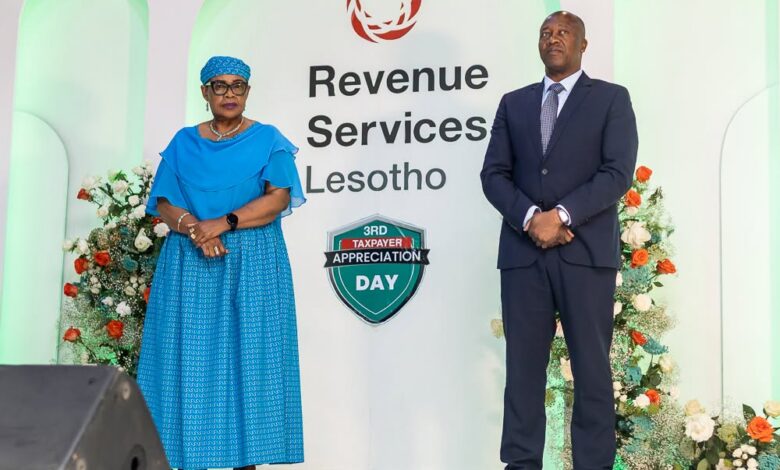
Revenue Services Lesotho (RSL) has celebrated the contribution of compliant taxpayers to national development during its 3rd Taxpayer Appreciation Day and Awards Ceremony, held at Avani Maseru Hotel on Friday, 31 October 2026. The event recognised outstanding taxpayers whose commitment to meeting their tax obligations continues to support Lesotho’s economic growth and public service delivery. It brought together government leaders, representatives of international and regional revenue institutions and other stakeholders to acknowledge the importance of responsible tax compliance. The ceremony also provided an opportunity for RSL to strengthen relationships with taxpayers and highlight the role of revenue collection in building a sustainable economy. Under the theme “Re Tjena Ka Uena”, meaning “Together, we are here because of you”, the event placed taxpayers at the centre of the country’s development journey.
The ceremony attracted distinguished representatives from several international and regional institutions, reflecting the importance of cooperation in strengthening tax administration and revenue collection. Among the participating organisations were the World Customs Organization (WCO), the South African Revenue Service (SARS), Eswatini Revenue Services (ERS) and the Nigerian Customs Command and Staff College. Their participation highlighted the value of regional and international engagement in improving customs operations, tax administration and institutional capacity. Revenue authorities face increasingly complex challenges, including the need to improve compliance, strengthen enforcement and adapt to changing economic activities. Cooperation between institutions allows countries to exchange knowledge, share practical experiences and explore approaches that can improve revenue collection. The gathering therefore provided an important platform for recognising taxpayers while reinforcing the wider role of partnerships in effective revenue administration.
The event was graced by the Honourable Nthomeng ‘Matoka Justina Majara, Deputy Prime Minister and Minister of Parliamentary Affairs, who presented awards to deserving taxpayers and delivered remarks recognising their contribution to nation-building. Her participation demonstrated the importance of tax compliance within Lesotho’s broader economic and development agenda. Taxpayers play a central role in financing government operations and supporting the delivery of essential public services. Revenue collected through taxation helps government institutions meet public responsibilities and invest in areas that contribute to national development. Recognising compliant taxpayers also sends an important message about the value of fulfilling civic and legal responsibilities. The awards ceremony provided an opportunity to acknowledge businesses and taxpayers whose commitment supports the country’s revenue system.
In his address, Acting RSL Commissioner General, Mr Rakokoana Makoa, emphasised that tax compliance goes beyond fulfilling a legal obligation. He explained that paying taxes represents an active contribution to national development, improved public service delivery, infrastructure investment and better livelihoods. His remarks highlighted the direct relationship between responsible tax behaviour and the resources available to government for delivering services. When taxpayers meet their obligations, they contribute to the revenue needed to support public institutions and national programmes. Tax revenue also provides an important foundation for infrastructure development and other investments that support economic activity. By presenting tax compliance as a shared contribution to national progress, Mr Makoa encouraged taxpayers to recognise the wider value of their participation in the country’s development.
Tax compliance remains an important part of a functioning economy because governments depend on reliable revenue to meet public expenditure needs. For businesses, meeting tax obligations also supports transparency, accountability and responsible participation in the formal economy. Consistent compliance helps create a more predictable environment in which businesses can operate and compete. It also supports fairness by ensuring that taxpayers contribute according to their legal responsibilities rather than allowing the burden to fall disproportionately on those who comply. Revenue authorities such as RSL therefore have an important responsibility to promote voluntary compliance while maintaining effective tax administration. Through taxpayer education, accessible services and appropriate enforcement measures, revenue institutions can strengthen public confidence in the tax system.
Mr Makoa further highlighted RSL’s commitment to broadening its taxpayer recognition framework to promote greater inclusivity and visibility across different industries and economic sectors. He indicated that the expanded framework has the potential to recognise approximately 50 taxpayers. This approach reflects the importance of acknowledging contributions from a wider range of economic participants rather than limiting recognition to a narrow group of businesses. Different industries contribute to the national economy in different ways, and their tax responsibilities form part of the broader revenue system. Expanding recognition can also encourage more businesses and individuals to maintain good tax compliance practices. By creating opportunities to acknowledge taxpayers across sectors, RSL aims to strengthen engagement and promote a culture in which responsible tax behaviour receives greater public recognition.
The expansion of the taxpayer appreciation framework also highlights the importance of building positive relationships between revenue authorities and the people and businesses they serve. Taxpayers are more likely to engage constructively with revenue institutions when they understand their obligations and can access clear information and reliable services. Recognition initiatives can help reinforce this relationship by demonstrating that compliance is noticed and valued. They can also encourage businesses to view tax responsibilities as part of their contribution to the wider economy. However, sustainable compliance depends on more than awards and public recognition. It requires consistent communication, efficient administrative processes, transparency and a tax system that taxpayers can understand and navigate.
The theme “Re Tjena Ka Uena” captures the central message of the ceremony by acknowledging that national development depends on the collective contributions of citizens, businesses and institutions. It reinforces the idea that taxpayers are important partners in financing the services and infrastructure that support the country. The accompanying message, “Lekhetho ke motheo oa nts’etsopele ea naha ea rona”, meaning “Tax is the foundation of our country’s development”, further emphasises the connection between revenue collection and national progress. These messages encourage a shared understanding of taxation as more than an individual financial responsibility. They highlight its role in supporting public services, strengthening institutions and creating opportunities for future generations. Through responsible tax compliance and cooperation, taxpayers and government can contribute to building the Lesotho they aspire to see.
The participation of international and regional institutions also brought attention to the importance of strengthening revenue administration beyond national borders. Organisations such as the World Customs Organization provide an international platform for cooperation on customs matters, while revenue authorities such as SARS and ERS offer opportunities for regional knowledge exchange. Such relationships can help institutions learn from different administrative approaches and identify ways to improve their operations. The involvement of the Nigerian Customs Command and Staff College also reflected the value of professional development and institutional knowledge in the revenue and customs sector. As economies become more interconnected, revenue authorities need effective systems, skilled personnel and cooperation to respond to emerging challenges. Strong institutional relationships can therefore complement domestic efforts to improve tax compliance and strengthen public revenue collection.
For Lesotho, improving tax compliance and strengthening revenue administration remain important considerations in supporting economic development. A reliable revenue system helps government plan expenditure and provide resources for national priorities. It also supports the country’s ability to finance public programmes and invest in infrastructure that contributes to economic activity. Encouraging voluntary compliance requires taxpayers to understand how the tax system works and why their contributions matter. Revenue institutions must also continue improving the quality of services they provide, making it easier for taxpayers to fulfil their responsibilities. RSL’s recognition initiative forms part of this broader effort to encourage positive engagement and strengthen the relationship between the authority and compliant taxpayers.
The 3rd Taxpayer Appreciation Day and Awards Ceremony also served as an opportunity to celebrate the businesses and individuals who continue to meet their tax obligations. Their contributions support the national revenue system and help provide the financial foundation for public services and development initiatives. By recognising their efforts, RSL reinforced the importance of accountability and responsible economic participation. The planned expansion of its recognition framework could further encourage compliance across a wider range of industries and economic sectors. It also provides an opportunity to promote greater awareness of the responsibilities shared by taxpayers and revenue authorities. Continued cooperation will be important in ensuring that tax administration remains responsive to the needs of the economy and the people it serves.
The celebration at Avani Maseru Hotel marked another opportunity for Revenue Services Lesotho to acknowledge the role of taxpayers in shaping the country’s economic future. Through the leadership of the Deputy Prime Minister, the remarks of Acting Commissioner General Rakokoana Makoa and the participation of regional and international institutions, the ceremony reinforced the importance of responsible tax compliance. The message behind “Re Tjena Ka Uena” remains central to this effort because national development requires cooperation and shared responsibility. Every compliant taxpayer contributes to a system that supports government services, infrastructure investment and improved livelihoods. As RSL continues to strengthen its taxpayer recognition framework and promote effective revenue administration, the collective commitment of taxpayers will remain essential to Lesotho’s development. Congratulations to all the award recipients and appreciation to every taxpayer whose responsible contributions continue to support the growth and prosperity of Lesotho.
Join 'Lesotho News' WhatsApp Channel
Get breaking Lesotho news — delivered directly to your WhatsApp.
CLICK HERE TO JOIN