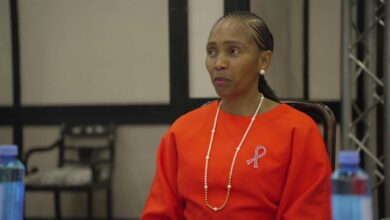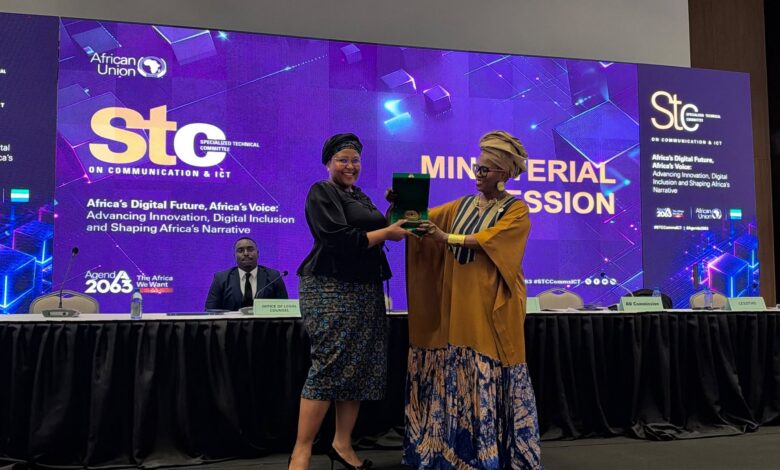
Lesotho’s Minister of Information, Communications, Science, Technology and Innovation, Honourable Nthati Moorosi, has received a special recognition gift from the African Union Commission in appreciation of her three years of leadership as Chairperson of the Specialised Technical Committee on Communication and ICT (STC-CICT). The recognition took place during the Sixth Ordinary Session of the Committee, currently underway in Libreville, Gabon. The honour acknowledges her contribution to advancing Africa’s digital transformation agenda and strengthening continental cooperation in communication and information technology. Her tenure has provided an opportunity for Lesotho to play an important leadership role in discussions concerning Africa’s digital development and technological future. The recognition also highlights the country’s contribution to continental efforts aimed at ensuring that technology becomes an important driver of economic growth, innovation and inclusive development.
Minister Moorosi delivered the opening remarks during the Ministerial Session, where she expressed appreciation to the Government and people of Gabon for their warm hospitality. She also thanked the African Union Commission for its continued support and commitment to advancing Africa’s digital transformation priorities. Her remarks emphasised the importance of cooperation among African countries in responding to the opportunities and challenges created by rapid technological developments. She described the gathering as a historic moment for the continent, noting that technology has become much more than a tool for progress. According to the Minister, digital technology is now a decisive factor in economic sovereignty, international competitiveness and the long-term prosperity of African nations.
Addressing the session under the theme “Africa’s Digital Future, Africa’s Voice,” Minister Moorosi called for a stronger African role in shaping the continent’s technological direction. She explained that the theme represents a call for African countries to take greater responsibility for their digital future rather than relying entirely on solutions and priorities developed elsewhere. She stressed that Africa must become the architect of its own technological destiny by drawing on local knowledge, innovation, resources and shared development priorities. This approach requires governments, institutions, businesses and communities to work together in building digital systems that respond to the continent’s specific needs. She also emphasised that technological development should promote inclusive growth and create opportunities that benefit people across all African countries.
The Minister further highlighted the need to measure Africa’s digital transformation by the actual improvements it delivers in people’s lives. She argued that adopting policies, strategies and technological frameworks is not enough if communities continue to experience limited access to digital services. Her remarks placed particular emphasis on ensuring that geographical location does not prevent people from accessing connectivity and digital opportunities. She also called for young innovators to receive the support and opportunities they need to develop their ideas and participate in the digital economy. No African country, she stressed, should be left behind because of inadequate infrastructure, limited technical capacity or insufficient resources.
Her message reflects one of the continent’s major digital development challenges, which is ensuring that technological progress reaches both urban and rural communities. Access to reliable internet connectivity remains essential for education, healthcare, business development, public services and communication. Without affordable and dependable digital infrastructure, individuals and businesses may struggle to participate fully in the modern economy. Expanding connectivity can help students access educational resources, allow entrepreneurs to reach wider markets and enable governments to improve service delivery. Minister Moorosi’s call for inclusive digital development therefore places ordinary citizens at the centre of Africa’s technological ambitions.
Artificial intelligence and other emerging technologies also featured prominently in the Minister’s address. She described these developments as powerful opportunities that could accelerate economic growth, improve public services and strengthen regional integration. Artificial intelligence has the potential to support innovation across several sectors, including agriculture, healthcare, education, manufacturing and financial services. However, Minister Moorosi cautioned that technological progress must be guided by principles of fairness, inclusion and responsible governance. She warned that development without inclusion could deepen existing inequalities, while innovation without proper governance could weaken public trust. She also noted that ambitious digital strategies would remain unfulfilled promises unless governments and institutions focused on effective implementation.
The Minister’s position highlights the importance of developing policies that allow African countries to benefit from emerging technologies while managing their associated risks. Artificial intelligence raises important questions about data protection, privacy, accountability and the responsible use of digital systems. African governments must therefore consider how these technologies can support development without exposing citizens to unnecessary risks. Strong regulatory frameworks and effective institutions will be important in building public confidence and encouraging responsible innovation. Investment in digital skills and research will also help African countries participate more actively in developing and applying new technologies. By addressing these issues, the continent can work towards a digital economy that supports innovation while protecting the interests of its people.
Minister Moorosi called for Africa’s digital transformation agenda to rest on several essential foundations, including affordable connectivity, resilient infrastructure, reliable energy and trusted digital systems. She also emphasised responsible innovation and equitable access as important requirements for sustainable technological development. These priorities are closely connected because digital services depend on reliable infrastructure, electricity and secure systems that people can trust. Expanding internet access alone will not be sufficient if communities cannot afford digital services or lack the skills needed to use them effectively. Governments must therefore pursue coordinated policies that address infrastructure, affordability, digital literacy and institutional capacity. Such an approach could help create stronger digital economies and reduce the technological divide between different communities and countries.
The Minister also urged African countries to speak with one voice in global digital governance and defend their legitimate interests in shaping the rules of the digital future. She emphasised that Africa should play an active role in international discussions concerning technology, digital trade, artificial intelligence and communication systems. A coordinated continental position could strengthen Africa’s ability to influence decisions that affect its digital development and economic interests. It could also help ensure that international technology standards and policies take African priorities into account. Stronger cooperation among African Union Member States will therefore be important in promoting a digital environment that supports the continent’s development objectives. Her call reflects the need for Africa to move beyond being only a consumer of technology and become a more influential participant in global technological innovation and decision-making.
As Lesotho concludes its three-year stewardship of the Specialised Technical Committee on Communication and ICT, Minister Moorosi expressed gratitude to African Union Member States for their confidence and cooperation throughout her leadership. She also acknowledged the contributions of the outgoing Bureau, the African Union Commission, Regional Economic Communities and development partners. She recognised that progress in continental digital development depends on cooperation between governments and institutions with different responsibilities and capacities. The Minister expressed confidence that the strength of the Committee lies in continuity of purpose, collective ownership and an unwavering commitment to implementation. Her remarks underscored the importance of maintaining momentum as leadership transitions to the next Bureau.
Ghana is set to assume the chairmanship of the Committee, while Lesotho will continue to contribute to its work as Rapporteur in the new Bureau. This arrangement allows Lesotho to remain actively involved in continental discussions on communication, information technology and digital transformation. Although its chairmanship is coming to an end, the country’s continued participation provides an opportunity to support ongoing initiatives and contribute to the Committee’s future priorities. The transition also demonstrates the importance of institutional continuity in advancing long-term African Union programmes. Maintaining cooperation between outgoing and incoming leadership will be essential in ensuring that agreed priorities translate into practical results.
In her closing remarks, Minister Moorosi reflected on the responsibility African leaders have in determining how technology will shape the continent’s future. She stated that the legacy of the current generation should not be measured by the technologies it has witnessed but by the vision, determination and collective leadership demonstrated in using them to improve people’s lives. She emphasised the need to harness technological progress to advance human dignity, unlock national potential and create a more prosperous, inclusive and sustainable future for African communities. Her message placed people at the centre of digital transformation and reinforced the importance of ensuring that innovation produces meaningful social and economic benefits. It also served as a reminder that Africa’s technological ambitions require consistent leadership, practical action and cooperation across national borders.
The Government of Lesotho has congratulated Honourable Nthati Moorosi on receiving recognition from the African Union Commission for her leadership over the past three years. The recognition represents an important moment for Lesotho’s participation in continental digital policy discussions and reflects the country’s contribution to advancing Africa’s technological development agenda. Through its continued role as Rapporteur, Lesotho remains committed to supporting the work of the Specialised Technical Committee on Communication and ICT. The country also maintains its commitment to an African digital future in which technology serves humanity and creates opportunities for all. As Ghana takes over the chairmanship, the focus will remain on strengthening cooperation, improving digital infrastructure, supporting innovation and ensuring that Africa has a meaningful voice in shaping the global digital landscape.
Join 'Lesotho News' WhatsApp Channel
Get breaking Lesotho news — delivered directly to your WhatsApp.
CLICK HERE TO JOIN