Prime Minister Sam Matekane Promotes Lesotho Investment Opportunities at 9th World Investment Forum in Qatar

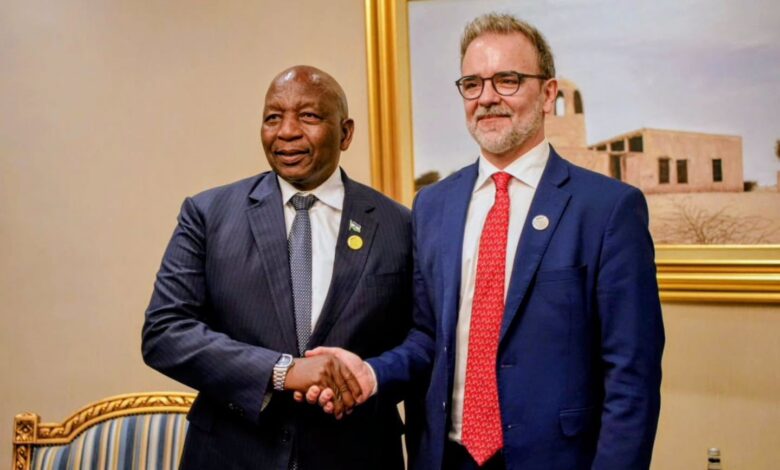
The Right Honourable Prime Minister of the Kingdom of Lesotho, Mr Samuel Ntsokoane Matekane, has led a high-level government delegation to the 9th World Investment Forum (WIF) in Doha, Qatar, to promote Lesotho as an attractive investment destination and strengthen international economic partnerships. Held under the theme “Investing in the Future”, the global forum brought together government leaders, international organisations, development partners and investors to discuss ways of mobilising investment for sustainable economic development. Hosted by the State of Qatar and the United Nations Trade and Development (UNCTAD), the event provided Lesotho with an important platform to showcase its economic potential and engage with key international stakeholders. The Prime Minister used the opportunity to highlight investment opportunities in agriculture, manufacturing, information and communications technology (ICT) and tourism. His participation also reflected the Government’s commitment to using economic diplomacy to attract productive investment, create employment opportunities and strengthen Lesotho’s position in regional and global markets.
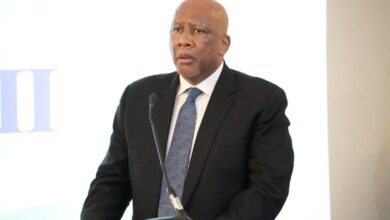
During his Special Address to the Forum Plenary on 26 October 2026, Prime Minister Matekane outlined the importance of directing investment towards sectors that can generate lasting economic benefits for Lesotho. He emphasised that attracting foreign capital should not be treated as the only measure of investment success. Instead, investment must strengthen productive capacities, encourage technology transfer, create decent employment and help domestic businesses participate in regional and international value chains. This approach recognises that sustainable economic growth requires more than financial resources because countries also need skills, infrastructure, technology and competitive industries. By highlighting these priorities, the Prime Minister called for investment partnerships that support long-term economic transformation rather than short-term financial gains. His address positioned Lesotho as a country seeking investment that delivers practical benefits for businesses, workers and communities.
The Prime Minister identified agriculture as one of the important sectors offering investment opportunities in Lesotho. Agriculture has the potential to support food production, create employment and strengthen rural livelihoods when supported by appropriate technology, infrastructure and access to markets. Investment in agricultural production, processing and related services can also help increase the value of locally produced goods. Improving productivity and strengthening agricultural value chains could create opportunities for local enterprises to participate more effectively in domestic and international trade. However, realising this potential requires investment in productive capacity, skills development and reliable market information. The Government’s emphasis on agriculture therefore reflects the importance of building a more productive and competitive sector that contributes to economic development.
Manufacturing was another priority highlighted by the Prime Minister during the international investment discussions. A stronger manufacturing sector can support economic diversification by creating opportunities to process raw materials, produce finished goods and expand exports. It can also generate employment and encourage the development of supporting businesses across the supply chain. Investment in manufacturing can bring improved production methods, modern equipment and technical expertise that help local industries become more competitive. For Lesotho, strengthening domestic production is particularly important in expanding the country’s participation in regional and global value chains. The Prime Minister’s message encouraged investors to consider opportunities that can increase local productive capacity and support sustainable industrial development.
Information and communications technology also featured among the sectors identified as having investment potential. Digital technology plays an increasingly important role in business operations, communication, financial services and access to information. Investment in ICT infrastructure and digital services can help businesses improve efficiency and connect with customers and markets beyond national borders. It can also create opportunities for innovation, entrepreneurship and skills development among young people. Stronger digital infrastructure can support other economic sectors by improving access to information, communication systems and modern business solutions. By promoting ICT as an investment priority, Lesotho highlighted the importance of technology in building a more connected and competitive economy.
Tourism was also presented as an important area for investment and economic diversification. Lesotho’s natural environment, mountain landscapes and cultural heritage provide opportunities for tourism-related businesses and services. Investment in tourism infrastructure, accommodation, transport and visitor services could help strengthen the country’s appeal to domestic and international visitors. A growing tourism sector can also create opportunities for local entrepreneurs and communities through hospitality, cultural activities and related services. However, sustainable tourism development requires careful planning and investment that respects the environment and benefits local populations. The Prime Minister’s inclusion of tourism among the country’s priority sectors demonstrated the Government’s interest in developing industries that can broaden economic opportunities.
A central message of the Prime Minister’s address was the need to move beyond competition for investment towards partnerships that promote shared prosperity. He emphasised that investment should create benefits for both investors and host countries while supporting inclusive and sustainable development. This approach places greater importance on cooperation, mutual benefit and long-term economic relationships. For developing countries such as Lesotho, productive partnerships can provide access to capital, technology, expertise and international markets. They can also strengthen domestic businesses by connecting them with larger regional and global production networks. The Prime Minister’s remarks encouraged international investors to view Lesotho not simply as a destination for capital but as a partner in building sustainable economic opportunities.
Prime Minister Matekane also delivered a keynote address at the High-Level Roundtable on “Partnerships, Investment and Trade: Advancing Sustainable Development and Prosperity in Least Developed Countries”. The discussion focused on the challenges facing Least Developed Countries (LDCs) as they seek to attract investment, expand trade and strengthen their productive economies. The Prime Minister highlighted structural constraints such as limited productive capacities, infrastructure gaps and restricted access to affordable financing. These challenges can make it difficult for LDCs to develop competitive industries and attract the scale of investment required for economic transformation. Limited infrastructure can increase production and transport costs, while inadequate financing can prevent businesses from expanding or adopting modern technology. His contribution emphasised the importance of international cooperation in addressing these barriers and creating better conditions for sustainable economic development.
The Prime Minister acknowledged the contribution of the Enhanced Integrated Framework (EIF) to Lesotho’s trade development efforts. The EIF supports Least Developed Countries in strengthening their capacity to participate in international trade and use trade as a tool for economic development. In Lesotho, its contribution has included institutional strengthening, agricultural production and market intelligence. These areas are important because effective trade development requires strong institutions, productive industries and reliable information about market opportunities. Strengthening institutional capacity can help government agencies and businesses develop better strategies for participating in international trade. Similarly, improved agricultural production and market intelligence can help local producers understand demand, identify opportunities and make more informed business decisions.
Prime Minister Matekane further indicated that Lesotho is developing its Country Programme Document under EIF Phase Three. This process provides an opportunity to identify priorities and areas where international cooperation can support the country’s trade development objectives. He invited the Enhanced Integrated Framework, the Qatar Fund for Development and other development partners to explore opportunities for cooperation in productive capacity-building, project preparation and investment mobilisation. Productive capacity-building is important because businesses need the skills, infrastructure, technology and resources required to increase production and compete in wider markets. Project preparation also plays a critical role in turning development priorities into investment-ready projects that can attract financing. By encouraging cooperation in these areas, Lesotho is seeking practical partnerships that can help move development plans towards implementation.
The Honourable Minister of Foreign Affairs and International Relations, Mr Limpho Tau, also participated in the Ministerial Roundtable on Investment. Lesotho’s intervention highlighted the importance of regional integration, cross-border investment partnerships and the development of regional value chains. The country emphasised the opportunities available through its membership in the Southern African Customs Union (SACU), the Southern African Development Community (SADC) and the African Continental Free Trade Area (AfCFTA). These regional and continental frameworks provide platforms for improving trade cooperation, expanding market access and strengthening economic relationships between countries. Regional integration can also help businesses access larger markets and participate in production networks that extend beyond national borders. Lesotho’s position at the roundtable reflected its interest in using regional cooperation to support investment, trade expansion and industrial development.
The Ministerial Roundtable also provided an opportunity for Lesotho to advocate innovative financing mechanisms that can help unlock private investment in strategic productive sectors. These mechanisms include blended finance, credit guarantees and risk-sharing arrangements. Blended finance combines public or development funding with private capital to support projects that may struggle to attract commercial investment on their own. Credit guarantees can help reduce some of the risks faced by lenders when financing businesses and development projects. Risk-sharing arrangements can also encourage investors to participate in sectors where financial or operational challenges might otherwise discourage investment. For Lesotho, these financing approaches could help mobilise additional resources for productive activities and improve access to capital for projects with development potential. The country’s intervention highlighted the need for financing solutions that respond to the realities of developing economies while encouraging greater private-sector participation.
On the margins of the World Investment Forum, Prime Minister Matekane held bilateral meetings with key international partners to advance Lesotho’s trade, investment and development priorities. These engagements provided opportunities to discuss practical areas of cooperation and strengthen relationships with institutions that play important roles in international trade and development. Bilateral diplomacy is an important part of economic diplomacy because it allows countries to address specific interests directly with potential partners. Through these meetings, Lesotho sought to strengthen cooperation in investment promotion, trade facilitation, regional integration and institutional development. The discussions also demonstrated the importance of maintaining relationships beyond major international conferences. Turning these engagements into practical programmes and investment opportunities will be important for achieving the country’s economic objectives.
One of the Prime Minister’s important bilateral engagements was with the Prime Minister of Qatar, His Excellency Sheikh Mohammed bin Abdulrahman Al Thani. Their discussions focused on potential investment opportunities and ways to strengthen economic cooperation between Lesotho and Qatar. The engagement provided an opportunity to explore areas of mutual interest and identify possibilities for deeper bilateral economic relations. Qatar’s participation as host of the World Investment Forum also created an important setting for Lesotho to present its investment priorities directly to a senior Qatari leader. Stronger economic relations could open opportunities for cooperation in areas aligned with Lesotho’s development objectives. The discussions formed part of the Government’s broader effort to establish international partnerships that can support investment and economic growth.
Prime Minister Matekane also met with World Trade Organization (WTO) Director-General, Dr Ngozi Okonjo-Iweala. During the engagement, he acknowledged the WTO’s support for Lesotho and reaffirmed the country’s commitment to the organisation’s reform process. The WTO plays an important role in establishing and overseeing international trade rules and providing a platform for member countries to address trade-related issues. For a small developing economy such as Lesotho, participation in the multilateral trading system provides opportunities to engage in international trade discussions and advance national interests. WTO reform is also an important subject for countries seeking a trading system that responds to the needs and challenges of different economies. The meeting therefore reinforced Lesotho’s interest in maintaining constructive engagement with the organisation and strengthening its participation in international trade.
Another important meeting took place between the Prime Minister and Acting UNCTAD Secretary-General, Mr Pedro Manuel Moreno. Their discussions focused on strengthening technical cooperation, including support for implementing the WTO Trade Facilitation Agreement. Trade facilitation involves simplifying and improving the procedures required to move goods across borders. Effective implementation can help reduce delays, improve administrative efficiency and lower some of the costs associated with international trade. These improvements are particularly relevant for countries such as Lesotho, where efficient cross-border trade is important for businesses accessing regional and international markets. Stronger technical cooperation can help improve institutional capacity and support the development of more efficient trade systems. The engagement highlighted the value of international expertise in helping Lesotho advance its trade facilitation priorities.
The Prime Minister also held discussions with AfCFTA Secretary-General, His Excellency Wamkele Mene, focusing on opportunities to strengthen intra-African trade, regional value chains and investment cooperation. The African Continental Free Trade Area aims to create a more integrated continental market by improving trade among African countries. Greater participation in this market could provide Lesotho’s businesses with opportunities to reach more customers and expand their commercial activities. Regional value chains can also create opportunities for local enterprises to supply goods and services to businesses operating across different African countries. However, taking advantage of these opportunities requires competitive production, effective trade systems and appropriate investment. During the engagement, the AfCFTA Secretary-General also indicated his intention to visit Lesotho in 2027, creating an opportunity for further discussions on cooperation and continental trade priorities.
Beyond his engagements with international leaders and institutions, Prime Minister Matekane also met with members of the Basotho diaspora living in Qatar. He encouraged them to continue representing Lesotho positively and maintaining their connection with their home country. The Prime Minister assured the diaspora that the Government is working towards establishing labour relations with Qatar and neighbouring countries to expand employment opportunities for Basotho. Such arrangements could help create additional opportunities for Basotho workers to access employment in international labour markets. However, establishing these opportunities requires continued engagement and cooperation between the relevant governments. The discussions reflected the Government’s recognition of the diaspora as an important part of Lesotho’s wider economic and social development.
The Prime Minister also encouraged Basotho living in Qatar to consider investing in Lesotho. He highlighted the potential for diaspora investment to contribute to national economic development while helping individuals build financial security for their own futures. Members of the diaspora can contribute through business ownership, partnerships, property development and investments in productive sectors. Their experience of international markets and business environments may also help connect Lesotho with new commercial opportunities. Encouraging diaspora investment can strengthen the relationship between Basotho living abroad and the domestic economy. It also provides another avenue for mobilising capital and expertise to support entrepreneurship, employment creation and economic growth.
Lesotho’s participation in the 9th World Investment Forum demonstrated the Government’s commitment to using international engagement to advance national development priorities. Prime Minister Matekane’s addresses placed productive investment, technology transfer, employment creation and stronger domestic industries at the centre of the country’s investment agenda. The discussions on trade development, regional integration and innovative financing also highlighted the need to address structural challenges that limit economic opportunities in Least Developed Countries. Meanwhile, bilateral meetings with Qatar, the WTO, UNCTAD and the AfCFTA Secretariat provided opportunities to strengthen relationships and explore practical areas of cooperation. Engagement with the Basotho diaspora further reinforced the importance of involving citizens abroad in the country’s economic development.
The real value of Lesotho’s participation will depend on how effectively the discussions and commitments translate into practical investment projects, stronger trade relationships and improved economic opportunities. Attracting investment requires a supportive business environment, reliable infrastructure, skilled workers and effective institutions. It also requires partnerships that recognise the importance of local businesses and ensure that investment contributes to domestic productive capacity. By promoting agriculture, manufacturing, ICT and tourism while strengthening regional and international cooperation, Lesotho is seeking to broaden its economic base and improve its competitiveness. The 9th World Investment Forum provided an important opportunity to advance these objectives and present the country to potential partners. Through sustained economic diplomacy and productive investment partnerships, Lesotho aims to build a more diversified, inclusive and resilient economy that creates lasting opportunities for its people.
Join 'Lesotho News' WhatsApp Channel
Get breaking Lesotho news — delivered directly to your WhatsApp.
CLICK HERE TO JOIN