The Lesotho Electricity and Water Authority has issued seven licence exemptions to One Power Africa to support the installation of mini-grids in rural communities across Lesotho. The exemptions are intended to facilitate electricity projects in communities where extending the conventional national electricity grid may be difficult or may take time. The initiative targets Ketane in Mohale’s Hoek, Tosing in Quthing, Tlhanyaku in Qacha’s Nek, Sehlaba-Thebe, Matsoaing in Mokhotlong, Thaba-Tseka and Berea. The projects are expected to expand access to modern electricity services and create new opportunities for households in underserved rural areas. The planned investment, estimated at M250 million, represents a significant proposed development in efforts to improve rural energy access, although implementation will depend on funding and other project requirements.
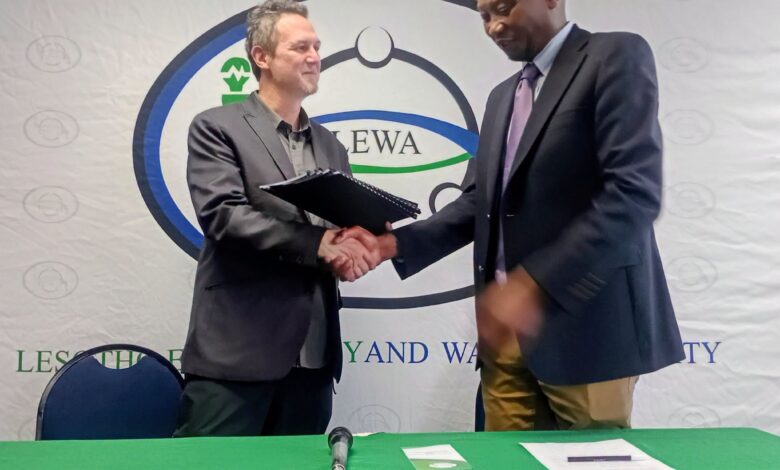
LEWA Chief Executive Officer Mr. Lebeko Sello handed over the licence exemptions to One Power Africa, marking an important step toward the implementation of the seven proposed mini-grid projects. Mr. Sello explained that the exemptions were specifically intended to support the projects in the identified communities. Regulatory approval is important for electricity projects because the supply of an essential service requires appropriate oversight and compliance with applicable requirements. The exemptions provide a regulatory pathway for One Power Africa to proceed with the targeted projects, subject to the conditions and requirements that apply to their implementation. The handover therefore connects the regulatory process with the practical goal of expanding electricity access in rural Lesotho.
The targeted communities are located across several districts, reflecting the geographical scope of the proposed programme. Ketane is located in Mohale’s Hoek, while Tosing is in Quthing and Tlhanyaku is in Qacha’s Nek. The other targeted locations include Sehlaba-Thebe, Matsoaing in Mokhotlong, Thaba-Tseka and Berea. Rural communities can face particular challenges when electricity infrastructure has to cover difficult terrain or reach areas with relatively dispersed households. Mini-grids can offer an alternative approach by generating and distributing electricity within a defined local area rather than depending entirely on an extensive national transmission and distribution network.
Speaking during the handover ceremony, One Power Africa representative Mr. Matthews Oroz acknowledged the importance of regulating essential services such as electricity and water. He also stressed that access to modern technology and infrastructure is necessary for rural development. His comments highlighted the connection between electricity access and the ability of communities to participate in modern economic and social activities. Reliable electricity can support household needs while also creating conditions for businesses, schools, public facilities and other community services to use electrical equipment and digital technologies. For rural communities with limited electricity access, the availability of a local energy system can therefore have practical implications beyond household lighting.
Oroz explained that conventional electricity grids may not reach some remote communities in the near future, making mini-grids an important option for providing electricity. A mini-grid, sometimes described as an isolated grid, is a local electricity network that can supply power to a defined community or group of users. This approach can be useful in locations where extending the national grid requires substantial infrastructure, time or investment. Instead of waiting for a traditional grid connection, communities can potentially receive electricity through a system designed for local conditions. The proposed One Power Africa projects are based on this approach, with the seven exemptions intended to facilitate implementation in the selected areas.
The proposed mini-grid projects are also linked to broader questions about rural development and modernisation. Electricity can support activities that depend on reliable power, including small businesses, communication services, refrigeration, water systems and other productive uses. For households, access to electricity can make it easier to use modern appliances and other technologies. The actual benefits will depend on factors such as reliable service, affordability, connection rates and the successful completion of the projects. Nevertheless, expanding electricity access provides a potential foundation for wider economic and social activity in communities that currently face limited access to modern energy services.
One Power Africa has also indicated that it is working with several institutions in implementing the proposed projects. The partners mentioned include a pension fund, the Ministry of Energy, the Roads Directorate, the Revenue Services Lesotho and the Lesotho Electricity Corporation. Collaboration between different institutions can be important for infrastructure projects because electricity development may involve financing, government policy, roads and access infrastructure, revenue administration and technical electricity requirements. The involvement of multiple stakeholders also reflects the range of arrangements that may be needed to move a major rural energy programme from planning to implementation. The precise roles and responsibilities of the different institutions will remain relevant as the projects progress.
Funding remains a key factor in determining when the seven mini-grid projects will be completed. Oroz said the completion date had not yet been determined because implementation would depend on the availability and timing of funding. This means that the licence exemptions represent a step toward implementation but do not by themselves establish a confirmed completion schedule. The estimated cost of the overall project is M250 million, making financing a central consideration for the programme. Further progress will depend on securing the necessary resources and meeting other requirements associated with developing the mini-grids.
The proposed connection arrangement is designed to provide households with a defined pathway to access the electricity service. According to the project details provided, households will pay a M500 connection fee. Families without ready boards will also be connected at a cost of M500. After connection, households will pay M5 per single unit of electricity consumed. These proposed charges provide an indication of how the service is expected to be structured for participating households, although the practical application of the arrangements will depend on the final implementation of the projects and applicable requirements.
Affordability will remain an important consideration as rural electricity access expands. Providing infrastructure is only one part of increasing electricity use because households also need to be able to connect to and regularly afford the service. The proposed connection fees and unit charge therefore form part of the practical considerations surrounding the projects. Reliable electricity can provide significant value to households and communities, but sustainable access requires infrastructure, financing, effective operation and appropriate consumer arrangements to work together. Monitoring how households use the service and how the projects perform will be important once the mini-grids become operational.
The seven licence exemptions also illustrate the role that regulatory institutions can play in supporting new approaches to electricity supply. LEWA’s involvement provides the regulatory framework within which the proposed mini-grid projects can be developed. One Power Africa, meanwhile, will need to progress with the technical, financial and operational aspects of the projects. The cooperation of government departments, public entities and other partners can help address the different requirements involved in rural energy infrastructure. The overall process shows that expanding electricity access involves both physical infrastructure and the regulatory and institutional systems needed to support it.
For the targeted communities, the proposed projects could provide an alternative route to electricity access where conventional grid expansion presents practical challenges. The initiative could help households gain access to modern energy services while supporting other forms of community development. However, the projects remain subject to funding availability and other implementation requirements, and no completion date has yet been established. The M250 million estimated investment demonstrates the scale of the proposed programme and the resources required to deliver it. Continued progress will therefore depend on securing financing and moving the projects through the remaining stages of development.
The issuance of seven licence exemptions by LEWA marks a significant step in the proposed expansion of rural mini-grid electricity services in Lesotho. The projects target communities across several districts where alternative approaches to electricity supply may be needed because of the challenges associated with conventional grid expansion. One Power Africa has outlined proposed connection and electricity charges while working with several institutions to advance the projects. The estimated M250 million investment highlights the scale of the programme, while the absence of a confirmed completion date reflects the importance of funding availability. If the necessary financing and project requirements are secured, the mini-grids could expand access to modern electricity services and support greater opportunities for households and communities in rural Lesotho.
Join 'Lesotho News' WhatsApp Channel
Get breaking Lesotho news — delivered directly to your WhatsApp.
CLICK HERE TO JOIN