The Central Bank of Lesotho Hosts Inclusive Green Finance Workshop to Strengthen Climate Resilience

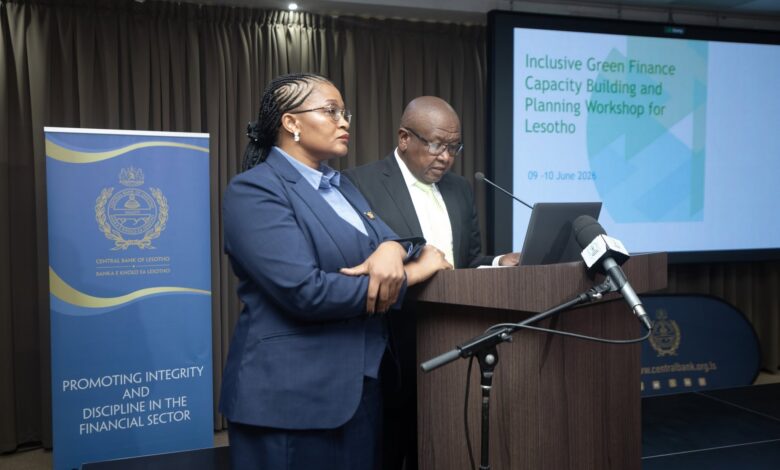
The financial sector in Lesotho is taking new steps to respond to the growing impact of climate change through a focused capacity building initiative held in Maseru. The workshop is organised by the Central Bank of Lesotho in partnership with the Alliance for Financial Inclusion and brings together key stakeholders from across the financial and development sectors. The main goal is to strengthen how financial systems prepare for and respond to climate related risks while supporting vulnerable communities. It reflects a broader shift toward integrating environmental challenges into financial planning and regulation. The discussions are centered on building practical strategies that can protect livelihoods and improve economic stability in the face of environmental shocks.
Speaking at the workshop, Deputy Governor Lehlomela Mohapi from the Central Bank of Lesotho emphasized that climate change is now a serious threat to the country’s economy. He explained that extreme weather patterns such as floods, rising temperatures and land degradation have increased in frequency over the past decade. These changes have had a direct impact on livelihoods, especially in rural areas where communities depend heavily on agriculture. He noted that climate shocks continue to destroy crops, reduce agricultural output and damage infrastructure across the country. He also introduced the idea of an “Economy at Risk” to describe the wider financial losses linked to climate change. According to him, financial institutions must adopt stronger adaptation measures to ensure stability during environmental disruptions.
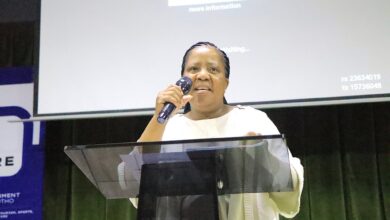
The workshop also highlighted the role of inclusive green finance in ensuring that financial services reach all segments of society. Nomcebo Hadebe from the Alliance for Financial Inclusion stressed that vulnerable groups such as farmers, women, youth and rural populations must be included in financial systems that support climate resilience. The Alliance for Financial Inclusion works with 89 member institutions globally, including 44 across Africa, to promote inclusive financial policies. Alliance for Financial Inclusion She praised the progress made by the Central Bank of Lesotho in advancing financial inclusion in a relatively short time. She also emphasized that collaboration is essential, with institutions such as commercial banks, insurance providers and disaster response agencies all playing a role. The Disaster Management Authority was identified as a key partner in strengthening preparedness and response systems. Disaster Management Authority
Insurance and regulatory perspectives also formed a key part of the discussions. Makaka Mothibe, Head of Insurance Supervision at the Central Bank of Lesotho, explained that financial inclusion is closely linked to climate resilience. He pointed out that people with lower incomes are often the most affected when disasters occur, making access to financial services essential for protection and recovery. Using FinScope survey data, he noted that the percentage of Basotho with bank accounts increased from 22 percent in 2011 to 48 percent in 2021. Over the same period, financial exclusion dropped from 19 percent to 9 percent, while overall financial inclusion reached 89 percent. He emphasized that these gains must now be strengthened through policies that directly address climate related risks and improve coordination among regulators and financial institutions.
The Central Bank of Lesotho has positioned itself as a leading driver of financial sector adaptation through this initiative. Central Bank of Lesotho International partners also pledged technical support to help convert workshop discussions into practical policies. Experts from Germany and the Alliance for Financial Inclusion committed to assisting in the development of frameworks that support inclusive green finance. The focus is on turning dialogue into action that benefits ordinary citizens while also protecting the environment for future generations. This includes strengthening policy design, improving institutional coordination and supporting innovation in financial products that address climate risks.
The workshop reflects a growing recognition that climate change is not only an environmental issue but also a financial and economic challenge. It highlights the need for stronger collaboration between regulators, financial institutions and development partners to build resilience in vulnerable economies. The discussions in Maseru point toward a future where financial systems are better prepared to absorb shocks and support recovery efforts in affected communities. By linking financial inclusion with environmental sustainability, Lesotho is working to build a more stable and inclusive economy. The outcomes of this workshop are expected to guide future policy direction and strengthen the country’s ability to respond to climate related challenges in a structured and coordinated way.
Join 'Lesotho News' WhatsApp Channel
Get breaking Lesotho news — delivered directly to your WhatsApp.
CLICK HERE TO JOIN