Gender Links Lesotho Engages NUL Students on Gender-Based Violence Through 2025 Study Findings

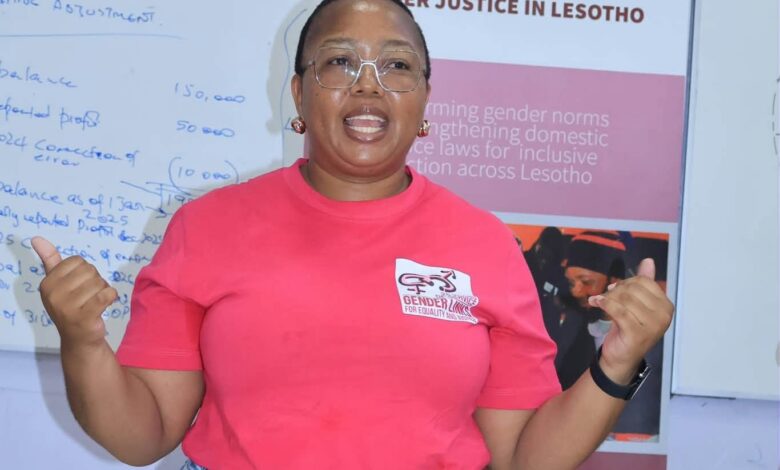
Gender Links Lesotho has engaged students at the National University of Lesotho (NUL) on the ongoing challenge of gender-based violence (GBV), providing valuable insights into the situation in the country and how it has changed over the years. The organisation was invited by the university’s Faculty of Social Work and Sociology to deliver a presentation focusing on GBV in Lesotho. The engagement created an opportunity for students to learn about the latest research findings and understand the factors contributing to violence against women and other forms of gender-based abuse. A key part of the presentation involved comparing findings from the 2013 and 2025 Lesotho GBV studies conducted by Gender Links with support from the European Union in Lesotho. Through this discussion, students gained a clearer understanding of progress made in addressing gender-based violence, the challenges that remain and the areas requiring stronger interventions.
The presentation focused on the findings of two important research studies conducted more than a decade apart. By comparing the 2013 and 2025 Lesotho GBV studies, Gender Links provided students with an opportunity to examine how the prevalence and patterns of gender-based violence have changed over time. Such comparisons are important because they help researchers, policymakers and communities understand whether efforts to prevent violence are producing meaningful results. They also reveal areas where existing interventions may not be sufficient to address the problem. Access to evidence from different periods allows stakeholders to assess developments and identify priorities for future action.
Gender-based violence remains an important social and human rights concern in Lesotho. It can take different forms, including physical, sexual, emotional and economic abuse, often affecting individuals within relationships, families and communities. Understanding GBV requires looking beyond individual incidents to examine the social, economic and cultural conditions that can contribute to violence. Factors such as unequal power relations, harmful gender stereotypes and barriers to reporting abuse can make prevention and response more difficult. Discussions at academic institutions therefore play an important role in helping future professionals understand the wider causes and consequences of gender-based violence.
The comparison between the 2013 and 2025 studies offered an important foundation for discussing changes in GBV over time. Rather than treating violence as an isolated issue, the research provides an opportunity to examine broader patterns and developments within Lesotho. It also allows students to consider how social attitudes, public awareness, institutional responses and prevention initiatives may influence the experiences of survivors. However, understanding whether the situation has improved requires careful consideration of the actual research findings and the methods used in each study. The presentation helped create space for these important discussions while highlighting the need for continued research and evidence-based responses.
The involvement of the Faculty of Social Work and Sociology at the National University of Lesotho was particularly relevant because students in these fields are likely to encounter issues relating to gender inequality, social justice and community welfare in their academic and professional work. Social workers, sociologists and other professionals have an important role in understanding the conditions that expose people to violence and identifying ways to support affected individuals. Their work may involve community engagement, research, advocacy and connecting survivors with appropriate support services. Learning about the latest GBV research can help students develop a stronger understanding of the challenges facing communities. It can also prepare them to approach gender-related issues with greater awareness, sensitivity and professional responsibility.
The students reportedly found the presentation particularly useful, especially because the findings from the 2025 GBV study will serve as a valuable resource for their academic work. Having access to recent research gives students an opportunity to strengthen assignments, research projects and discussions relating to gender and social development. Evidence-based information also helps students move beyond assumptions and develop arguments supported by research. The 2025 study can provide a relevant foundation for examining gender-based violence within the Lesotho context. This is particularly important for students who may wish to pursue careers in social work, research, public policy or community development.
The support of the European Union in Lesotho in the research process also highlights the importance of partnerships in addressing gender-based violence. Tackling GBV requires cooperation between civil society organisations, government institutions, academic institutions, development partners and communities. Research organisations such as Gender Links contribute by generating evidence, raising awareness and encouraging informed public discussions. Universities provide platforms where research findings can be examined, questioned and incorporated into academic learning. Such partnerships can help ensure that information generated through research reaches the people and institutions that can use it to support meaningful change.
The engagement at NUL also reinforces the importance of involving young people and university students in conversations about gender equality and violence prevention. Students can become influential voices in their communities by challenging harmful attitudes, promoting respectful relationships and sharing accurate information. They can also contribute to research and advocacy efforts that seek to address the root causes of gender-based violence. Providing them with reliable information helps build a generation of professionals who understand the importance of equality, dignity and human rights. Academic discussions of this nature can therefore contribute to wider efforts to prevent violence and strengthen community awareness.
Gender Links Lesotho’s presentation at the National University of Lesotho represents an important contribution to academic engagement and public awareness around gender-based violence. By bringing together findings from the 2013 and 2025 GBV studies, the organisation provided students with an opportunity to understand developments in Lesotho and consider the challenges that remain. The positive response from students demonstrates the value of connecting academic learning with current research and real social issues. As Lesotho continues working towards a society free from gender-based violence, access to reliable evidence, meaningful education and cooperation between institutions will remain essential. Equipping students with knowledge and research-based insights is an important step towards building a more informed generation committed to gender equality and the prevention of violence.
Join 'Lesotho News' WhatsApp Channel
Get breaking Lesotho news — delivered directly to your WhatsApp.
CLICK HERE TO JOIN