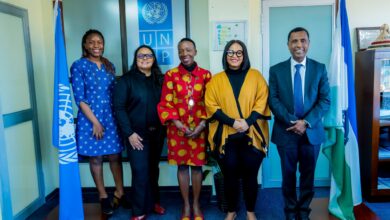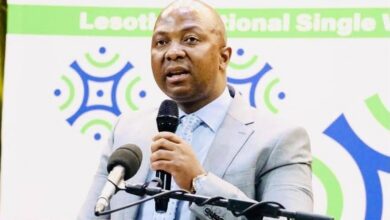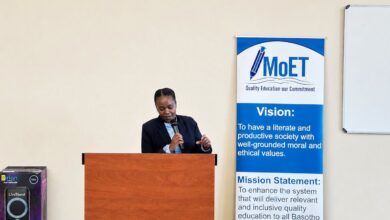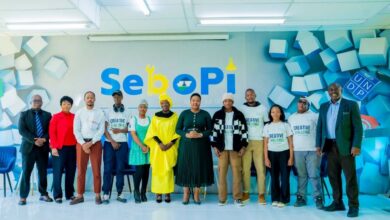
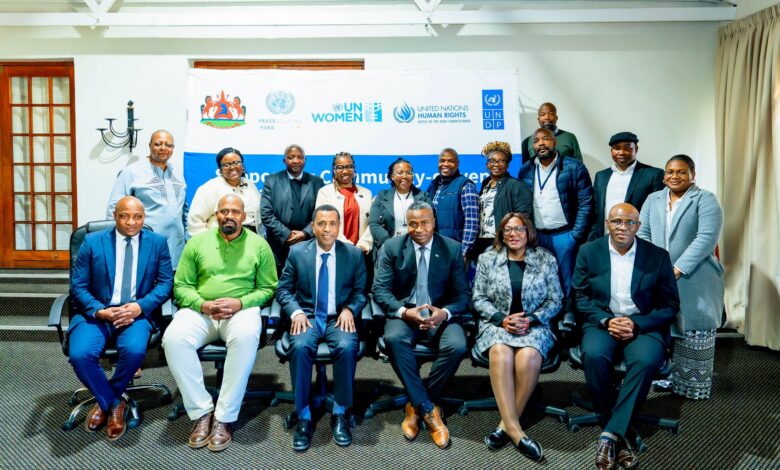
Lesotho is making progress in strengthening community peacebuilding and reducing violence through a Peacebuilding Fund-supported project focused on creating safer and more resilient communities. The project, titled Supporting Community-Driven Violence Reduction and Sustainable Peace in Lesotho, recently convened a Project Implementation Committee meeting to assess its progress and review the results achieved so far. The meeting was co-chaired by the Deputy Principal Secretary in the Ministry of Home Affairs and Police, Mr. Nkhotha Machachamise, and UNDP Deputy Resident Representative, Dr. Taye Amssalu. Discussions focused on whether the project is delivering its intended outcomes and how its interventions are contributing to sustainable peace across communities. The progress highlighted during the meeting suggests that the initiative is moving beyond activities and beginning to produce meaningful changes for communities and institutions.
The Project Implementation Committee meeting provided an opportunity for stakeholders to examine the work completed under the initiative and consider the extent to which its objectives are being achieved. Such reviews are important because peacebuilding projects require more than the completion of planned activities to create lasting change. They must strengthen institutions, improve relationships within communities and address conditions that can contribute to conflict and violence. The presentations showed that the project has made progress across several areas, including policing, community crime prevention, women’s participation, human rights and livelihood support. These areas are closely connected because safer communities require effective institutions, inclusive participation and economic opportunities that can reduce vulnerability.
One of the notable achievements highlighted during the meeting was the strengthened capacity of the Lesotho Mounted Police Service and Crime Prevention Committees to improve crime prevention efforts. Building the capacity of law enforcement and community-based structures can help communities respond more effectively to crime while strengthening cooperation between residents and authorities. Crime Prevention Committees can also provide an important link between communities and formal security institutions because they understand local concerns and can help identify problems at an early stage. Stronger capacity within these structures can contribute to more coordinated approaches to preventing violence rather than relying only on responses after incidents occur. The progress therefore reflects an effort to build a more proactive and community-focused approach to safety in Lesotho.
The project is also supporting greater participation by women through the establishment of Women’s Peace Clubs. These clubs provide a platform for women to become more actively involved in peacebuilding processes and community leadership. Women’s participation is important because women often have valuable perspectives on the causes and effects of conflict within families and communities. Creating opportunities for women to participate in decision-making can also help ensure that peacebuilding initiatives reflect the experiences and priorities of a wider section of society. The development of Women’s Peace Clubs therefore represents an important step towards making peacebuilding more inclusive and ensuring that women have a stronger voice in efforts to prevent violence.
Human rights capacity-building has formed another important part of the project’s work. The initiative has targeted a wide range of stakeholders with efforts designed to strengthen understanding and respect for human rights. This type of capacity-building can help ensure that people involved in policing, justice, community leadership and other areas understand their responsibilities when dealing with members of the public. Strong knowledge of human rights principles is particularly important when authorities interact with suspects and other people who come into contact with the justice system. Improving awareness among different stakeholders can contribute to fairer treatment, greater accountability and stronger public confidence in institutions.
The Project Implementation Committee also noted signs that the project is beginning to deliver tangible results at the outcome level. One of the clearest developments is increased respect for human rights, particularly the rights of suspects. Respect for the rights of suspects is a fundamental part of a fair justice system because people must receive lawful and dignified treatment regardless of the allegations against them. Improvements in this area can strengthen trust between communities and law enforcement institutions while reinforcing accountability within the criminal justice process. The reported progress suggests that the project’s human rights interventions are beginning to influence practices and attitudes rather than simply increasing awareness.
Greater involvement of women in leadership and peacebuilding roles was another outcome identified during the meeting. This development indicates that the project’s focus on women’s participation is beginning to translate into broader opportunities for women to contribute to decisions affecting their communities. Leadership participation can help women influence how communities respond to conflict, violence and other social challenges. It can also create positive examples for younger women and girls by demonstrating that peacebuilding and community leadership are roles in which they can participate meaningfully. Increasing women’s involvement can therefore strengthen both the inclusiveness and sustainability of local peacebuilding efforts.
The expansion of micro-grant support programmes has also contributed to the project’s progress. These programmes are improving livelihoods while reaching a growing number of young people, creating an important connection between economic opportunity and violence reduction. Young people who gain access to livelihood opportunities can develop greater financial independence and practical skills while becoming more connected to productive activities within their communities. Micro-grants can also help individuals and groups turn ideas into income-generating initiatives when they lack access to traditional sources of finance. Expanding these programmes can therefore support community resilience while addressing some of the economic pressures that can make young people more vulnerable to social instability.
The focus on young people is particularly significant because sustainable peace depends on creating opportunities for the next generation to participate positively in society. Economic exclusion and limited opportunities can contribute to frustration and vulnerability, while access to livelihoods can provide young people with practical alternatives and a stronger stake in their communities. The project’s growing reach through micro-grant programmes provides an avenue for supporting young people while strengthening household and community livelihoods. When economic support is combined with peacebuilding, human rights education and community participation, it can contribute to a more comprehensive approach to violence reduction. The project is therefore addressing several factors that influence peace and stability rather than treating violence as an issue that can be solved through security measures alone.
The involvement of the Ministry of Home Affairs and Police and the United Nations Development Programme also demonstrates the importance of cooperation between national institutions and international development partners. The co-chairing of the meeting by Mr. Nkhotha Machachamise and Dr. Taye Amssalu provided a platform for government and UNDP representatives to review progress and consider the project’s impact. Regular implementation reviews can help partners identify areas that require additional attention while ensuring that resources remain aligned with intended outcomes. They also create opportunities for stakeholders to share information about successes, challenges and lessons learned. Continued collaboration will be important as the project moves forward and seeks to build on the progress already achieved.
The progress recorded through the Supporting Community-Driven Violence Reduction and Sustainable Peace in Lesotho project shows that peacebuilding can involve a wide range of interventions working together. Strengthening the capacity of police and Crime Prevention Committees can improve community safety, while Women’s Peace Clubs can broaden participation in peacebuilding and leadership. Human rights capacity-building can promote fairer treatment and stronger accountability, while micro-grants can improve livelihoods and expand opportunities for young people. The emerging outcome-level results suggest that these interventions are beginning to influence how communities and institutions operate. Continued implementation, monitoring and collaboration will be essential to ensure that these gains develop into lasting improvements.
The Peacebuilding Fund-supported project is emerging as an important component of efforts to reduce violence and strengthen sustainable peace in Lesotho. The latest Project Implementation Committee meeting showed that the initiative has achieved meaningful progress in institutional capacity, women’s participation, human rights and livelihood support. Increased respect for the rights of suspects, greater involvement of women in leadership and peacebuilding and expanding opportunities for young people provide encouraging evidence that the project is beginning to produce tangible results. Sustaining these gains will require continued commitment from government institutions, communities, UNDP and other stakeholders involved in the initiative. By combining community participation, human rights, inclusive leadership, crime prevention and economic empowerment, Lesotho can strengthen the foundations needed for safer communities and more sustainable peace.
Join 'Lesotho News' WhatsApp Channel
Get breaking Lesotho news — delivered directly to your WhatsApp.
CLICK HERE TO JOIN