Quthing Students Gain Business Skills and Confidence Through SABA Competition


Students from several high schools in Quthing gathered at Masitise in Moyeni Constituency on Tuesday to compete in the Spelling a Business Africa (SABA) competition, an initiative designed to encourage young people to explore entrepreneurship and innovation. The event brought together 28 competitors from different schools and provided learners with an opportunity to demonstrate their business knowledge and ideas. Organised by SABA-Lesotho in collaboration with the Office of the District Administrator and the Department of Education and Training, the competition focused on developing an entrepreneurial mindset among young people. It also aimed to identify the top five students who will represent Quthing at the national competition scheduled for next month. The initiative highlights the growing importance of introducing entrepreneurship to learners as Lesotho looks for practical ways to address youth unemployment and expand opportunities for young people.
The competition was not only about identifying students with strong knowledge of business concepts, but also about encouraging learners to think differently about their future careers. Participants were challenged to demonstrate their understanding while gaining exposure to ideas that could help them develop businesses of their own. Such programmes can give students an early understanding of entrepreneurship, financial planning, innovation and the importance of identifying opportunities within their communities. By exposing learners to business concepts while they are still at school, initiatives such as SABA can help them develop practical skills that complement their formal education. The 28 students who participated therefore gained valuable experience regardless of whether they progressed to the national competition.
Thapelo Morethi from Mphaki High School emerged as the leading participant and received M500, securing his place among the students selected to represent the district. Rets’epile Phoka from Mopholosi High School followed in second place, while ‘Mamokete Letsie from Holy Trinity High School, Katleho Tlholoane from Masitise High School and Liteboho Pitiri from Holy Trinity High School also secured positions among the top five representatives. Although the information provided does not specify individual prizes for all five students, their selection gives them an important opportunity to take part in the national competition. Their achievement also reflects the level of interest and talent among learners from schools across Quthing. The students will now have an opportunity to build on their experience as they prepare to compete against representatives from other districts.
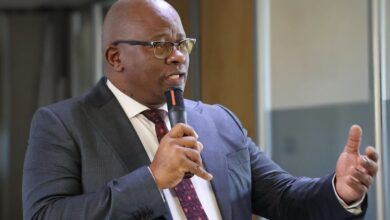
Addressing attendees at the event, Minister of Energy and Mining Mr. Lejone encouraged participants to make effective use of their business ideas and turn them into viable enterprises. He stressed that young people should not view employment only through the traditional route of searching for existing jobs. Instead, they should also consider how their skills and ideas can be used to create businesses that generate opportunities for themselves and others. This approach is particularly important in a country where young people face significant challenges when entering the labour market. Encouraging entrepreneurship can help learners develop the confidence to become opportunity creators while contributing to economic activity in their communities.
The Minister also highlighted agriculture as an area where schools can develop practical business and production skills. He encouraged schools to participate in agricultural production for both consumption and commercial purposes, allowing learners to gain experience in farming as an economic activity. School-based agricultural projects can teach students about production, budgeting, marketing and the management of resources. They can also help young people understand how agriculture can contribute to household income and local economic development. Greater agricultural production could further support efforts to reduce reliance on imported products by encouraging more local production and developing a generation of young people with practical commercial farming knowledge.
Minister of Environment and Forestry Mr. Thabo Mofosi also praised the SABA initiative for introducing learners to entrepreneurship at an early stage. He noted that developing an entrepreneurial mindset while students are still in school can contribute to long-term economic growth. Traditional classroom education provides important academic knowledge, but young people also need practical skills that help them solve problems, identify opportunities and manage projects. Entrepreneurship programmes can provide learners with experience in communicating ideas, thinking creatively and understanding how businesses operate. Mr. Mofosi called on teachers to support and sustain such programmes so that their benefits can continue beyond individual competitions.
Acting District Administrator Mr. Moses Mokati highlighted the wider economic value of business development during his remarks at the event. He said participation in business can contribute to economic growth, create employment opportunities and strengthen financial independence. For young people, developing entrepreneurial skills can provide an alternative pathway towards earning an income while also allowing them to address needs within their communities. Small businesses can contribute to local economies by providing products and services while creating opportunities for other people. Encouraging students to understand these connections can help them recognise entrepreneurship as a practical component of economic development rather than simply an alternative to formal employment.
Acting District Education Manager Mr. Tabane Mots’oene welcomed the competition while raising the importance of considering language barriers in educational and entrepreneurial programmes. He noted that some Basotho may struggle to express themselves confidently in English even when they have strong business ideas and a good understanding of entrepreneurship. Language should therefore be considered when designing programmes that aim to identify and develop young talent. Students should have opportunities to demonstrate their abilities without language difficulties becoming the main barrier to communicating their ideas. Addressing this issue could help ensure that competitions such as SABA identify learners based on their knowledge, creativity and entrepreneurial potential.
Mrs. Makananelo Kabeli, an accounting teacher from Masitise High School, said the competition had helped students gain confidence in their ability to start businesses. Confidence is an important part of entrepreneurship because young people need to believe that their ideas can be developed into practical ventures. Exposure to competitions and business discussions can help learners become more comfortable with presenting their ideas and responding to questions. It can also encourage them to think about how their proposed businesses could address challenges within their communities. The experience gained through SABA could therefore influence how participants approach entrepreneurship long after the competition has ended.
Business supporter Mr. Mokhethi Lets’ela also emphasised the importance of confidence in developing successful business ideas. He described confidence as a foundation for turning concepts into clear plans that can attract funding and support long-term growth. Having an idea is only the beginning of entrepreneurship, as business owners also need to understand their customers, develop realistic plans, manage finances and communicate their value to potential partners or investors. Teaching these principles to students can help them approach entrepreneurship with greater preparation and discipline. The SABA competition provides a practical environment where learners can begin developing these skills and learn how to communicate their ideas more effectively.
Participant ‘Mamokete Letsie expressed appreciation for the opportunity, saying the event motivated students to work towards turning their business ideas into reality. Her comments reflect the broader objective of the competition, which is to encourage young people to become more self-reliant and consider how they can contribute to solving unemployment. When students are encouraged to develop their own ideas, they can begin identifying problems in their communities that could become opportunities for products or services. This can strengthen their understanding of entrepreneurship while giving them a practical reason to develop their skills. The experience can also help learners see themselves as potential business owners and contributors to local economic development.
The initiative received additional support from Minister Thabo Mofosi, who is also the Member of Parliament for Moyeni Constituency. He donated M2,000 to be shared among the five students selected to represent Quthing at the national competition. The money is intended to help the students purchase data as they prepare for the national event, recognising the importance of internet access in modern learning and competition preparation. Mr. Mofosi also pledged to provide free accommodation for the students and their teachers while they prepare for the national competition. This support can reduce some of the practical challenges associated with participation and give the selected students a better opportunity to focus on their preparation.
The Quthing competition forms part of a wider programme being conducted across Lesotho’s districts, with similar competitions taking place in other areas. These district-level events are expected to conclude in Mafeteng next week before attention turns to the national stage. The nationwide programme gives more learners an opportunity to participate in activities that promote entrepreneurship, business knowledge and innovation. It also creates a platform for identifying young people with promising ideas and developing their confidence before they enter the workforce. By extending the competition across districts, SABA-Lesotho and its partners can reach students from different communities and encourage a broader culture of entrepreneurship among Basotho youth.
The SABA competition in Quthing demonstrates how schools, government institutions, teachers, business supporters and youth organisations can work together to prepare young people for economic opportunities. The event provided students with more than a competitive experience because it exposed them to entrepreneurship, confidence-building, business planning and practical economic thinking. The selection of five students to represent the district at the national competition gives them an opportunity to build on the knowledge they gained in Moyeni. Continued support from teachers, community leaders and business stakeholders will be important as the students prepare for the next stage. By encouraging learners to develop businesses, explore agriculture and turn ideas into practical enterprises, initiatives such as SABA can help cultivate a generation of young Basotho who are better equipped to create opportunities, strengthen local economies and contribute to reducing youth unemployment.
Join 'Lesotho News' WhatsApp Channel
Get breaking Lesotho news — delivered directly to your WhatsApp.
CLICK HERE TO JOIN