Lesotho Accelerates Digital Transformation as ETL and UNDP Deepen AI and Innovation Partnership

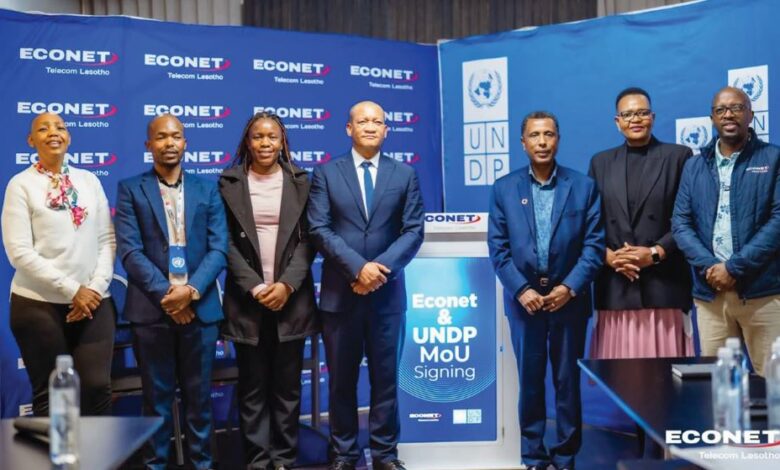
Lesotho’s ambition to build a digitally competitive economy has gained fresh momentum following the renewal of a strategic partnership between Econet Telecom Lesotho (ETL) and the United Nations Development Programme (UNDP). The agreement places artificial intelligence, digital infrastructure and innovation at the centre of a collaboration that has been developing since 2020 and expanded in 2022. The latest agreement represents a significant shift from earlier efforts that focused mainly on expanding digital inclusion and connectivity. It signals a broader ambition to position Lesotho to participate in the rapidly developing global artificial intelligence economy. For a country seeking to diversify beyond traditional sources of income, digital technology could provide new opportunities for businesses, workers, entrepreneurs and public institutions.
The agreement was signed by ETL Chief Executive Officer Dennis Plaatjies and UNDP Deputy Resident Representative Dr Taye Amssalu, bringing together private-sector technology investment and international development expertise. Their renewed cooperation reflects growing recognition that digital transformation requires more than access to mobile phones and internet services. Lesotho needs infrastructure capable of supporting advanced technologies, policies that encourage responsible innovation and a skilled workforce able to develop and use digital tools. The partnership therefore takes a broader approach by combining infrastructure development with skills development, research, entrepreneurship and policy support. Its success will depend on how effectively these different elements are translated into practical opportunities for people and businesses across the country.
The digital economy presents an important opportunity for Lesotho as the country looks for ways to reduce its dependence on traditional economic sectors. Textiles, remittances, water exports and customs revenue have historically played important roles in the economy, but these sources face different structural challenges and limitations. Digital services could create additional avenues for economic growth without requiring every new opportunity to depend on physical proximity to international markets. Technology-enabled businesses can potentially reach customers beyond Lesotho while skilled professionals can participate in global digital industries from within the country. However, turning that potential into sustained economic growth will require investment in infrastructure, education, regulation and entrepreneurship.
Plaatjies emphasised this changing role of telecommunications companies during the signing ceremony, arguing that connectivity providers can no longer define their purpose solely through communication services. He said connectivity now provides a foundation for innovation, economic growth and inclusive development. This reflects a broader transformation in the telecommunications industry, where networks increasingly support cloud computing, artificial intelligence, digital financial services, data-driven businesses and other technology applications. For Lesotho, having telecommunications infrastructure capable of supporting these developments could provide a foundation for wider digital economic activity. The challenge will be ensuring that the benefits of this infrastructure extend beyond large companies and reach entrepreneurs, communities, government institutions and smaller businesses.
ETL has reportedly spent several years modernising its network to prepare for advanced technologies such as artificial intelligence and cloud computing. Plaatjies said these investments could put Lesotho in a stronger position than many African countries were during earlier waves of technological development. Africa historically experienced delays in adopting major technologies, with electricity, fixed-line telecommunications and internet services taking significant periods to become widely available after their introduction elsewhere. Artificial intelligence could offer a different opportunity because countries that have previously lagged in technology adoption can now build modern systems without necessarily reproducing every stage of earlier technological development. Plaatjies described this as being ready from “year zero” because of the investments ETL has already made.
The company’s focus on artificial intelligence is also connected to wider developments within the ETL Group. Plaatjies disclosed that the group has secured access to AI computing capacity through a partnership with global chipmaker NVIDIA. ETL has also developed sovereign cloud and data infrastructure capable of hosting local datasets and artificial intelligence applications within Lesotho. Local data hosting could become increasingly important as governments and organisations pay greater attention to data sovereignty, cybersecurity and digital independence. Keeping certain datasets and applications within the country could also help create an environment where local developers can build solutions around national priorities and locally relevant information. These capabilities could give Lesotho an important foundation as demand for AI services grows.
Despite the emphasis on infrastructure, the partnership recognises that technology alone cannot deliver a successful digital transformation. Plaatjies stressed the importance of creating an appropriate policy environment and investing in people who can create, manage and innovate with emerging technologies. This is a critical consideration because countries can invest heavily in hardware and connectivity without developing enough skilled professionals to use those systems effectively. Lesotho will need specialists in areas such as artificial intelligence, software development, cybersecurity, cloud computing, data science and digital business. Building this human capital will take sustained investment in education, training and practical opportunities for young people.
One of the flagship initiatives under the renewed partnership is the planned establishment of a National AI Academy. The initiative could provide a structured platform for developing artificial intelligence skills and increasing awareness of how AI can be applied across different sectors. The partners also plan to expand the University Innovation Pod, known as UNIPOD, while supporting research collaborations and entrepreneurship programmes aimed at young innovators. These initiatives could help create stronger connections between universities, technology companies, researchers and emerging entrepreneurs. If implemented effectively, they could contribute to closing Lesotho’s digital skills gap while creating a pipeline of talent capable of developing technology businesses and knowledge-based industries.
The partnership also seeks to move artificial intelligence from discussion into practical applications that can address real economic and social challenges. Healthcare, agriculture, education and government have been identified as sectors where intelligent systems could improve productivity and service delivery. AI tools could potentially support healthcare professionals with diagnostic processes, help farmers access better agricultural information and assist education providers with digital learning solutions. Government agencies could also use automation and data analysis to improve administrative processes and make public services more efficient. For these technologies to have a meaningful impact, however, they will need to be designed around Lesotho’s specific conditions rather than simply imported from other markets.
Plaatjies indicated that ETL will introduce locally relevant AI-powered solutions developed specifically for African markets. This approach could be particularly important for addressing challenges that global technology products may not adequately understand. Local solutions can take account of language, infrastructure limitations, economic conditions, public service structures and the needs of small businesses. AI-powered tools could also help entrepreneurs automate routine tasks, improve customer services and make greater use of digital financial services. If local innovators become involved in developing these solutions, the technology sector could generate both employment and intellectual property within Lesotho.
The UNDP views the renewed partnership as part of its wider objective of using digital technologies to accelerate progress towards the Sustainable Development Goals. Dr Taye Amssalu described digital transformation as a powerful driver of inclusive development and said the partnership aims to support digital ecosystems that create jobs, strengthen institutions and improve public service delivery. The focus on inclusion is particularly important because digital transformation can widen inequality if access to technology and skills remains concentrated among a small section of society. Lesotho will therefore need to ensure that women, young people, rural communities, small businesses and other groups have opportunities to participate in the digital economy. A successful digital strategy must expand both access and the ability to use technology productively.
The agreement’s policy component could prove as important as its technological investments. ETL and UNDP have committed to supporting Lesotho’s emerging artificial intelligence policy framework while promoting ethical, secure and responsible AI adoption. Governments around the world are increasingly dealing with complex questions involving privacy, cybersecurity, algorithmic bias, transparency and accountability. Establishing clear rules at an early stage could help Lesotho attract responsible investment while giving businesses and citizens greater certainty about how AI systems should be developed and used. Strong governance will also be necessary to ensure that technological progress does not undermine individual rights or public trust.
The partnership illustrates a growing model of cooperation in which private-sector investment and development expertise are combined to support national development priorities. Instead of depending entirely on donor-funded programmes, governments and development organisations can work with technology companies that bring infrastructure, investment and implementation capacity. In this case, UNDP contributes policy expertise, institutional support and international development experience, while ETL provides commercial technology infrastructure and investment. This combination can help move digital initiatives from policy discussions towards implementation. It also creates an opportunity to align commercial innovation with broader national goals such as employment creation, improved public services and economic diversification.
Lesotho’s renewed partnership with ETL and UNDP therefore represents more than another agreement focused on digital connectivity. It reflects an attempt to build the foundations of a national digital economy in which artificial intelligence, cloud computing, research, entrepreneurship and digital skills work together. The country’s ability to benefit will depend on sustained investment, effective regulation, strong education systems and meaningful opportunities for local innovators to develop practical solutions. If the planned National AI Academy, UNIPOD expansion, research programmes and AI applications are successfully implemented, they could help create new economic opportunities while improving services in critical sectors. Lesotho now has an opportunity to approach artificial intelligence as a tool for economic diversification and inclusive development, but turning that opportunity into lasting progress will require continued collaboration between government, business, universities, development partners and communities.
Join 'Lesotho News' WhatsApp Channel
Get breaking Lesotho news — delivered directly to your WhatsApp.
CLICK HERE TO JOIN