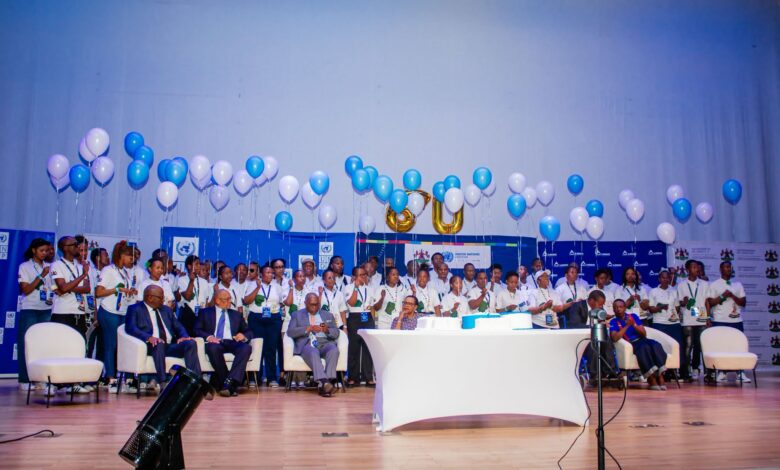
Lesotho’s young people are increasingly being recognised as active partners in shaping the country’s social and economic future, rather than simply as leaders who will take charge at some point in the distant future. UNDP Lesotho is placing youth empowerment at the centre of its development work by supporting entrepreneurship, innovation, digital skills and access to opportunities. The organisation argues that young Basotho need more than encouragement and recognition if they are to turn their ideas into sustainable enterprises and meaningful contributions to society. They also need access to finance, markets, mentorship, technology and institutions that are prepared to support their ambitions. This approach reflects a broader call for development systems to move from simply supporting young people to creating practical pathways through which they can lead, create and thrive.
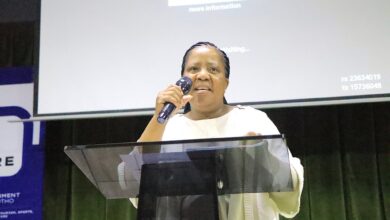
In her International Youth Day reflection, UNDP Lesotho Resident Representative Dr Jacqueline Olweya shared experiences from more than two decades of working with young people across different African countries and development settings. One experience involved a group of young entrepreneurs in Lesotho who demonstrated enthusiasm, determination and confidence in their business ideas. Among them was a young woman working to grow a small enterprise despite facing limited access to affordable finance, reliable markets, technical support and mentorship. Her message was simple, as she explained that young people were not asking others to carry them but were asking for opportunities and institutions to open doors. Her experience illustrates a wider challenge facing young entrepreneurs who have the motivation and ideas to succeed but encounter structural barriers that limit their ability to turn those ideas into sustainable businesses.
Dr Olweya’s reflection challenges the tendency to describe young people as the leaders of tomorrow while overlooking their contributions today. Young Basotho are already building businesses, developing innovative ideas, participating in communities and looking for ways to contribute to national development. The issue is therefore not whether young people have ideas or a voice, but whether institutions are prepared to listen and respond to them. Youth empowerment becomes meaningful when young people’s ideas influence policies, programmes, budgets and decisions that affect their lives. It also requires a shift from viewing young people primarily as beneficiaries towards recognising them as partners and builders of their communities and economies.
The distinction between participation and power is particularly important in discussions about youth empowerment. Inviting young people to conferences, consultations and public events does not automatically give them influence over decisions. A youth representative can sit in a meeting and speak without having any meaningful ability to affect the final outcome. Similarly, consultations can become symbolic exercises if there are no resources, accountability mechanisms or processes for incorporating youth recommendations into policy and implementation. Genuine participation requires young people to have defined roles, access to information, opportunities to influence decisions and mechanisms that show how their contributions affect outcomes.
Dr Olweya’s experiences across Africa demonstrate that the barriers facing young people vary according to their circumstances and communities. Her earlier work in Kenya exposed her to issues involving education, gender, poverty reduction and community development. These experiences showed that a young person’s future can be influenced by factors that arise long before they enter the labour market. Access to quality education, family resources, safety, confidence, services and opportunities can all affect whether a young person is able to develop their potential. This means youth empowerment should not begin only when a young person becomes unemployed or starts looking for business finance, but should be built through education, dignity, safety, learning and agency from an early stage.
Her experiences in Somalia provided another perspective on youth leadership, particularly in communities affected by conflict and institutional fragility. Young people who had grown up in difficult circumstances were still seeking ways to contribute to peace, livelihoods, civic processes and community recovery. Their experiences demonstrated that young people in crisis settings should not be viewed only through the lens of vulnerability. They can also become important social, economic and civic actors who contribute to rebuilding institutions and strengthening communities. Excluding them from recovery processes can create a generation that feels disconnected from institutions, while meaningful participation can allow young people to become partners in reconciliation and national renewal.
In Lesotho, young Basotho are calling for practical opportunities that can help them translate ambition into economic activity. These opportunities include access to digital skills, entrepreneurship support, mentorship, finance and markets. Young people can have strong business ideas but still struggle to obtain capital, find customers or access the technical knowledge required to operate and grow their enterprises. The policy environment also matters because regulations, procurement systems, digital infrastructure and financial services can either support or restrict entrepreneurship. Creating an environment where young people can build sustainable businesses therefore requires cooperation between government, development organisations, financial institutions, businesses, educational institutions and young people themselves.
Youth empowerment should also be treated as an economic policy rather than a charitable activity. When young people cannot access productive employment, finance, technology, markets or value chains, countries lose potential innovation, business activity, tax revenue and economic growth. Young entrepreneurs who receive appropriate support can create products, services and employment opportunities that benefit more than themselves. Supporting young people can also strengthen social cohesion by giving them constructive economic opportunities and a greater stake in their communities. For Lesotho, where economic diversification remains an important development challenge, expanding opportunities for young entrepreneurs could help create new sources of economic activity.
The gender dimension of youth empowerment is equally important. Young women can face additional barriers involving unpaid care work, personal safety, access to finance, digital exclusion, social expectations and limited representation in leadership positions. These challenges can restrict their ability to participate fully in education, employment, entrepreneurship and public decision-making. Youth empowerment programmes that fail to address these barriers risk benefiting young people unevenly and leaving many young women behind. Supporting young women through education, financing, mentorship, digital access and leadership opportunities can strengthen households, businesses and communities while contributing to broader economic development.
Digital inclusion is becoming another critical part of youth empowerment as technology reshapes education, employment and entrepreneurship. Digital skills can help young people access online learning, digital marketplaces, remote work and technology-based business opportunities. Artificial intelligence, mobile technology, innovation hubs and online platforms could create new pathways for young people to participate in the economy. However, digital transformation will not automatically benefit everyone because affordability, connectivity, access to devices, digital literacy and online safety remain important considerations. Rural youth, young women, persons with disabilities and young people outside formal education or employment need deliberate support if digital transformation is to reduce rather than reproduce existing inequalities.
Mentorship also has an important role in helping young people navigate the transition from ideas to implementation. A mentor can provide more than technical advice by helping a young person build confidence, develop discipline, understand professional networks and make informed decisions. Experienced leaders and professionals can help young entrepreneurs avoid common mistakes while introducing them to potential partners, customers and investors. For this reason, mentorship should be integrated into youth development programmes rather than treated as an optional addition. Strong mentorship networks can also encourage intergenerational cooperation by allowing experienced professionals to transfer knowledge while creating space for younger people to take on leadership responsibilities.
Dr Olweya’s proposed approach calls for a stronger social compact between institutions and young people across Africa. Such a compact would need to connect education and skills development with emerging opportunities in digital technology, green jobs, entrepreneurship, creative industries and local economies. It would also need to expand access to finance and markets through grants, patient capital, procurement opportunities, incubation programmes and support for informal businesses seeking to grow. Youth participation in governance should become more meaningful by giving young people opportunities to influence budgets, policies, peacebuilding, climate action and accountability processes. At the same time, experienced leaders should actively create opportunities for young people to lead now rather than continually preparing them for a future that may remain out of reach.
The message from UNDP Lesotho is ultimately about changing how society understands young people and their role in development. Young people do not need to be treated as problems waiting to be solved or as passive recipients of programmes designed by others. They already possess ideas, skills, determination and an understanding of the challenges affecting their communities. What they need is an environment that allows those qualities to produce tangible results. Lesotho’s future development will depend in part on whether institutions can remove barriers, share decision-making power and create practical pathways through which young Basotho can turn their potential into sustainable economic and social impact. Youth empowerment therefore needs to move beyond speeches, workshops and symbolic participation towards long-term investment, meaningful inclusion and shared leadership.
Join 'Lesotho News' WhatsApp Channel
Get breaking Lesotho news — delivered directly to your WhatsApp.
CLICK HERE TO JOIN