Lesotho Strengthens AfCFTA Readiness as Five-Day State of Play Workshop Begins in Maseru

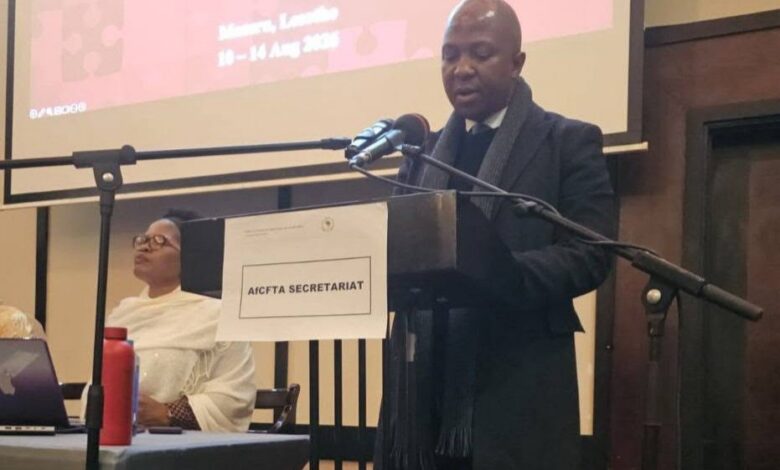
The Honourable Minister of Trade, Industry and Business Development, Hon. Motlatsi Maqelepo, has opened the African Continental Free Trade Area (AfCFTA) State of Play Workshop in Maseru, placing Lesotho’s participation in Africa’s single market at the centre of discussions this week. The five-day workshop is taking place from 10 to 14 August 2026 and brings together government officials, business representatives and other relevant stakeholders. The event provides an opportunity to assess how far Lesotho has progressed in implementing the AfCFTA Agreement while identifying areas that still require attention. Minister Maqelepo welcomed the AfCFTA Secretariat delegation to Lesotho and expressed appreciation for its support in strengthening the country’s capacity to implement the agreement. The workshop comes at an important time as Lesotho seeks to position local businesses to benefit from increased access to markets across the African continent.
Minister Maqelepo highlighted the importance of AfCFTA as an opportunity for Lesotho to expand its markets and increase exports. For a small economy such as Lesotho, access to a larger continental market can create opportunities for businesses to reach customers beyond the domestic market. The agreement can also support efforts to diversify the country’s exports and reduce some of the limitations associated with operating within a relatively small consumer base. Lesotho can potentially benefit from stronger trade relationships with other African countries if local producers can meet market requirements and compete effectively. The Minister’s focus on market expansion therefore reflects the need for Lesotho to turn continental trade opportunities into practical benefits for local businesses and the wider economy.
The AfCFTA also presents an opportunity to strengthen local manufacturing and value addition in Lesotho. Instead of relying primarily on the export of products with limited processing, value addition can allow businesses to produce goods that generate greater economic value within the country. Developing manufacturing capacity can also create demand for local suppliers, technical skills and other services connected to production. Increased industrial activity has the potential to support employment while contributing to a broader and more diversified economy. However, achieving these outcomes will require businesses to invest in productivity, quality, technology, skills and production capacity so that they can meet the demands of the continental market.
A key message from Minister Maqelepo was the need to ensure that Basotho businesses are adequately prepared to compete across Africa. Micro, small and medium enterprises, commonly referred to as MSMEs, form an important part of the business environment and need appropriate support to take advantage of new trading opportunities. Many smaller businesses may face challenges related to finance, production capacity, product standards, packaging, logistics and access to information about foreign markets. Addressing these challenges can help businesses move from simply having access to markets to actually being able to supply those markets consistently. Preparation will therefore be essential if Lesotho wants AfCFTA to translate into meaningful opportunities for local entrepreneurs and manufacturers.
Quality and competitiveness will remain critical as Basotho businesses seek to participate in the continental market. Access to a larger market does not automatically guarantee increased exports because businesses still need to offer products that meet customer expectations and applicable standards. Manufacturers may need to improve production processes, packaging, branding and quality control to compete with established producers from other African countries. Businesses will also need to understand consumer preferences and identify products where Lesotho has a realistic competitive advantage. Building this capacity can help local companies move beyond the domestic market and develop sustainable export opportunities under AfCFTA.
The five-day State of Play Workshop provides a platform to examine the practical progress Lesotho has made in implementing the agreement. Stakeholders will assess existing measures, consider areas where implementation remains incomplete and identify gaps that could limit the country’s participation in the African single market. Such discussions can help government institutions understand which policies, systems and capabilities require further development. They can also create opportunities for different stakeholders to coordinate their efforts rather than addressing trade challenges separately. A clear assessment of the current situation can provide a stronger basis for developing practical measures to improve Lesotho’s readiness for continental trade.
The presence of the AfCFTA Secretariat delegation is also significant because technical support and institutional capacity are important components of successful implementation. The AfCFTA is a large and complex trade framework that requires countries to align various areas of policy, administration and business support. Lesotho needs institutions with the knowledge and resources to help businesses understand the rules and opportunities associated with continental trade. Collaboration with the AfCFTA Secretariat can provide valuable guidance as the country works to strengthen its implementation processes. The Minister’s appreciation for the delegation’s support highlights the importance of cooperation between Lesotho and continental institutions as the agreement moves forward.
The workshop also creates an opportunity to place MSMEs and manufacturers at the centre of Lesotho’s trade strategy. Larger businesses may have more resources to investigate new markets, meet regulatory requirements and manage export logistics, while smaller enterprises can face greater barriers. Providing targeted information, training and support can help MSMEs understand what is required to sell their products across borders. Access to finance will also remain important because businesses may need capital to expand production, purchase equipment, improve packaging or meet certification requirements. If these challenges receive adequate attention, more Basotho businesses could be positioned to take advantage of the opportunities created by the continental market.
Employment creation is another important reason for Lesotho to pursue stronger participation in AfCFTA. Expanded exports can encourage businesses to increase production when they gain access to new customers and markets. Higher production can create demand for workers across manufacturing, agriculture, logistics, packaging, distribution and related services. Local value addition can further increase the amount of economic activity generated within Lesotho rather than exporting products in less processed forms. The potential employment benefits will depend on the ability of businesses to grow sustainably, making investment in skills and productive capacity an important part of the country’s AfCFTA strategy.
The Maseru workshop therefore represents more than a review of trade policies because it provides an opportunity to connect continental ambitions with the practical needs of Basotho businesses. Lesotho must identify the sectors and products that can compete effectively while addressing the constraints that prevent businesses from scaling up. Government agencies, manufacturers, MSMEs and other stakeholders will need to work together to improve productivity, quality, access to finance and export readiness. Stronger coordination can help ensure that AfCFTA implementation supports businesses rather than remaining primarily a government-level process. The discussions taking place during the five-day workshop can contribute to a clearer roadmap for strengthening Lesotho’s participation in the African single market.
The opening of the AfCFTA State of Play Workshop by Hon. Motlatsi Maqelepo signals Lesotho’s continued focus on making continental trade opportunities more accessible to local businesses. The five-day programme provides a valuable opportunity to assess progress, identify implementation gaps and strengthen the capacity required for effective participation in AfCFTA. Lesotho’s ability to benefit from the agreement will depend heavily on whether Basotho businesses can produce quality, competitive products and scale their operations to serve larger markets. Supporting MSMEs and manufacturers through skills development, financing, market information and improved production capacity will therefore remain essential. If these efforts are sustained, AfCFTA can provide Lesotho with a stronger platform for export growth, local manufacturing, value addition and employment creation across the country.
Join 'Lesotho News' WhatsApp Channel
Get breaking Lesotho news — delivered directly to your WhatsApp.
CLICK HERE TO JOIN