Lesotho Strengthens Development Strategy Through South-South Learning Mission to The Gambia


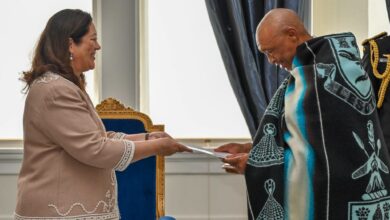
Lesotho has concluded a South-South learning mission to The Gambia, creating an opportunity for the country to gain practical lessons on development financing, public-sector delivery and innovative approaches to advancing national development priorities. The mission brought together a parliamentary delegation from Lesotho and Gambian authorities to exchange experiences on strategies that can support more effective development outcomes. The delegation was led by the Right Honourable Speaker of the National Assembly, Hon. Tlohang Sekhamane, who headed discussions focused on strengthening government-led development efforts. The engagement reflects Lesotho’s interest in learning from African countries that have developed approaches to addressing common challenges in financing and delivering development programmes. It also highlights the value of direct knowledge sharing between African institutions as countries seek practical solutions that respond to their own national circumstances.
A central focus of the mission was The Gambia’s Government Development Financing (GDF) model, which provided an important area for comparative learning. The model offers lessons on how governments can approach the mobilisation and management of financing for development priorities. For Lesotho, understanding how development financing is structured, coordinated and directed towards national priorities can help inform efforts to improve the effectiveness of public investments. Financing remains a critical part of development because ambitious policies and programmes require sustainable resources to move from planning to implementation. The exchange therefore gave the Lesotho delegation an opportunity to examine how financing mechanisms can be connected more effectively to government priorities and measurable development outcomes.
The delegation also studied the implementation of The Gambia’s Programme for Accelerated Community Development (PACD), which is supported through a partnership with the United Nations Development Programme. The programme provided Lesotho with another example of how national development priorities can be translated into interventions that directly benefit communities. Community-level development is particularly important because the success of government policies is ultimately reflected in the conditions experienced by people in their everyday lives. Lessons from the Gambian experience can help Lesotho consider how government-led programmes can be better coordinated and delivered closer to communities. The exchange also demonstrated the importance of partnerships that combine government leadership with technical and development support.
One of the key lessons from the mission was the importance of mobilising development financing in a way that supports clearly defined national priorities. Countries often face competing demands for limited public resources, making effective planning and prioritisation essential. Development financing must therefore be managed carefully to ensure that available resources contribute to projects and programmes with meaningful and sustainable outcomes. Lesotho can use the experience gained in The Gambia to reflect on ways of strengthening its own approaches to securing and managing resources for development. Better alignment between financing, planning and implementation can help improve the efficiency of public spending and increase the impact of government programmes.
The mission also placed strong attention on public-sector delivery, an area that has a direct influence on whether development policies achieve their intended results. Effective public-sector delivery requires more than the development of policies and strategic plans. Government institutions must have the systems, resources, coordination and accountability mechanisms needed to turn those plans into practical programmes. The Gambian experience gave the Lesotho delegation an opportunity to examine approaches that can strengthen government-led implementation. These lessons can contribute to ongoing efforts to improve how public institutions deliver services and development projects to communities across Lesotho.
The community development component of the exchange is particularly relevant because national development priorities need to produce visible benefits at local level. Infrastructure, social services, economic opportunities and other development interventions can have a greater impact when they respond directly to the needs of communities. The PACD experience provided an opportunity for Lesotho to examine how community-focused programmes can be organised and implemented through government leadership. Understanding how local priorities are identified and connected to national development planning can help strengthen the delivery of development interventions. It can also encourage greater attention to measurable outcomes that demonstrate how public investments improve people’s lives.
During the mission, the Lesotho delegation also engaged with senior Gambian Government officials, allowing both sides to discuss their respective development experiences and institutional approaches. These engagements created space for open discussions about the challenges governments face when implementing national priorities and mobilising resources. Lesotho expressed appreciation for the warm hospitality extended by The Gambia and for the openness with which Gambian authorities shared their experiences. Such openness is important to South-South cooperation because countries can learn from both successful approaches and the challenges encountered during implementation. The discussions also helped strengthen institutional relationships between the two countries.
South-South cooperation provides African countries with an opportunity to develop and share solutions that are grounded in similar economic, social and institutional realities. While each country has its own circumstances, many African nations face common challenges involving development financing, public-sector capacity, service delivery and economic transformation. Direct exchanges can help countries identify approaches that have already been tested in comparable environments. This can make learning more practical because officials can examine how policies and programmes work in real settings rather than relying only on theoretical models. The Lesotho and The Gambia mission demonstrates how such cooperation can support knowledge transfer while strengthening relationships between African institutions.
The mission also reinforces the role that parliamentary institutions can play in national development discussions. The participation of the Speaker of the National Assembly and a parliamentary delegation highlights the importance of understanding how development financing and government programmes operate. Parliament has an important role in oversight, policy discussions and ensuring that national priorities are supported by appropriate public institutions and resources. Exposure to experiences from other countries can contribute to informed discussions about development approaches and public-sector performance. It can also strengthen the ability of lawmakers to engage with complex issues surrounding financing, implementation and community development.
The lessons gathered from The Gambia can provide useful reference points as Lesotho considers ways to strengthen its own development financing and public-sector delivery systems. The value of the mission will ultimately depend on how effectively the knowledge gained is assessed, adapted and applied to Lesotho’s national circumstances. Not every approach used in The Gambia will necessarily be suitable for direct adoption, but the underlying principles can inform local policy development and institutional improvements. The focus on financing, government-led delivery and community benefits provides a broad framework for identifying areas where Lesotho can strengthen implementation. Continued engagement between the two countries could also create opportunities for further technical exchanges and collaboration.
The conclusion of the South-South learning mission marks another step in Lesotho’s efforts to learn from African experiences and strengthen its approach to national development. The delegation led by Hon. Tlohang Sekhamane gained valuable insights into the Government Development Financing model and The Gambia’s Programme for Accelerated Community Development, supported by UNDP. These experiences can help Lesotho examine new ways of mobilising development financing, improving public-sector delivery and ensuring that national priorities translate into tangible benefits for communities. The mission also strengthened the bonds of friendship between Lesotho and The Gambia while demonstrating the practical value of South-South cooperation. As both countries continue working towards inclusive development, knowledge sharing and African-led solutions can remain important tools for addressing shared challenges and improving outcomes for their citizens.
Join 'Lesotho News' WhatsApp Channel
Get breaking Lesotho news — delivered directly to your WhatsApp.
CLICK HERE TO JOIN