Malealea Zone Road Project Moves Closer to Construction as Lesotho Government Advances 154km Upgrade

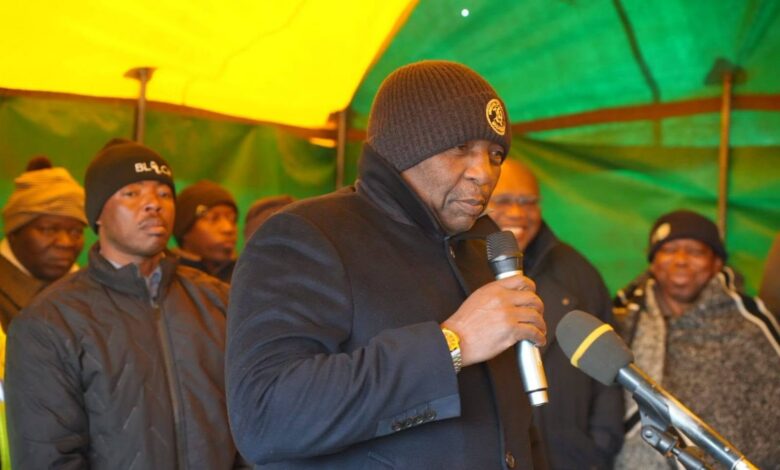
The Lesotho government has taken an important step towards improving road infrastructure and connectivity in the southern and central parts of the country with the start of the process for the construction and upgrading of the Malealea Zone Road. The Right Honourable Prime Minister Samuel Ntsokoane Matekane, accompanied by the Minister of Transport and Public Works, Honourable Matjato Moteane, witnessed the beginning of the process at Mpatana, Ha-Raleqheka. The development marks a significant milestone for communities that have long relied on gravel roads to access essential services, markets and economic opportunities. The planned 154-kilometre road is expected to strengthen connections between communities in Maseru, Mafeteng and Mohale’s Hoek districts. It also reflects the government’s broader focus on improving transport infrastructure as a foundation for economic development and better access to services.
The Malealea Zone Road will stretch across a number of communities, creating a vital transport link through areas that play an important role in local economic and social activity. The planned route will run from around Ha-Rantšitse through Moitšupeli, Ha-Mosala, Malealea Lodge, Ha-Mokhothu, ’Masemousu, Ha-Tlali, Ha-Mpalipali, Ha-Sekhaupane and Ha-Thakabanna. These communities depend on reliable roads for the movement of residents, agricultural products, commercial goods and other services. Improving the road could reduce some of the difficulties associated with travelling on gravel routes, particularly during periods of heavy rain and other challenging weather conditions. A more reliable road network can also make it easier for residents to reach schools, healthcare facilities, businesses and government services.
The planned upgrade will transform the road from gravel to a tarred surface, representing a major improvement in the quality and reliability of the route. A tarred road can provide safer and more efficient travel while reducing the wear and tear experienced by vehicles operating on rough gravel surfaces. For communities along the route, improved road conditions could make transportation more predictable and support greater movement between villages and nearby towns. Better connectivity can also help local businesses reach customers and suppliers more efficiently. The project therefore has the potential to deliver benefits that extend beyond transportation and contribute to wider economic activity across the three districts.
Tourism is another area that could benefit from the Malealea Zone Road upgrade, particularly because the route includes Malealea Lodge and surrounding communities. Malealea is known for its scenic mountain environment and tourism activities, making accessibility an important factor in attracting and accommodating visitors. Better road infrastructure could make travel to the area easier for tourists while also improving conditions for businesses that provide accommodation, food, transport and other tourism-related services. Increased visitor movement could create opportunities for local entrepreneurs and communities to participate more actively in the tourism economy. The road could therefore serve as both a transport investment and an important support mechanism for the development of the local tourism sector.
The project is not yet at the construction stage, as it is currently undergoing a feasibility study. This study will play an important role in determining the technical, financial and practical requirements for the planned road upgrade. The findings are expected to guide detailed planning and help establish how the project should be implemented. Feasibility studies are particularly important for large infrastructure projects because they allow authorities to assess factors such as road conditions, construction requirements, costs and potential challenges before major construction work begins. The study will therefore provide an important foundation for decisions concerning the eventual implementation of the Malealea Zone Road project.
The government is also expected to include the Malealea Zone Road project in the National Budget for the next financial year. Inclusion in the budget would provide an important step towards securing the financial framework required to move from planning to implementation. Once the necessary processes have been completed, the project could progress through the stages required before construction begins. The timing of the project will depend on the outcome of the feasibility study, budgetary decisions and other implementation requirements. Communities along the proposed route will therefore be watching closely as the government moves through these stages.
The involvement of Prime Minister Samuel Ntsokoane Matekane and Minister Matjato Moteane in witnessing the beginning of the process highlights the importance attached to the project by the government. Transport infrastructure remains critical to Lesotho because the country’s mountainous terrain and dispersed settlements can make travel challenging in many areas. Strategic road investments can improve access while supporting agriculture, tourism, trade and local economic development. The Malealea Zone Road has the potential to connect communities that have historically faced limitations because of road conditions. Its 154-kilometre route also means that the project’s impact could extend across a substantial geographic area covering parts of three districts.
For residents, one of the most important potential benefits will be improved mobility. Better roads can make it easier for people to travel for work, education, healthcare and commercial activities. Farmers and other producers could also benefit from more reliable transport routes when taking products to markets or bringing supplies back to their communities. Businesses may find it easier to move goods and services along the corridor, while transport operators could potentially experience lower vehicle maintenance costs as road conditions improve. These changes could strengthen economic links between communities and create new opportunities for people living along the route.
The Malealea Zone Road project also demonstrates how infrastructure development can have a long-term impact when it connects communities with economic centres and tourist destinations. A road is not only a physical connection between two locations, but also an important part of the system that allows people, goods and services to move efficiently. By improving the route between communities in Maseru, Mafeteng and Mohale’s Hoek, the project could contribute to stronger regional integration. The benefits will depend on effective planning, adequate funding and quality construction once implementation begins. Continued engagement between government authorities and affected communities will also be important throughout the development process.
The beginning of the feasibility process is therefore an important development for the Malealea Zone and the communities along the proposed 154-kilometre route. The planned conversion from gravel to tar could improve transport, strengthen tourism and support economic activity across Maseru, Mafeteng and Mohale’s Hoek districts. The next major steps will involve completing the feasibility study, finalising detailed plans and securing the required budget for implementation. If these processes progress as expected, the Malealea Zone Road could become a major infrastructure investment that improves daily life and expands economic opportunities for communities across the route. The project ultimately represents an important step towards building a more connected Lesotho where reliable road infrastructure supports people, businesses and sustainable development.
Join 'Lesotho News' WhatsApp Channel
Get breaking Lesotho news — delivered directly to your WhatsApp.
CLICK HERE TO JOIN