WHO and LeBoHA Strengthen Partnership to Advance Medical Education and Establish Lesotho’s First Medical School

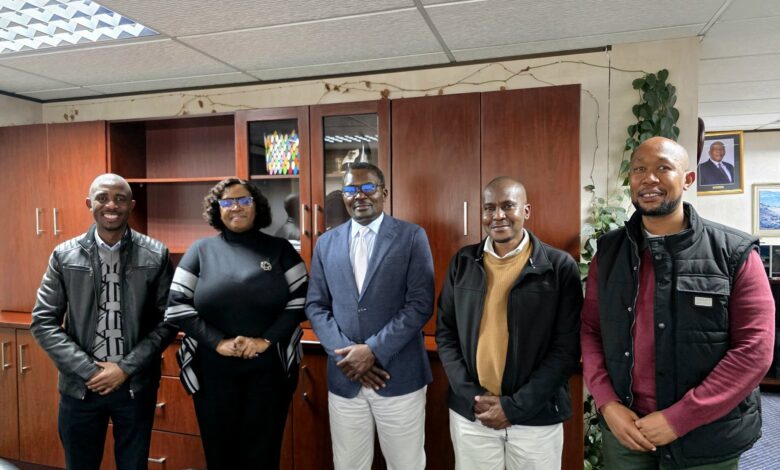
Lesotho is taking important steps toward strengthening its healthcare system through greater investment in medical education and workforce development. A significant milestone in this journey was marked on Tuesday, 21 July, when the World Health Organization (WHO) Representative in Lesotho, Dr. Innocent Nuwagira, and senior members of the WHO team met with the Executive Director of the Lesotho Boston Health Alliance (LeBoHA), Dr. Elizabeth Nkabane-Nkholongo, and her delegation at the WHO offices in Maseru. The high-level meeting focused on building stronger collaboration to improve healthcare delivery by developing the country’s medical workforce. Central to the discussions was the long-term vision of establishing a medical school in Lesotho, a project expected to transform healthcare education and services across the nation. The meeting reflected a shared commitment to ensuring that Basotho communities have greater access to qualified healthcare professionals and quality medical services in the years ahead.
During the discussions, both organizations explored practical opportunities to strengthen medical education and expand health workforce development in Lesotho. They agreed that investing in the education, training, and retention of healthcare professionals is essential to addressing current and future health challenges facing the country. Developing a stronger local workforce would help reduce dependence on foreign-trained medical professionals while ensuring that healthcare workers understand the unique needs of Basotho communities. The participants also recognized that increasing the number of locally trained doctors and healthcare specialists would contribute significantly to improving healthcare access in both urban and rural areas. These efforts are closely aligned with Lesotho’s broader objective of achieving Universal Health Coverage by ensuring that quality healthcare services are available to everyone.
One of the key highlights of the meeting was the discussion surrounding the establishment of Lesotho’s first medical school. The proposed institution represents a major investment in the country’s future and has the potential to reshape the healthcare landscape for generations. Training medical professionals within Lesotho would create opportunities for students who wish to pursue medicine without leaving the country, while also encouraging graduates to remain and serve local communities after completing their studies. A locally based medical school would also strengthen research capacity, promote innovation in healthcare, and enhance collaboration between educational institutions and healthcare facilities. By developing medical expertise at home, Lesotho would be better positioned to respond to public health emergencies and evolving healthcare demands.
Dr. Innocent Nuwagira praised the efforts already made by the Government of Lesotho and its development partners in moving the medical school project forward. He described the planned institution as a transformative investment that could significantly strengthen the country’s healthcare system by producing more qualified healthcare professionals. According to Dr. Nuwagira, locally training doctors would improve access to quality healthcare while helping build a stronger and more resilient national health system. He emphasized that achieving such an ambitious goal will require strategic investment, effective planning, and sustained commitment from every stakeholder involved. He also stressed that collaboration between government institutions, development partners, educational organizations, and healthcare providers will be essential for turning the vision into reality.
The Executive Director of LeBoHA, Dr. Elizabeth Nkabane-Nkholongo, provided an overview of her organization’s ongoing contributions to improving Lesotho’s healthcare system. She highlighted LeBoHA’s extensive work in medical education, health research, clinical training, and capacity building, all of which have helped strengthen healthcare services throughout the country. Among the organization’s most notable achievements is its Centre of Excellence in Leribe, which has become an important hub for training family medicine specialists and primary healthcare clinicians. These initiatives have already demonstrated the value of investing in local healthcare education and professional development. The organization’s experience places it in a strong position to support the successful establishment and operation of the country’s future medical school.
Dr. Nkabane-Nkholongo also shared important progress regarding the planned medical school, which is expected to welcome its first cohort of students in July 2027. The institution aims to increase the number of Basotho doctors trained within the country, creating a sustainable pipeline of healthcare professionals equipped to serve communities nationwide. Beyond producing more doctors, the medical school is expected to improve healthcare quality by integrating education, clinical practice, and research into one comprehensive system. Graduates will be encouraged to serve in underserved communities where shortages of medical professionals continue to affect healthcare delivery. The long-term impact of the project is expected to strengthen the national health workforce while improving health outcomes for future generations.
The WHO Representative reaffirmed the organization’s continued commitment to supporting Lesotho’s national health priorities through close collaboration with LeBoHA and the Government of Lesotho. He emphasized WHO’s readiness to assist with strengthening health systems, expanding the healthcare workforce, and accelerating progress toward Universal Health Coverage. Dr. Nuwagira also encouraged stronger cooperation among government ministries, universities, healthcare institutions, development agencies, and members of the Basotho diaspora. He noted that each partner has an important role to play in building sustainable pathways for advancing medical education and developing a skilled health workforce. Such broad collaboration will help ensure that healthcare improvements remain sustainable and responsive to the country’s evolving needs.
The meeting between WHO and LeBoHA highlights a shared vision for a healthier and more resilient Lesotho built on strong partnerships and strategic investment in human capital. The planned establishment of the country’s first medical school represents more than an educational achievement, as it has the potential to transform healthcare delivery by producing skilled medical professionals who understand local health challenges. Combined with ongoing investments in research, clinical training, and workforce development, the initiative could significantly strengthen Lesotho’s healthcare system and improve access to quality care for communities across the nation. Continued cooperation between WHO, LeBoHA, the Government of Lesotho, development partners, and the wider health sector will be critical in bringing this vision to life. As preparations continue toward the anticipated opening of the medical school in 2027, Lesotho is positioning itself to build a stronger, more self-sufficient health workforce capable of delivering better healthcare outcomes for generations to come.
Join 'Lesotho News' WhatsApp Channel
Get breaking Lesotho news — delivered directly to your WhatsApp.
CLICK HERE TO JOIN