European Union and Lesotho Strengthen Partnership for Environmental Protection and Climate Resilience

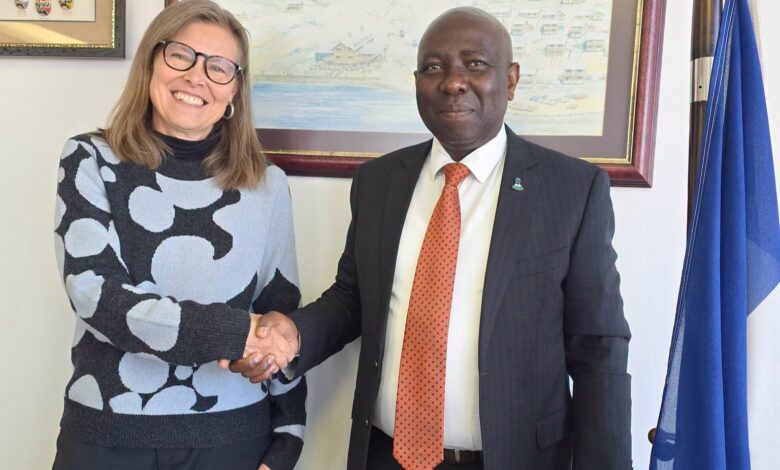
Lesotho and the European Union continue to strengthen their partnership through a shared commitment to environmental protection, climate resilience and sustainable development. This cooperation was reinforced during a courtesy meeting between European Union Ambassador to Lesotho, H.E. Mette Sunnergren, and the Minister of Environment and Forestry, Hon. Thabo Mofosi. The meeting reflected the growing importance of international partnerships in addressing climate change, protecting natural resources and supporting communities that depend on healthy ecosystems. Both parties reaffirmed their commitment to building a greener and more climate-resilient future for the Kingdom of Lesotho. Their discussions highlighted the need for coordinated action to address environmental challenges while creating lasting benefits for present and future generations.
Environmental conservation has become one of Lesotho’s most pressing priorities as the country faces increasing pressure from climate change, land degradation and changing weather patterns. These challenges affect agriculture, water resources, biodiversity and the livelihoods of many Basotho communities. The meeting between Ambassador Sunnergren and Minister Mofosi provided an opportunity to strengthen cooperation on practical solutions that improve environmental stewardship across the country. Both leaders recognized that protecting natural ecosystems requires sustained investment, strong policies and active participation from local communities. Their shared vision demonstrates that environmental protection is not only about preserving nature but also about improving social and economic resilience.
A key focus of the discussions was the implementation of joint measures to combat land degradation, one of the most significant environmental issues facing Lesotho. Land degradation reduces agricultural productivity, increases soil erosion and threatens the country’s fragile ecosystems. Restoring degraded landscapes is essential for maintaining food security, protecting biodiversity and supporting sustainable rural development. Through collaborative efforts between the Government of Lesotho and international partners, restoration initiatives are helping to improve land management practices while encouraging conservation at community level. These actions contribute to healthier ecosystems that can better withstand the impacts of climate change.
Protecting ecosystems was another important topic during the meeting, as healthy natural environments play a critical role in supporting economic development and community wellbeing. Forests, wetlands, rivers and grasslands provide essential services including clean water, fertile soils and habitats for wildlife. Conserving these natural resources helps reduce the impact of floods, droughts and other climate-related disasters while supporting agriculture and tourism. The European Union and the Government of Lesotho recognize that long-term environmental sustainability depends on protecting these valuable ecosystems. Their partnership seeks to strengthen conservation efforts while ensuring that local communities remain active participants in environmental management.
Climate action remains at the heart of the partnership between the European Union and Lesotho. As climate change continues to affect rainfall patterns, water availability and agricultural production, building resilience has become increasingly important. During the discussions, attention was given to programmes that support climate adaptation and sustainable resource management. One of the flagship initiatives highlighted was ReNOKA, the national movement dedicated to combating land degradation, restoring ecosystems and improving water security across Lesotho. Supported by the European Union and the German Government, ReNOKA has become an important platform for mobilizing communities, government institutions and development partners around shared environmental goals.
The ReNOKA programme represents a comprehensive approach to environmental restoration by combining community participation with scientific knowledge and sustainable development practices. Its activities promote improved land management, ecosystem restoration and responsible use of natural resources across different regions of Lesotho. Community involvement is central to the programme’s success because local residents play a direct role in protecting the landscapes on which they depend. Through education, training and collaborative planning, ReNOKA encourages sustainable practices that strengthen environmental resilience while improving local livelihoods. The continued support from the European Union and Germany demonstrates strong international confidence in Lesotho’s environmental agenda.
The meeting also emphasized the European Union’s Global Gateway strategy, which continues to strengthen partnerships with local initiatives and communities across Lesotho. Through Global Gateway, the European Union supports projects that promote sustainable infrastructure, climate resilience and responsible environmental management. These investments help protect landscapes, improve water security and strengthen the country’s ability to respond to climate-related challenges. By working alongside government institutions, civil society organizations and local communities, Global Gateway encourages inclusive development that delivers long-term environmental and economic benefits. This collaborative approach ensures that climate action is closely linked with sustainable growth and community empowerment.
Water security remains one of the most important priorities for Lesotho, making environmental conservation essential for the country’s future development. Healthy watersheds, restored wetlands and protected catchment areas contribute directly to reliable water supplies for households, agriculture and industry. Protecting these resources also benefits neighboring countries that rely on water originating from Lesotho’s mountain ecosystems. The initiatives supported through ReNOKA and Global Gateway help safeguard these critical water resources while strengthening resilience against droughts and changing climate conditions. Investing in water conservation today helps secure sustainable development opportunities for generations to come.
The courtesy meeting between Ambassador H.E. Mette Sunnergren and Minister Hon. Thabo Mofosi demonstrates the strength of the partnership between the European Union and Lesotho in advancing environmental protection and climate resilience. Through joint efforts to combat land degradation, restore ecosystems, promote climate action and strengthen water security, both partners are working toward a more sustainable future for the Kingdom. Programmes such as ReNOKA, supported by the European Union and the German Government, alongside investments under the Global Gateway strategy, continue to deliver practical solutions that benefit communities and the environment alike. These initiatives reflect a shared commitment to responsible environmental stewardship, sustainable development and long-term resilience. As this partnership continues to grow, it offers a strong foundation for protecting Lesotho’s natural heritage while creating a greener and more climate-resilient future for generations to come.
Join 'Lesotho News' WhatsApp Channel
Get breaking Lesotho news — delivered directly to your WhatsApp.
CLICK HERE TO JOIN