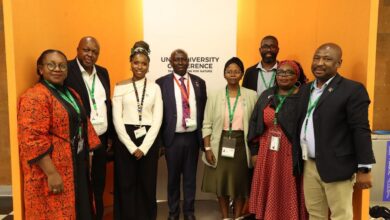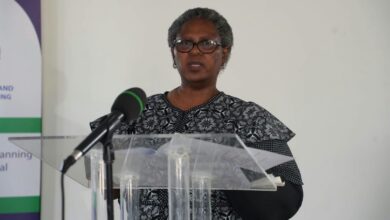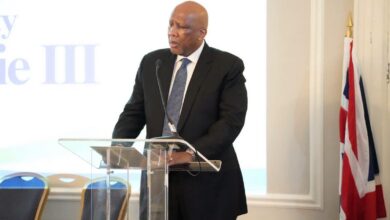
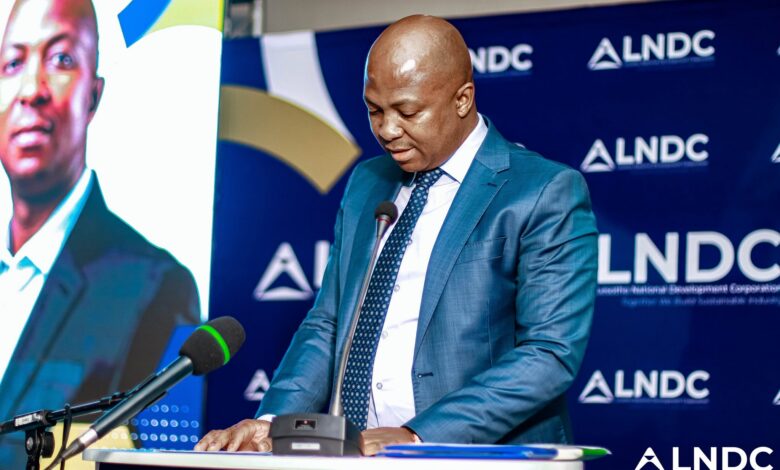
Lesotho is positioning itself as a country open for business and seeking investment that can build a stronger economy for future generations. This message was delivered by Minister of Trade, Industry and Business Development Mr Motlatsi Maqelepo during the inaugural India-Lesotho Business Dialogue held in Maseru. The dialogue brought together public and private sector stakeholders from Lesotho and India to explore practical opportunities for deeper economic cooperation. Agriculture, aerospace, technology and renewable energy were identified among the priority areas where Lesotho wants to attract investment and develop new capabilities. The central message from the meeting was clear: strong diplomatic relations must increasingly translate into investments, businesses, jobs, skills and sustainable economic activity.
Mr Maqelepo emphasized that Lesotho needs to move beyond discussions and convert opportunities into tangible investments. For a developing economy, investment can provide more than financial capital because it can also bring technology, expertise, production capacity and access to new markets. Lesotho is seeking partnerships that can strengthen domestic industries while allowing Basotho businesses to participate more fully in regional and international value chains. The government’s focus on agriculture, aerospace, technology and renewable energy reflects an interest in sectors with potential to support long-term economic diversification. The minister’s call for action also highlights the need for investors and local businesses to identify projects that can move from negotiations to implementation.
The minister also drew attention to challenges faced by small traders in Lesotho, particularly those trying to move goods through the country’s borders with South Africa. Supply chain bottlenecks on both sides of the borders can make it difficult for small businesses to sell their products efficiently and compete in wider markets. These challenges can have a significant impact on Basotho entrepreneurs because small traders often operate with limited capital and fewer resources to absorb delays and additional costs. Mr Maqelepo noted that the scale of Lesotho’s economy needs to be considered when assessing what constitutes a meaningful business opportunity. What may appear small from the perspective of a large economy such as India can have substantial economic importance in Lesotho because of the country’s size and market structure.
The India-Lesotho Business Dialogue comes against the background of longstanding relations between the two countries. High Commissioner of India to South Africa and Lesotho Mr Prabhat Kumar highlighted historical links between Indian traders and Basotho communities, pointing to accounts of Indian traders travelling from Durban to Basutoland and reaching Butha-Buthe, where they were welcomed and exchanged goods for sheep. He also emphasized the development of formal diplomatic relations between India and Lesotho since 1971. Over the decades, cooperation has expanded into areas including capacity building, agriculture, health, education, infrastructure, technology, defence, trade, cyber security and culture. These longstanding connections provide a foundation for the countries to pursue a stronger economic partnership.
India has also supported Lesotho in responding to development and climate-related challenges. In April 2025, India delivered 1,000 metric tonnes of rice and 1,000 metric tonnes of sorghum to Lesotho as part of efforts to mitigate the effects of drought. The support came alongside other forms of cooperation focused on strengthening national capacity and economic development. India has provided Lines of Credit of nearly M166 million for vocational training centres and agricultural irrigation machinery, while Basotho professionals have benefited from Indian Technical and Economic Cooperation training and Indian Council for Cultural Relations scholarships. These programmes have helped expand opportunities for skills development and technical training. Such cooperation provides a basis for moving towards partnerships that combine development assistance with commercial investment and private sector engagement.
Digital transformation has emerged as another important area of cooperation between Lesotho and India. The two countries signed a comprehensive memorandum of understanding on Digital Public Infrastructure in mid-2026, with cooperation covering areas such as digital identification, DigiLocker and artificial intelligence-driven public service delivery. The agreement is intended to support Lesotho’s digital transformation by drawing on India’s experience in developing and using digital public systems. The initiative builds on the India-funded Centre for Advanced Education in Information Technology at Lerotholi Polytechnic. Digital infrastructure can have broad economic implications because it can support more efficient public services, business processes, payments, identity systems and access to information.
The Joint Bilateral Commission for Cooperation remains an important mechanism for advancing cooperation between Lesotho and India. Such institutional structures can help governments maintain dialogue, identify areas of common interest and follow up on commitments made between the two countries. The business dialogue adds a strong private sector dimension to this relationship by focusing attention on companies, investment projects and commercial opportunities. For economic diplomacy to produce measurable results, government engagement needs to create an environment in which businesses can establish partnerships and invest with greater confidence. The combination of government-to-government cooperation and private sector participation could therefore play an important role in expanding India-Lesotho economic relations.
Bilateral trade between Lesotho and India reached approximately M139 million in the 2025-26 financial year, according to the figures presented at the dialogue. India exports pharmaceuticals, machinery and electronics to Lesotho, while Lesotho exports textiles, wool and garments to India. These existing trade flows demonstrate that commercial links already exist between the two economies. However, the dialogue focused on the possibility of expanding these relationships into more diverse and higher-value activities. Increasing trade while also developing local production could allow Lesotho to capture greater economic value from its participation in regional and global markets.
A significant development highlighted during the dialogue was the signing of Terms of Reference by India and the Southern African Customs Union, or SACU, on 12 August 2026 to revive discussions on a Preferential Trade Pact. The proposed process is aimed at improving market access and reducing trade barriers between India and the SACU region. The discussions target areas including lower duties for automobiles and machinery and more reliable access to critical minerals. Greater market access could create opportunities for Lesotho’s businesses, particularly in sectors such as diamonds, textiles and manufacturing. For a small economy, access to larger regional and international markets can be an important factor in attracting investment and encouraging companies to expand production.
The potential Preferential Trade Pact also gives added importance to Lesotho’s position within SACU. Lesotho already participates in the regional customs arrangement alongside South Africa, Botswana, Eswatini and Namibia. Improved commercial links between India and the wider SACU market could provide businesses operating in Lesotho with additional opportunities to connect with Indian companies and supply chains. Lesotho’s diamond sector and garment industry could particularly benefit if improved market access translates into increased demand, investment and commercial partnerships. However, the ultimate benefits will depend on the outcome of negotiations and the ability of businesses to take advantage of any new trading arrangements. The discussion therefore represents an opportunity rather than a guaranteed economic outcome.
The Lesotho Chamber of Commerce and Industry also stressed the importance of turning economic diplomacy into actual commercial activity. LCCI Secretary General Mr Fako Hakane argued that the strength of relations between Lesotho and India should increasingly be measured through companies established, partnerships concluded, skills transferred, investments made, goods traded and jobs created. This approach places practical economic results at the centre of bilateral cooperation. Diplomatic goodwill can create the conditions for engagement, but businesses ultimately need viable projects, reliable supply chains, suitable infrastructure and clear commercial incentives to invest. The business dialogue therefore provides an important platform for moving from high-level discussions to concrete private sector partnerships.
India offers considerable experience in areas that could support Lesotho’s economic ambitions. Its business ecosystem has significant capabilities in manufacturing, pharmaceuticals, information and communications technology, financial services, renewable energy and agriculture. Lesotho, meanwhile, offers an entrepreneurial private sector, access to regional markets, a young population and established manufacturing capabilities. These complementary strengths could create opportunities for partnerships that are designed around production and shared value rather than simple trade in finished products. The challenge will be to identify commercially sustainable projects that match Indian capabilities with Lesotho’s resources, workforce and market access.
LCCI has called for partnerships that go beyond importing finished products into Lesotho. Joint ventures, local assembly, manufacturing, technology transfer and skills development could give Basotho businesses greater opportunities to participate in regional and global value chains. This model could help strengthen local productive capacity while allowing foreign companies to use Lesotho as part of broader regional strategies. It could also create opportunities for workers and entrepreneurs to acquire new technical and managerial skills. For these partnerships to succeed, however, investors will need predictable business conditions and local firms will need the capacity to meet quality, financing and production requirements.
Technology cooperation is another area with significant potential. LCCI identified software development, digital payments, cyber security, artificial intelligence and business automation as areas where Lesotho and India could deepen collaboration. These technologies are increasingly relevant to how businesses operate, deliver services and compete in international markets. For Lesotho, greater digital capacity could help businesses improve efficiency and reach customers beyond the domestic market. It could also create opportunities for young Basotho with skills in software, data, cybersecurity and other technology-related fields. The message that digital transformation is no longer optional reflects the growing importance of technology to modern economic development.
Agriculture remains another major opportunity for Lesotho and India to explore. LCCI argued that Lesotho should not focus only on producing more agricultural goods but should also process, package and export more products while retaining greater economic value within the country. This approach points towards agricultural value addition rather than relying mainly on the sale of unprocessed commodities. Investment in irrigation, processing facilities, packaging, storage and logistics could help strengthen agricultural supply chains if commercially viable projects are developed. Expanding agricultural processing could also create additional opportunities for employment and entrepreneurship while helping local producers connect with larger markets.
Renewable energy, pharmaceuticals, tourism, infrastructure and professional services were also identified as potential areas for mutually beneficial partnerships. Renewable energy has particular relevance to economic development because reliable energy supports businesses, manufacturing and essential services. Pharmaceuticals could create opportunities for stronger supply arrangements and potentially greater local participation in the healthcare value chain. Tourism and professional services could provide additional avenues for diversification if investment and skills development support sustainable growth. The broad range of sectors discussed at the dialogue shows that the India-Lesotho economic relationship has the potential to extend well beyond traditional trade.
The challenge now is to maintain momentum after the business dialogue ends. Mr Hakane emphasized that identifying opportunities is the easier part and that the real test begins after the speeches and meetings. This is an important consideration because successful investment partnerships require detailed negotiations, feasibility assessments, financing, regulatory processes and implementation. Businesses also need to establish trust and understand the markets in which they intend to operate. Turning the discussions in Maseru into new ventures will therefore require sustained engagement between companies, government institutions and business organizations in both countries.
Lesotho’s relatively small economy does not necessarily prevent it from attracting strategic investment. A smaller market can allow businesses and institutions to focus on specialized industries where they can develop specific capabilities and serve customers beyond the domestic market. Lesotho’s location within the Southern African region also provides an important basis for considering regional market opportunities. Its established manufacturing sector and access to wider regional markets can be valuable to investors seeking a Southern African base. The key is to match these advantages with investments that create local value, strengthen skills and connect Basotho businesses with larger supply chains.
The history of diplomatic relations between Lesotho and India provides a strong foundation for this next phase. The two countries formally established diplomatic relations on 8 June 1971, while India’s diplomatic representation to Lesotho was initially handled through its High Commission in Botswana. Since 1996, India’s representation to Lesotho has been concurrently accredited through its High Commission in Pretoria, South Africa. Following the visit of former Lesotho Prime Minister Pakalitha Mosisili to India in August 2003, Lesotho opened a resident mission in New Delhi in 2005. These developments reflect the gradual institutional strengthening of relations that now extend into an increasingly important economic dimension.
The inaugural India-Lesotho Business Dialogue has therefore created an important platform for both countries to consider how their longstanding relationship can produce greater economic value. Lesotho’s message that it is open for business is closely linked to its desire to attract investment, expand local production and create opportunities for future generations. India brings extensive experience in technology, manufacturing, agriculture, pharmaceuticals and other sectors, while Lesotho offers opportunities linked to regional markets, entrepreneurship, manufacturing and its workforce. The success of this partnership will depend on whether the commitments and ideas discussed in Maseru become practical projects that generate investment, jobs, skills and trade. If that transition from dialogue to implementation is achieved, the India-Lesotho relationship could become an increasingly important part of Lesotho’s strategy to build a more diversified, productive and future-focused economy.
Join 'Lesotho News' WhatsApp Channel
Get breaking Lesotho news — delivered directly to your WhatsApp.
CLICK HERE TO JOIN