Lesotho Highlights Cancer Care and Food Security Priorities at IAEA General Conference

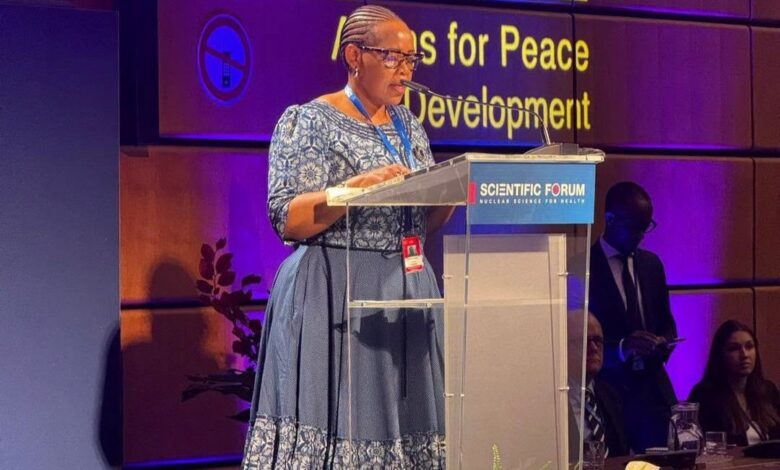
The Deputy Prime Minister of the Kingdom of Lesotho, Hon. Justice Nthomeng Majara, is representing the country at the 70th General Conference of the International Atomic Energy Agency in Vienna, where she delivered Lesotho’s national statement. Her participation places key national development priorities on an international platform, with particular attention to healthcare, food security, agriculture and livestock production. The conference provides an opportunity for member states to discuss how nuclear science and technology can support development and address challenges affecting communities. For Lesotho, the engagement comes as the country continues to explore practical applications of science and technology across essential sectors. The discussions in Vienna also highlight the country’s growing cooperation with the IAEA and its efforts to use nuclear technology to strengthen national capacity.
A major focus of Lesotho’s participation has been the need to improve access to cancer treatment. Hon. Majara participated in the IAEA Scientific Forum, titled “Rays of Hope: Delivering on the Promise of Cancer Care,” which brought together global leaders to discuss ways of expanding access to life-saving cancer services. The forum provided an important platform for countries to highlight challenges in cancer prevention, diagnosis and treatment while examining the role of nuclear science in addressing these challenges. For Lesotho, improving cancer care remains closely linked to the country’s broader efforts to strengthen its healthcare system. The discussions also placed the country’s plans for establishing its first radiotherapy facility within the wider international conversation about expanding access to essential cancer treatment.
The establishment of Lesotho’s first radiotherapy facility represents a significant national healthcare priority. Radiotherapy forms an important part of cancer treatment and can be used to treat a range of cancers, either on its own or alongside other forms of treatment. Having such a facility within the country could reduce the need for patients to seek radiotherapy services outside Lesotho and could contribute to improved access to specialised cancer care. The project also points to the importance of developing the technical expertise and infrastructure required to operate advanced medical facilities. Lesotho’s engagement with the IAEA provides an avenue for cooperation as the country works towards strengthening its capacity to deliver specialised healthcare services.
Beyond healthcare, Lesotho also highlighted the role of science and technology in strengthening food security. Agriculture and livestock production remain important to communities across the country, making improvements in productivity and resilience significant development priorities. Nuclear science and related technologies can support agricultural research, crop improvement, soil and water management and the development of practices that help address production challenges. In livestock production, scientific approaches can also contribute to animal health, breeding and productivity. Lesotho’s emphasis on these areas reflects a broader effort to apply scientific knowledge to practical challenges affecting food production and livelihoods.
The country’s engagement with the IAEA therefore extends beyond the use of nuclear technology in healthcare. It also demonstrates how scientific cooperation can support several areas of national development when countries have access to appropriate expertise, technology and training. Building capacity among professionals and institutions remains important because the effective use of advanced technologies requires skilled personnel and strong systems. Cooperation with international organisations such as the IAEA can help countries develop this capacity while adapting scientific applications to local needs. For Lesotho, this approach creates opportunities to connect scientific development with priorities such as healthcare delivery, agricultural productivity and food security.
The discussions at the 70th IAEA General Conference also highlight the importance of international cooperation in addressing development challenges. Countries face different circumstances, but many share concerns around access to healthcare, food security, climate-related pressures and the need for stronger technical capacity. Platforms such as the IAEA General Conference allow governments to exchange experiences and explore areas where scientific and technological cooperation can provide practical solutions. Lesotho’s participation gives the country an opportunity to communicate its priorities while engaging with broader international efforts in nuclear science and technology. The national statement and participation in the Scientific Forum therefore form part of a wider diplomatic and development engagement.
Lesotho’s growing partnership with the IAEA provides a framework for pursuing these priorities through science and technology. The country has identified healthcare, food security and national capacity building as areas where continued cooperation can support its development objectives. The proposed radiotherapy facility is particularly important because it connects international technical cooperation with a direct healthcare need for people in Lesotho. At the same time, the focus on agriculture and livestock production shows that the country’s interest in nuclear science extends to improving food systems and strengthening livelihoods. Continued investment in skills, infrastructure and scientific institutions will be important for turning these priorities into sustainable outcomes.
Hon. Justice Nthomeng Majara’s participation at the IAEA General Conference places Lesotho’s development priorities within an important global discussion on the practical use of nuclear science and technology. The focus on establishing the country’s first radiotherapy facility highlights the urgent need to expand access to specialised cancer care, while the emphasis on agriculture and livestock production demonstrates the wider potential of scientific applications. Through its partnership with the IAEA, Lesotho is seeking to strengthen healthcare, improve food security and build national technical capacity. The engagement in Vienna provides an opportunity to advance these priorities through international cooperation, knowledge sharing and access to scientific expertise. As Lesotho continues to develop its use of nuclear science and technology, these efforts could play an important role in strengthening essential services and supporting long-term national development.
Join 'Lesotho News' WhatsApp Channel
Get breaking Lesotho news — delivered directly to your WhatsApp.
CLICK HERE TO JOIN