Lesotho Wool and Mohair Farmers Challenged to Invest in Abattoirs and Diversify Their Income

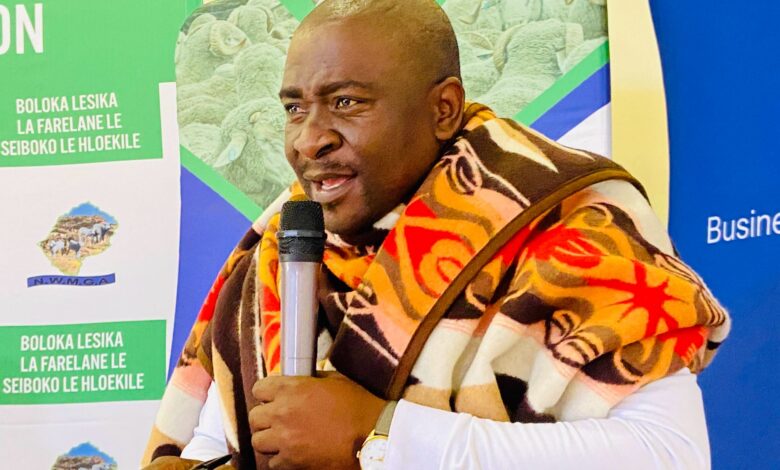
Lesotho’s wool and mohair farmers have been challenged to look beyond traditional fibre production and consider investing in meat processing as the industry prepares for possible changes in global demand. Minister of Agriculture, Food Security and Nutrition Mr. Selibe Mochoboroane urged farmers to consider establishing a large abattoir in Lesotho supported by smaller district facilities. He said diversification could help farmers generate additional income from their livestock while reducing their exposure to future risks in the wool and mohair market. The minister also warned that growing production of synthetic alternatives to wool and mohair could eventually affect demand for natural fibres. His remarks highlight the need for Lesotho’s livestock sector to strengthen its resilience by developing multiple sources of income from sheep and goats.
Mr. Mochoboroane said farmers should pay close attention to international market trends when planning the future of their businesses. The increasing production of synthetic alternatives could create pressure on traditional wool and mohair markets if consumers and manufacturers increasingly choose substitute materials. This potential shift makes it important for farmers to consider how they can continue generating value from their livestock even if fibre demand changes. The minister argued that meat production and processing could provide one such opportunity, particularly because sheep and goats already form a major part of the country’s livestock economy. By investing in infrastructure that allows farmers to participate in meat markets, the sector could become less dependent on the sale of wool and mohair alone.
The minister proposed the development of a large abattoir in Lesotho, supported by smaller abattoirs in the districts that could supply the main facility. Such a structure could create a more organised pathway for farmers to move livestock from production to processing and ultimately to consumers. It could also create opportunities for value addition within Lesotho rather than relying primarily on the export of raw agricultural products. Meat processing could generate additional economic activity through transportation, animal handling, packaging, cold storage and distribution. If properly developed, the proposed model could strengthen local supply chains while creating new opportunities for farmers and businesses operating within the livestock sector.
Mr. Mochoboroane also pointed to lamb chops as an example of a high-value meat product that Lesotho could explore more aggressively. He described lamb chops as both expensive and highly desirable, suggesting that farmers have an opportunity to capture more value from meat production. Instead of focusing only on the sale of livestock or wool, farmers could potentially benefit from processing and marketing premium meat products. Developing this market would require attention to quality standards, animal health, processing facilities, packaging and reliable distribution systems. However, increased investment in these areas could create a pathway for Lesotho’s livestock farmers to access higher-value markets and diversify their earnings.
The minister’s call for diversification is closely linked to concerns about the long-term sustainability of wool and mohair production. He noted that diminishing grazing land could create additional pressure on livestock production if land resources become increasingly limited. Poor management of grazing areas can reduce the availability and quality of pasture, affecting animal health and fibre production. Climate and environmental pressures can also make livestock farming more difficult and increase the need for efficient land and animal management. Developing multiple income streams could therefore help farmers manage the risks associated with changes in both production conditions and international markets.
Mr. Mochoboroane also reflected on the history of Lesotho’s wool and mohair industry since the country gained independence in 1966. He said the sector experienced periods of decline in the sale of wool and mohair, attributing some of the difficulties to diminishing grazing lands and inadequate management of these resources. He also pointed to the emergence of synthetic wool and mohair alternatives as another factor that affected the industry. These historical experiences demonstrate that the sector has faced external market pressures and domestic production challenges before. Understanding these developments can help farmers and policymakers identify strategies that can protect the industry while preparing for future changes.
The minister further noted that disputes surrounding wool and mohair regulations in 2018 contributed to a decline in exports. Regulatory uncertainty can affect farmers, traders and other participants across an agricultural value chain because businesses need predictable systems to plan production and sales. Disruptions to established marketing arrangements can also affect the movement of products and access to international buyers. The experience reinforced the importance of effective regulation and cooperation among government, farmers and industry organisations. As Lesotho considers the future of its wool and mohair sector, stable policies and strong institutions will remain important for protecting market access and supporting farmer confidence.
Despite these challenges, Lesotho remains a significant producer of wool and mohair. According to figures cited by Mr. Mochoboroane, Lesotho ranks second globally in mohair production and 31st in wool production. He said the country’s climate and mountainous terrain provide favourable conditions for producing these natural fibres. The minister also reported that Lesotho currently has approximately two million sheep and one million goats, highlighting the scale of the livestock resources supporting the industry. These figures demonstrate why wool and mohair remain important to the country’s agricultural sector and why protecting the livelihoods of farmers involved in the industry is a significant economic priority.
The minister said Lesotho exports approximately 8.2 tonnes of wool and mohair per shearing season, generating between M1.2 billion and M1.4 billion. This makes wool and mohair an important contributor to the country’s export earnings and wider economy. The value generated by the sector also supports economic activity among farmers, shearing workers, traders, transporters and other businesses connected to the value chain. Protecting this contribution requires continued investment in animal health, grazing management, shearing infrastructure and market access. At the same time, diversification into meat production could provide an additional economic foundation for farmers if global conditions make natural fibre markets more difficult.
Wool and Mohair Growers Association President Mokoenehi Thinyane provided further insight into the state of the industry during the association’s Annual General Meeting. He explained that the AGM was intended to report to members on the organisation’s finances, achievements and challenges during the year. The meeting also gave farmers an opportunity to discuss the condition of the industry and consider plans for its future. Such forums are important because they allow farmers to raise concerns directly while contributing to decisions that affect their livelihoods. The 16th successful AGM brought together wool and mohair farmers from across Lesotho, demonstrating the continued importance of collective organisation within the sector.
One of the achievements highlighted by Thinyane was the association’s successful securing of a M42 million grant from the International Fund for Agricultural Development. The funding will be used to develop shearing sheds across the country, providing an important investment in the infrastructure supporting wool and mohair production. Improved shearing facilities can help farmers meet required standards and strengthen the quality and handling of fibre. Thinyane said the improved shearing sheds would enable farmers to obtain compliance certificates, which could help them secure better prices for their wool and mohair. This investment could therefore contribute to improving both production standards and the commercial value of the country’s fibre exports.
However, the industry continues to face serious challenges, with Foot-and-Mouth Disease identified by Thinyane as the biggest problem experienced during the year. The disease affected the movement of livestock and resulted in wool and mohair becoming trapped at borders. Border restrictions can have serious consequences for an export-dependent agricultural industry because delays can disrupt supply chains, increase costs and affect relationships with international buyers. Animal health therefore remains closely connected to the economic performance of the wool and mohair sector. Strengthening disease prevention, veterinary services and cross-border coordination will be essential to ensuring that Lesotho’s agricultural exports can move efficiently to international markets.
The call for abattoir investment provides a broader discussion about how Lesotho can increase the value generated from its livestock resources. Farmers already have significant numbers of sheep and goats, but capturing more value from these animals requires infrastructure, investment and access to reliable markets. A coordinated meat-processing system could complement wool and mohair production rather than replace it, allowing farmers to benefit from multiple products. The approach could also create opportunities for local entrepreneurs in areas such as meat processing, logistics, packaging, retail and hospitality. With careful planning, investment in abattoirs could become part of a wider strategy to build a more diversified and resilient livestock economy.
Lesotho’s wool and mohair industry remains a major contributor to the national economy, but the challenges identified by the minister and farmers show why the sector cannot rely solely on current market conditions. Synthetic fibre competition, declining grazing resources, regulatory disputes and animal health problems all demonstrate the need for long-term planning. Investment in better shearing infrastructure can strengthen the existing wool and mohair value chain, while investment in abattoirs and meat processing could create additional sources of income. Farmers, government and industry organisations will need to work together to develop these opportunities while protecting the country’s established position in global fibre markets. Diversification could ultimately help Lesotho’s livestock farmers remain competitive, protect their livelihoods and build a stronger agricultural sector capable of responding to future economic and environmental pressures.
Join 'Lesotho News' WhatsApp Channel
Get breaking Lesotho news — delivered directly to your WhatsApp.
CLICK HERE TO JOIN