Lesotho Launches ReLiF Project to Strengthen Climate Resilience and Food Security

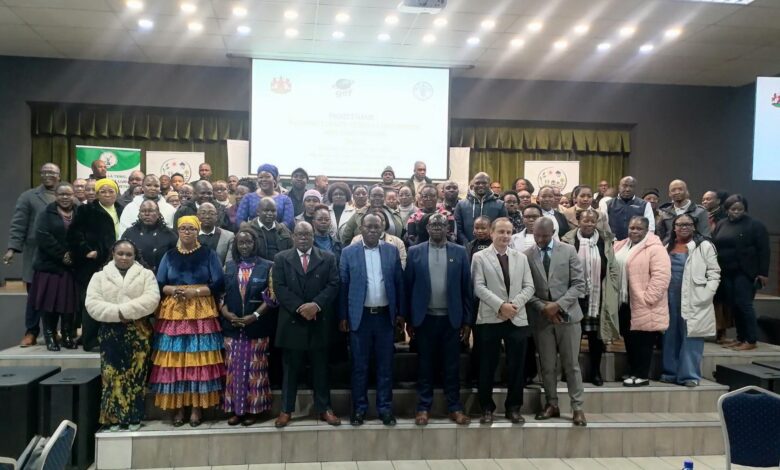
Lesotho has taken another important step toward addressing the growing challenges posed by climate change with the launch of the Building Climate Resilient Livelihoods and Food Systems project, widely known as ReLiF. Officially launched on July 7, 2026 by the Ministry of Agriculture, Food and Nutrition, the initiative aims to improve the livelihoods of Basotho while strengthening the country’s food systems against the increasing impacts of changing weather patterns. Climate change has become one of the biggest threats to agricultural production in Lesotho, affecting crop yields, livestock farming and rural communities that depend heavily on agriculture for their income and food supply. Through the ReLiF project, the government hopes to build stronger, more resilient farming systems that can better withstand droughts, unpredictable rainfall and other climate-related challenges. The initiative demonstrates Lesotho’s commitment to protecting food security while supporting sustainable rural development for future generations.
Agriculture remains one of the most important sectors of Lesotho’s economy, providing employment and livelihoods for a significant portion of the population. However, farmers across the country have experienced increasing difficulties due to changing climate conditions that have reduced agricultural productivity and threatened household food security. Extended dry spells, irregular rainfall, soil degradation and extreme weather events continue to place pressure on farming communities. These challenges not only reduce food production but also affect incomes, nutrition and economic growth. The ReLiF project has been designed to respond directly to these issues by promoting climate-smart agricultural practices and improving the resilience of rural livelihoods.
The new project will initially operate in four districts, namely Leribe, Maseru, Mohale’s Hoek and Quthing. These districts have been identified as important areas where climate-related challenges continue to affect agricultural production and community livelihoods. By concentrating resources and support within these regions, the Ministry aims to deliver practical interventions that produce measurable improvements in farming and food security. Local communities will benefit from programs that strengthen agricultural production while helping farmers adapt to changing environmental conditions. Lessons learned during implementation may also help inform future expansion of similar initiatives to other districts across the country.
Launching the project, Permanent Secretary of the Ministry of Agriculture, Dr. Khothatso Ts’ooana, emphasized the importance of collective responsibility in ensuring the success of the initiative. He urged all stakeholders to work together toward the shared goal of improving the lives of Basotho through stronger and more resilient agricultural systems. According to Dr. Ts’ooana, climate change has already had a significant impact on agricultural production, making coordinated action more important than ever before. He stressed that overcoming these challenges requires commitment from government institutions, development partners, local communities and the private sector. Building resilience is not the responsibility of a single ministry but a national effort that requires broad cooperation.
One of the defining strengths of the ReLiF project is its multisectoral approach to implementation. While the Ministry of Agriculture, Food and Nutrition serves as the lead institution, several other government departments are directly involved in delivering the initiative. Dr. Ts’ooana highlighted the active participation of the Ministry of Forestry and Rangeland Development as well as the Ministry of Home Affairs and Chieftainship. Their involvement recognizes that climate resilience extends beyond farming alone and includes sustainable land management, natural resource conservation and effective local governance. Bringing together different sectors allows the project to address the complex environmental and social challenges associated with climate change more effectively.
The inclusion of the Ministry of Forestry and Rangeland Development is particularly significant because forests, grazing lands and natural ecosystems play a critical role in supporting agricultural productivity. Healthy forests help regulate water supplies, reduce soil erosion and protect biodiversity, while well-managed rangelands provide sustainable grazing for livestock. Climate change has increased pressure on these natural resources, making integrated management essential for long-term sustainability. By improving environmental conservation alongside agricultural development, the ReLiF project seeks to strengthen the resilience of both ecosystems and farming communities. This balanced approach supports sustainable resource use while protecting the livelihoods of future generations.
The involvement of the Ministry of Home Affairs and Chieftainship also reflects the importance of community leadership in implementing climate resilience initiatives. Traditional leaders often play a central role in land management, community mobilization and conflict resolution within rural areas. Their participation can help ensure that project activities align with local priorities while encouraging widespread community ownership. Strong collaboration between government institutions and traditional authorities can improve communication, increase participation and strengthen accountability throughout project implementation. This partnership is expected to contribute to more effective and sustainable development outcomes.
Dr. Ts’ooana used a powerful comparison during the launch, stating that cooperation among stakeholders should resemble the unity displayed by an army fighting a battle. His message emphasized that climate change presents a shared challenge requiring coordinated action rather than isolated efforts. Every participating institution has an important role to play in protecting food systems, supporting farmers and improving community resilience. Effective collaboration will allow resources, expertise and knowledge to be shared more efficiently while avoiding duplication of efforts. Such teamwork will be essential in achieving the ambitious objectives set out under the ReLiF project.
The ReLiF initiative also represents an opportunity to introduce modern agricultural practices that improve productivity while reducing environmental risks. Climate-smart farming methods, improved water management, sustainable soil conservation and resilient crop production techniques can help farmers adapt to changing weather conditions. These innovations are increasingly important as climate variability continues to affect traditional farming methods. By supporting farmers with new knowledge, improved technologies and practical solutions, the project can increase agricultural productivity while strengthening long-term food security. Investing in resilience today helps reduce future vulnerability to climate-related disasters.
Beyond agriculture, the project has the potential to generate wider social and economic benefits for communities across the participating districts. Increased food production can improve household nutrition while creating opportunities for higher incomes and stronger local economies. More resilient farming systems can also reduce poverty by protecting families from crop failures and livestock losses caused by extreme weather. Strengthening rural livelihoods contributes to greater economic stability while supporting national development goals. These broader benefits demonstrate that climate resilience is closely linked to sustainable economic and social progress.
The launch of the Building Climate Resilient Livelihoods and Food Systems project marks an important milestone in Lesotho’s efforts to address the growing impacts of climate change. By focusing on climate-smart agriculture, environmental conservation and strong partnerships between government ministries and local communities, the ReLiF project provides a practical framework for improving food security and protecting rural livelihoods. The call by Permanent Secretary Dr. Khothatso Ts’ooana for close cooperation among all stakeholders highlights the shared responsibility required to overcome climate-related challenges. As implementation begins in Leribe, Maseru, Mohale’s Hoek and Quthing, the success of the initiative will depend on sustained collaboration, innovation and community participation. If these partnerships remain strong, the ReLiF project has the potential to transform agricultural resilience, improve the lives of Basotho and create a more secure and sustainable future for the country.
Join 'Lesotho News' WhatsApp Channel
Get breaking Lesotho news — delivered directly to your WhatsApp.
CLICK HERE TO JOIN