ABS Workshop Highlights Enterprise Development and Value Addition in Lesotho’s Biocultural Economy

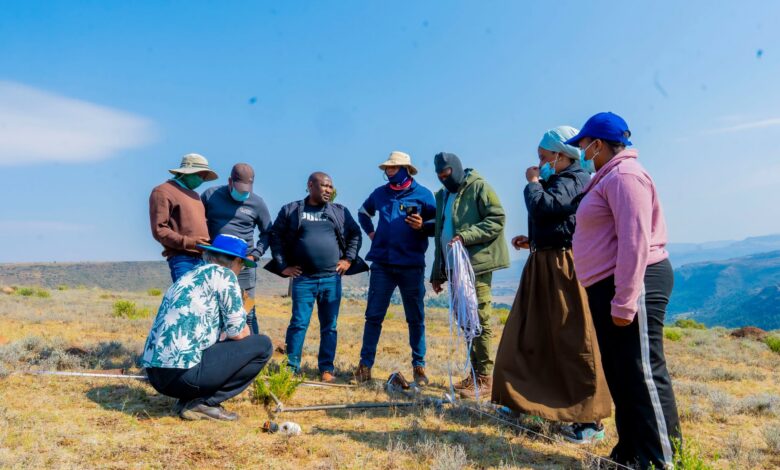
The fourth and final day of the Access and Benefit-Sharing (ABS) capacity-building workshop placed enterprise development and value addition at the centre of discussions aimed at strengthening Lesotho’s biocultural economy. The final session brought together micro, small and medium enterprises (MSMEs), women-led cooperatives, youth entrepreneurs and herders to explore practical ways of turning locally harvested resources into higher-value products. Participants examined areas such as processing, packaging, Good Manufacturing Practices (GMP) and fair-trade pricing. The discussions also focused on the importance of moving beyond the sale of raw materials towards activities that can generate greater economic value within communities. The workshop concluded with the development of Training Action Plans designed to support sustainable enterprise growth and strengthen community participation in Lesotho’s biocultural economy.
Enterprise development formed an important part of the final day because access to natural and biological resources can create economic opportunities when communities have the skills and systems needed to develop sustainable businesses. Many communities possess valuable traditional knowledge and locally available resources, but limited processing capacity can prevent them from capturing the full economic value of these resources. By introducing participants to value-addition opportunities, the workshop encouraged them to consider how raw materials can be transformed into products with stronger market potential. This can include improving the quality, presentation, shelf life and usability of products before they reach consumers. Such an approach can help local enterprises retain more value within communities while supporting income generation and sustainable resource use.
MSMEs were among the groups that benefited from the focus on enterprise development and value addition. Small businesses can play an important role in connecting local resources with markets, particularly when entrepreneurs have access to appropriate technical knowledge and business development support. Participants explored ways to improve production processes while meeting standards that can help products become more competitive. Processing and packaging were particularly important areas because they can influence product quality, consumer confidence and marketability. Strengthening these capabilities can help small enterprises move from informal or low-value activities towards more structured businesses with greater opportunities for sustainable growth.
Women-led cooperatives also featured prominently in the discussions, highlighting the role of women in community-based enterprise development. Cooperatives can provide members with opportunities to pool resources, share knowledge and develop products collectively. Value addition can help these groups move beyond selling raw harvested materials and develop finished or semi-finished products that command better prices. Improved packaging, quality control and production practices can further strengthen their ability to access formal markets. Supporting women-led enterprises can therefore contribute to household income, local economic participation and the broader development of Lesotho’s biocultural economy.
Youth entrepreneurs were also encouraged to explore opportunities within the value-addition sector. Young people can bring new ideas, digital skills and entrepreneurial approaches to businesses based on natural resources and traditional knowledge. The workshop provided an opportunity for young entrepreneurs to consider how innovation can be combined with locally available resources to develop commercially viable products. Areas such as product presentation, marketing and improved processing can create opportunities for young people to participate across different stages of the value chain. Building these capabilities can help make the biocultural economy more inclusive while creating pathways for young entrepreneurs to establish and grow their own enterprises.
Herders were another important group involved in the final day’s discussions. Their participation recognises the connection between local communities, traditional livelihoods, natural resources and the wider biocultural economy. Herders often possess practical knowledge about landscapes, plants, animals and other resources that can have economic and cultural importance. Giving them opportunities to understand value addition and fair-trade principles can help ensure that economic benefits do not remain concentrated further along the value chain. Their involvement also reinforces the importance of combining traditional knowledge with appropriate business and technical skills.
Processing was a key focus of the enterprise development discussions because it provides one of the clearest ways to increase the value of harvested resources. Instead of selling a raw material immediately after collection, producers can potentially process it into a product that is more convenient, durable or attractive to consumers. Processing can also create additional employment opportunities through activities such as preparation, drying, blending, manufacturing and quality control. However, successful value addition requires appropriate equipment, skills, hygiene standards and market knowledge. Participants were therefore encouraged to consider processing as part of a broader business strategy rather than as an isolated activity.
Packaging was another important area covered during the workshop. Effective packaging can protect products from contamination and damage while also providing information that helps consumers understand what they are purchasing. Good packaging can improve presentation and contribute to a product’s ability to compete in formal markets. For community enterprises, packaging can also provide an opportunity to communicate information about the origin, cultural significance and quality of a product. Developing appropriate packaging alongside improved processing can therefore help enterprises strengthen both product quality and market appeal.
The introduction of Good Manufacturing Practices was particularly relevant to participants interested in developing products for wider markets. GMP principles help businesses establish consistent processes that promote cleanliness, quality and product safety during manufacturing. Applying these practices can reduce contamination risks and help enterprises maintain consistent standards as production expands. It can also strengthen consumer confidence and support businesses seeking to meet the requirements of more formal markets. Building awareness of GMP among community-based enterprises is therefore an important step towards developing products that can compete beyond local informal markets.
Fair-trade pricing was another central issue discussed during the final day. Fair pricing is important because communities should receive an appropriate share of the economic value generated from resources and knowledge associated with their products. When producers have limited information about markets, they may struggle to negotiate prices that adequately reflect their labour, resources and production costs. Understanding pricing principles can help entrepreneurs calculate costs, assess market conditions and make more informed decisions when negotiating with buyers. Fair-trade approaches can also contribute to more equitable relationships between producers, traders and consumers.
The focus on moving from raw harvesting towards value-added products was particularly significant for the long-term sustainability of community enterprises. Selling raw materials can provide immediate income, but processing and developing finished products can create additional economic value within the community. Value addition can also reduce dependence on buyers who purchase raw materials at relatively low prices and later capture more value through processing and marketing. Developing local processing capacity can therefore strengthen the position of producers within the value chain. At the same time, sustainable harvesting practices remain essential to ensure that increased commercial activity does not place excessive pressure on biological resources.
The Access and Benefit-Sharing framework provides an important context for these discussions because it focuses on ensuring that benefits arising from the use of genetic resources and associated traditional knowledge are shared fairly. Capacity building can help communities understand how their resources and knowledge can contribute to economic opportunities while reinforcing the importance of responsible use. Enterprise development provides a practical pathway through which communities can participate more actively in the economic activities connected to their biocultural resources. Stronger businesses can also create opportunities for local employment and skills development. The final workshop sessions therefore connected ABS principles with practical enterprise development and community participation.
The development of Training Action Plans marked an important outcome of the fourth day. Rather than ending with discussions alone, participants were able to identify practical actions that can guide future training and enterprise development activities. Training Action Plans can help participants determine which skills they need to strengthen and identify areas where additional technical or business support may be required. They can also provide a framework for turning lessons from the workshop into activities that contribute to actual enterprise growth. This practical approach can help ensure that capacity building continues beyond the workshop and translates into measurable benefits for participating communities.
The final day demonstrated that Lesotho’s biocultural economy has potential to support enterprise development when communities have access to appropriate knowledge, skills and market opportunities. MSMEs, women-led cooperatives, youth entrepreneurs and herders all have potential roles to play in developing sustainable businesses based on locally available resources and knowledge. Processing, packaging, GMP and fair-trade pricing can help strengthen products while enabling producers to capture more value from their work. The development of Training Action Plans provides participants with a practical basis for continuing this work after the workshop. By strengthening community capacity and encouraging responsible value addition, the ABS capacity-building initiative can contribute to more inclusive enterprise development and greater participation in Lesotho’s biocultural economy.
Join 'Lesotho News' WhatsApp Channel
Get breaking Lesotho news — delivered directly to your WhatsApp.
CLICK HERE TO JOIN