Lesotho Strengthens National Monitoring and Evaluation System Ahead of 2027 Forum

The Ministry of Finance and Development Planning, through its Department of Monitoring and Evaluation, is taking steps to strengthen Lesotho’s national monitoring and evaluation system ahead of the planned National Monitoring and Evaluation (M&E) Forum in 2027. A preparatory meeting has brought together stakeholders to discuss the current state of monitoring and evaluation in the country, identify existing challenges and explore ways to improve coordination across development planning and implementation processes. The initiative aims to promote knowledge sharing, strengthen collaboration and ensure that government policies, programmes and projects deliver their intended results. Monitoring and evaluation play an important role in assessing development progress, measuring performance and determining whether public resources are being used effectively. By engaging stakeholders ahead of the national forum, the Ministry seeks to build a stronger foundation for evidence-based decision-making and improved development outcomes in Lesotho.
The preparatory meeting provides an opportunity for stakeholders to reflect on the progress made in strengthening monitoring and evaluation practices and examine areas that require further improvement. Discussions focus on the experiences of institutions involved in development planning, the challenges they encounter when measuring results and the opportunities available to improve cooperation within the national M&E system. Effective monitoring and evaluation require institutions to collect reliable information, establish clear performance indicators and assess progress against agreed development objectives. When these processes operate effectively, they help decision-makers understand what is working, what needs improvement and where additional support may be necessary. The meeting therefore represents an important step towards developing a coordinated approach that supports accountability, learning and better implementation of development priorities.
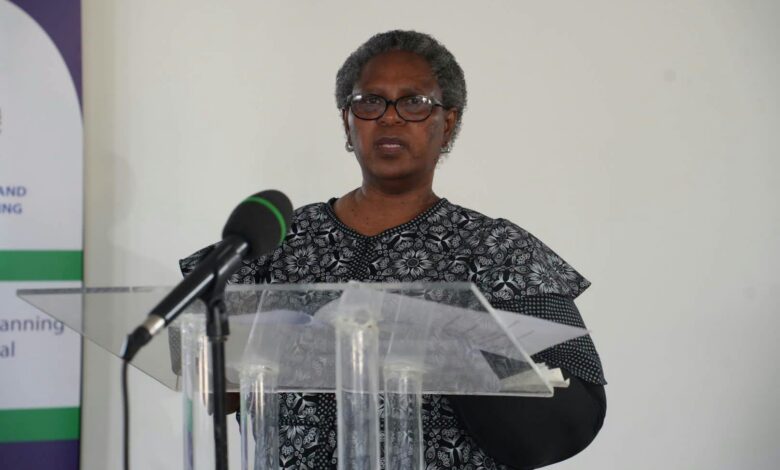
Speaking on behalf of the Principal Secretary in the Ministry of Finance and Development Planning, Ms Ntšiuoa Jaase emphasised that monitoring and evaluation should not be treated merely as a reporting requirement. She explained that M&E is an essential management and decision-making function that helps the Government and its development partners determine whether policies, programmes and projects are achieving their intended results. According to her remarks, effective monitoring and evaluation can reveal implementation difficulties, show whether allocated resources are producing the expected outcomes and identify areas where corrective action is required. This approach allows institutions to respond to challenges during implementation rather than waiting until a programme has ended to assess its performance. Her message highlights the need to make monitoring and evaluation an integral part of how development initiatives are designed, managed and improved.
Ms Jaase also highlighted the importance of results-based management in strengthening public sector performance and development planning in Lesotho. This approach requires government institutions to look beyond completed activities, expenditure reports and administrative procedures to determine whether interventions are producing meaningful development changes. For example, implementing a programme within its approved budget does not automatically mean that it has achieved its objectives or improved the lives of its intended beneficiaries. Institutions must also examine the results of their work, assess progress against established indicators and determine whether the intervention has made the expected contribution to development goals. By focusing on outcomes rather than activities alone, results-based management can help improve programme effectiveness, strengthen accountability and support more informed decisions about future investments.
Another important aspect of monitoring and evaluation is the use of lessons learned during programme implementation. Ms Jaase stressed that information generated through M&E should guide decisions, inform adjustments and improve the design of future interventions. Regular assessments can help institutions identify gaps in implementation, recognise effective practices and understand why certain approaches may not produce the expected results. When this information is shared across government institutions and development partners, it can also reduce duplication and encourage the adoption of approaches that have demonstrated positive results. Establishing a culture in which evidence informs decisions can therefore help Lesotho improve the efficiency of its development programmes and respond more effectively to changing priorities and implementation needs.
Despite progress in strengthening results-based management and development planning systems, Lesotho continues to face several challenges within its national monitoring and evaluation framework. Ms Jaase identified concerns relating to the availability and quality of data, consistency in reporting, alignment of indicators, institutional capacity and coordination among stakeholders. These challenges can make it difficult to compare performance across institutions, establish a complete picture of national development progress and determine whether programmes are achieving their intended objectives. Inconsistent indicators may also result in institutions measuring similar interventions in different ways, limiting the usefulness of the information produced. Addressing these issues will require stronger technical capacity, clearer reporting arrangements and more consistent approaches to collecting, analysing and sharing development data.
Data quality remains particularly important because monitoring and evaluation findings are only as useful as the information on which they are based. Reliable data enables institutions to track progress accurately, identify emerging problems and make decisions based on a sound understanding of programme performance. Poor-quality or incomplete information can weaken assessments and make it difficult to determine whether resources are producing the desired outcomes. Improving data collection systems, strengthening institutional procedures and promoting consistent reporting practices can help address these weaknesses. Greater cooperation between institutions responsible for producing and using development information will also be important in ensuring that evidence is accurate, relevant and available when decisions need to be made.
Ms Jaase further underscored the need to strengthen the use of monitoring and evaluation findings in government planning and budgeting processes. She emphasised that reliable evidence should inform decisions about priorities, resource allocation and the implementation of development programmes. Linking M&E findings with budgeting can help institutions identify interventions that are performing well, recognise programmes that require improvement and assess whether planned expenditure supports established development objectives. This connection is important because the availability of financial resources alone does not guarantee effective service delivery or meaningful development progress. By using evidence to guide planning and spending decisions, the Government can improve accountability and strengthen the link between public investment and intended development outcomes.
Strengthening Lesotho’s national M&E system will require sustained collaboration among a wide range of stakeholders. Ms Jaase called for collective participation and commitment from government institutions, development partners, local government authorities, academia, civil society organisations, the private sector and other actors involved in the country’s development process. Each group can contribute different forms of expertise, information and practical experience that can improve the quality of monitoring and evaluation. Government institutions can help establish consistent systems and integrate findings into policy decisions, while academic institutions can contribute research and analytical skills. Civil society organisations, local authorities, development partners and private sector stakeholders can also provide perspectives that help institutions understand implementation challenges and assess how development interventions affect communities.
Coordination is especially important when several institutions contribute to the same development objectives or work on related programmes. Without clear communication and shared approaches, organisations may duplicate activities, use incompatible indicators or collect information that cannot easily be compared. Stronger coordination can help stakeholders agree on common priorities, clarify their respective responsibilities and improve the sharing of relevant information. It can also support a more consistent understanding of development results across national and local levels. The preparatory meeting offers an opportunity to identify practical measures that can improve cooperation and establish a more coherent approach to monitoring and evaluation throughout Lesotho.
The meeting also marks the beginning of consultations with government ministries ahead of the planned National M&E Forum. These consultations are expected to help identify the most pressing concerns affecting monitoring and evaluation and ensure that the national forum addresses the needs of institutions involved in development planning and implementation. Recommendations emerging from the discussions will contribute to shaping the forum’s agenda and identifying priority areas for strengthening the national M&E system. This preparatory process is important because a meaningful forum needs to address practical challenges and produce discussions that can inform future action. By gathering views from government ministries before the event, the Ministry aims to establish a clearer understanding of the issues that require attention and the improvements stakeholders consider most important.
Ms Jaase also highlighted the importance of establishing a structured technical team to lead the preparatory process and coordinate activities required for the successful organisation of the national forum. Such a team would help organise consultations, coordinate contributions from participating institutions and support the development of a focused programme for the event. A clear coordination structure can also help ensure that responsibilities are understood and preparatory activities proceed in an organised manner. Effective preparation will be important in bringing together stakeholders with different responsibilities and areas of expertise. The proposed technical arrangement is therefore part of the broader effort to ensure that the forum provides a useful platform for identifying priorities and strengthening cooperation within the national monitoring and evaluation system.
The National Monitoring and Evaluation Forum is anticipated to take place in January or February 2027, although the exact dates have yet to be confirmed. The planned event is expected to provide a broader platform for stakeholders to exchange experiences, discuss persistent challenges and consider practical measures for improving M&E across the country. Its value will depend not only on the issues discussed but also on how recommendations are translated into action by the institutions involved. Clear priorities, stronger coordination and sustained follow-up will be important in ensuring that the discussions contribute to lasting improvements. The preparatory meeting is intended to help lay the groundwork for these outcomes by ensuring that the forum reflects the country’s needs and the priorities identified by participating stakeholders.
Lesotho’s efforts to strengthen monitoring and evaluation reflect the importance of connecting development planning with measurable results, reliable evidence and responsible resource management. The Ministry of Finance and Development Planning’s preparatory meeting provides an opportunity to examine existing weaknesses, build consensus and identify practical ways to improve the national M&E system. Addressing challenges related to data quality, reporting consistency, institutional capacity and stakeholder coordination will be essential to achieving meaningful progress. Equally important will be the integration of evaluation findings into government planning, budgeting and decision-making so that lessons from past and ongoing programmes inform future interventions. As preparations continue for the anticipated National M&E Forum in early 2027, sustained commitment from government institutions and development partners will be crucial to ensuring that monitoring and evaluation become stronger tools for accountability, effective programme delivery and sustainable development in Lesotho.
Join 'Lesotho News' WhatsApp Channel
Get breaking Lesotho news — delivered directly to your WhatsApp.
CLICK HERE TO JOIN