Lesotho Trade and Investment Forum Closes with Focus on Textiles, Food Sovereignty and Sustainable Mining

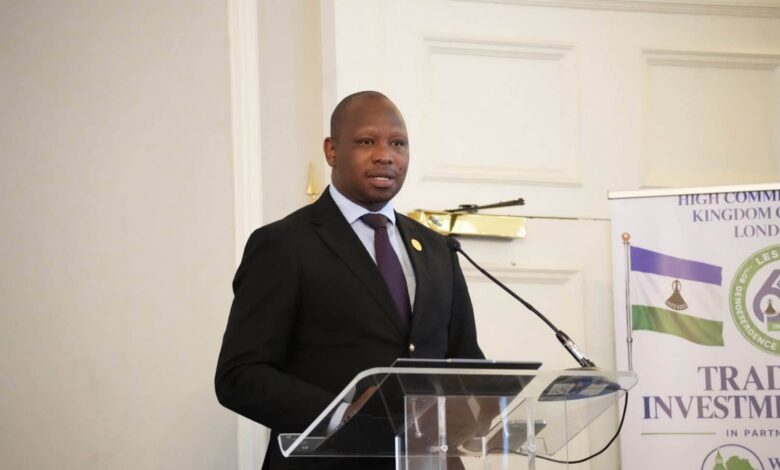
The Lesotho Trade and Investment Forum has officially closed after highlighting business opportunities and investment potential across key sectors of the country’s economy. Held in partnership with the Westminster Africa Business Association, the forum aimed to strengthen trade relations and encourage greater business cooperation between Lesotho and the United Kingdom. The event presented Lesotho as a competitive investment destination with opportunities in textile manufacturing, leather production, agriculture and responsible mining. It also provided a platform to promote the country’s economic potential and encourage partnerships that can support industrial growth, job creation and sustainable development. The forum’s discussions reinforced the importance of attracting investment that creates lasting economic value while helping Lesotho build a more resilient and self-reliant economy.
Textile manufacturing emerged as an important area of opportunity for Lesotho, particularly the production of denim and jean garments. Lesotho has an established garment manufacturing sector, which provides a foundation for expanding production, attracting new investment and strengthening export capacity. Greater investment in denim manufacturing could help businesses improve their production capabilities, develop new products and explore additional international markets. Investors may also find opportunities in supporting industries such as fabric processing, garment finishing, packaging and logistics. Strengthening these activities could help Lesotho capture more value within the textile supply chain while creating employment opportunities for workers and supporting local businesses.
Leather production was another sector identified as having potential to contribute to Lesotho’s industrial development. Investment in leather processing and manufacturing could create opportunities to produce footwear, clothing, accessories and other leather goods for domestic and international markets. Developing this sector would require reliable access to raw materials, appropriate technology, skilled workers and consistent quality standards. It would also be important to establish production methods that meet environmental requirements and responsible sourcing practices. With the right investment and business partnerships, leather manufacturing could help diversify Lesotho’s industrial base and reduce reliance on a limited range of manufactured products.
Agriculture and food sovereignty also featured among the important economic priorities highlighted by the forum. Food sovereignty focuses on the ability of communities and countries to shape their food systems and strengthen local production while ensuring access to sufficient, nutritious and affordable food. For Lesotho, improving domestic agricultural production could help reduce vulnerability to external supply disruptions and support rural livelihoods. Investment in irrigation, agricultural technology, storage facilities, food processing and distribution could help farmers improve productivity and reduce post-harvest losses. Stronger links between farmers, processors, retailers and investors could also create opportunities for local businesses while supporting the country’s broader food security objectives.
Achieving greater food self-sufficiency requires a coordinated approach that addresses both production challenges and market access. Farmers need access to suitable inputs, practical training, financing and reliable markets for their products. Investment in climate-resilient farming practices can also help communities manage changing rainfall patterns and other environmental pressures. Improved storage and transport infrastructure would allow more locally produced food to reach consumers before it spoils. By encouraging partnerships across the agricultural value chain, Lesotho can work towards a stronger domestic food system that supports rural development and contributes to long-term economic stability.
Mining was another area of interest, with emphasis on smart mining practices that protect communities, workers and the environment. Responsible mining involves applying appropriate technology, enforcing safety standards, managing waste carefully and reducing damage to land and water resources. For Lesotho, investment in modern mining methods could support economic activity while encouraging stronger environmental management and safer working conditions. Mining companies also have an important responsibility to engage with communities affected by their operations and ensure that local development needs receive appropriate consideration. A well-regulated mining sector can contribute to employment, government revenue and business opportunities while protecting the natural resources on which communities depend.
The forum’s partnership with the Westminster Africa Business Association was important in bringing attention to potential trade and investment links between Lesotho and the United Kingdom. Business associations can help companies identify commercial opportunities, establish professional relationships and better understand the requirements of entering new markets. For Lesotho, stronger engagement with British businesses could open discussions about manufacturing partnerships, agricultural investment, industrial development and other areas of mutual interest. For UK investors, the forum provided an opportunity to learn more about Lesotho’s productive sectors and consider potential areas for collaboration. Turning these discussions into successful business relationships will depend on clear commercial plans, reliable market information and a supportive environment for investment.
Positioning Lesotho as a competitive investment destination also requires attention to the conditions that businesses need to operate successfully. Investors consider factors such as infrastructure, access to skilled labour, regulatory clarity, transport links, production costs and access to export markets. Consistent government policies and efficient administrative processes can help businesses plan for the long term and make informed investment decisions. Local enterprises also benefit when they can access finance, improve their technical capabilities and connect with larger regional and international companies. Continued efforts to strengthen these conditions could help Lesotho attract investment that supports industrial expansion, export growth and broader economic diversification.
The potential benefits of investment extend beyond the companies that establish operations in the country. New businesses can create direct employment, increase demand for local suppliers and provide opportunities for workers to develop technical and professional skills. Expanding textile and leather production could support manufacturing jobs, while agricultural investment could strengthen rural incomes and improve food processing capacity. Responsible mining could contribute to public revenue and local economic activity when supported by effective regulation and environmental safeguards. These benefits are not automatic, however, and depend on the quality of investment, the availability of appropriate skills and the extent to which local communities and businesses participate in economic opportunities.
The official closure of the Lesotho Trade and Investment Forum marks the end of the event but also points to the importance of continued engagement between the country and prospective international partners. The forum showcased opportunities in denim and textile manufacturing, leather works, agriculture and smart mining while promoting Lesotho as a destination for trade and investment. Its partnership with the Westminster Africa Business Association provided a platform to strengthen business connections between Lesotho and the United Kingdom. The next step is to translate the opportunities discussed into viable projects, stronger commercial relationships and investment decisions that deliver measurable benefits. With effective planning, responsible business practices and sustained cooperation, Lesotho can use these opportunities to expand its productive industries, strengthen food sovereignty, create employment and build a more diversified and resilient economy.
Join 'Lesotho News' WhatsApp Channel
Get breaking Lesotho news — delivered directly to your WhatsApp.
CLICK HERE TO JOIN