Berlin Global Dialogue 2026: Lesotho Calls for Stronger International Alliances and Mutually Beneficial Partnerships

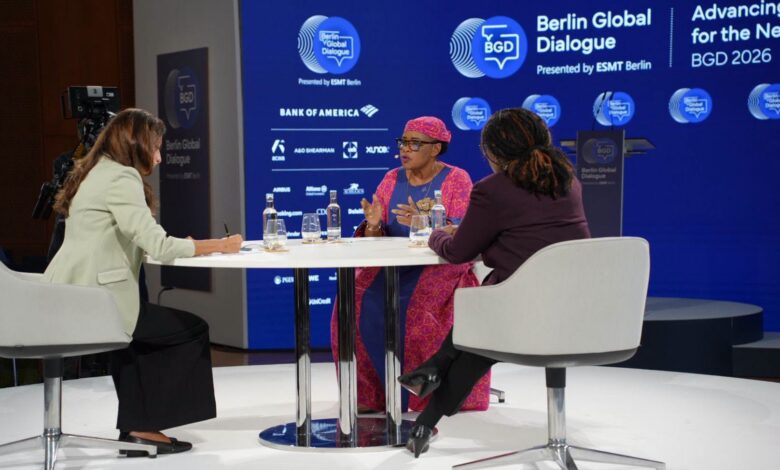
The Berlin Global Dialogue 2026 opened today at ESMT Berlin in Germany, bringing together global leaders and key stakeholders to discuss economic cooperation, international security and stronger partnerships between nations. The gathering provides a platform for countries to exchange ideas on shared challenges and explore ways to build a more cooperative and resilient global economy. Lesotho is participating in the dialogue, with Deputy Prime Minister Justice Nthomeng Majara highlighting the importance of international alliances and mutually beneficial cooperation. She drew a connection between the dialogue’s focus on strengthening partnerships and the legacy of King Moshoeshoe I, who united the Basotho nation through diplomacy, cooperation and a commitment to peaceful relations. Her remarks placed Lesotho’s historical experience at the centre of a broader discussion about how countries can work together to achieve common goals.
Justice Majara emphasised that strong international alliances remain essential in addressing the political, economic and security challenges facing the world. In an increasingly interconnected global economy, decisions made by one country can have consequences for businesses, communities and governments in other parts of the world. This makes cooperation between nations important for promoting stability, encouraging investment and creating opportunities for sustainable economic growth. The Deputy Prime Minister’s remarks highlighted the need for partnerships that extend beyond formal agreements and deliver practical benefits to the countries involved. Her message was that international cooperation should create opportunities for all participating parties rather than concentrate the benefits in the hands of a few.
The Deputy Prime Minister’s reference to King Moshoeshoe I gave her message a distinct historical and national perspective. King Moshoeshoe I is widely recognised as the founder of the Basotho nation and for his use of diplomacy, negotiation and strategic alliances during a period of major political and social change in Southern Africa. His leadership helped bring different communities together and establish the foundations of the nation that later became Lesotho. By drawing on this legacy, Justice Majara highlighted how cooperation and dialogue can help countries manage differences and build relationships that support shared interests. The comparison also reinforced the idea that the principles of diplomacy and partnership remain relevant in modern international relations, even as economic and security challenges continue to evolve.
Lesotho’s participation in the Berlin Global Dialogue 2026 also provides an opportunity to highlight the country’s natural resources and development potential. Justice Majara noted that these resources could benefit other countries through strong, fair and mutually beneficial partnerships. For a country such as Lesotho, international cooperation can create opportunities to attract investment, strengthen productive industries and expand economic relationships with regional and global partners. Such partnerships can also support the exchange of knowledge, skills and technology, helping countries develop their capabilities over time. However, the long-term value of these arrangements depends on careful planning, responsible resource management and agreements that deliver meaningful benefits to the people and economies involved.
The Deputy Prime Minister’s emphasis on shared benefits reflects an important principle in international economic cooperation. Countries enter partnerships with different resources, capabilities and development priorities, which can create opportunities for complementary forms of cooperation. One country may contribute natural resources, while another provides investment, technology, technical expertise or access to wider markets. When these contributions are managed fairly, partnerships can support economic activity and create opportunities for both sides. Justice Majara’s remarks therefore placed emphasis on cooperation that recognises the interests of all participants and encourages countries to pursue shared objectives through dialogue and practical collaboration.
Meanwhile, Lesotho’s Minister of Foreign Affairs and International Relations, Honourable Limpho Tau, shared details of the messages delivered by German Chancellor Friedrich Merz during the dialogue’s opening address. According to Honourable Tau, Chancellor Merz called for stronger international cooperation to address global security challenges, promote fair trade and support economic growth. These priorities reflect the close relationship between international stability and economic development. Security challenges can disrupt trade, weaken investor confidence and place pressure on national budgets, while unfair trading conditions can limit opportunities for businesses and developing economies. The German Chancellor’s reported message highlighted the importance of countries working together to address these interconnected issues.
Honourable Tau also reported that Chancellor Merz emphasised the importance of investment, innovation and artificial intelligence in strengthening economic competitiveness. Investment can help businesses expand, create employment and improve productive capacity, while innovation can support the development of new products, services and more efficient ways of working. Artificial intelligence is becoming an increasingly important part of this discussion because it can influence productivity, research, manufacturing and the delivery of public and private services. At the same time, countries need appropriate skills, infrastructure and policy frameworks to benefit from these technologies. For developing economies, including Lesotho, international cooperation in technology and innovation could help create new opportunities, provided that access to investment, expertise and digital infrastructure remains a practical priority.
The discussion about artificial intelligence and economic competitiveness is particularly relevant as countries consider how to prepare their economies for technological change. Businesses and governments are increasingly examining how digital tools can improve efficiency, support decision-making and encourage new forms of economic activity. However, the benefits of these developments are not automatic, as countries may face challenges involving skills shortages, infrastructure costs and unequal access to technology. Partnerships between governments, educational institutions, investors and businesses can help address some of these barriers. The issues highlighted at the Berlin Global Dialogue 2026 therefore demonstrate why international economic cooperation must consider both the opportunities created by innovation and the practical requirements for ensuring that more countries can benefit.
Another significant issue raised during the dialogue was the need for Africa to have a stronger voice in global economic discussions. Honourable Tau said Chancellor Merz underscored the importance of greater African participation in international decision-making, including at the G20 Summit scheduled for December 2026 in South Africa. The G20 brings together major economies and the European Union, with the African Union also a member of the grouping. Its discussions influence international conversations on economic growth, financial stability, trade and other issues that affect countries across the world. Stronger African participation can help ensure that the continent’s development priorities, economic opportunities and policy concerns receive meaningful attention in global debates.
For Lesotho and other African countries, participation in international forums offers an opportunity to raise concerns about investment, trade access, infrastructure development and sustainable economic growth. African economies have different resources and development needs, but many share an interest in attracting investment, creating employment and expanding access to international markets. Global discussions can help countries communicate these priorities and seek cooperation that supports long-term development. South Africa’s scheduled hosting of the G20 Summit in December 2026 also provides an important opportunity for African perspectives to feature in discussions involving major global economic issues. The effectiveness of such engagement will depend on whether the concerns raised translate into practical cooperation, investment and policies that support inclusive growth.
The Berlin Global Dialogue 2026 brings these issues together by creating a setting for discussions on economic cooperation, security and international partnerships. Its opening exchanges highlight the importance of balancing national interests with the need to address challenges that cross borders. For Lesotho, the dialogue offers a platform to present its development potential, strengthen international relationships and promote partnerships that can deliver practical economic benefits. Justice Majara’s reference to King Moshoeshoe I also demonstrates how the country’s history of diplomacy can inform its approach to contemporary international relations. By linking historical lessons with present-day economic opportunities, Lesotho is advancing a message that cooperation remains an important tool for achieving progress.
Lesotho’s participation in the Berlin Global Dialogue 2026 underscores the importance of building international alliances based on trust, fairness and shared objectives. Deputy Prime Minister Justice Nthomeng Majara highlighted the value of diplomacy and mutually beneficial partnerships, drawing inspiration from King Moshoeshoe I’s role in uniting the Basotho nation. Honourable Limpho Tau’s account of Chancellor Friedrich Merz’s address further emphasised international security, fair trade, investment, innovation and artificial intelligence as important issues for the global economy. The call for Africa to have a stronger voice in international economic discussions also places the upcoming G20 Summit in South Africa within a wider conversation about representation and development. Ultimately, the value of the Berlin Global Dialogue 2026 will be measured by the extent to which its discussions encourage practical partnerships, expand economic opportunities and help countries work together towards a more secure and inclusive global future.
Join 'Lesotho News' WhatsApp Channel
Get breaking Lesotho news — delivered directly to your WhatsApp.
CLICK HERE TO JOIN