Minister Motlatsi Maqelepo Visits Leather Manufacturing Factories in Maseru to Boost Industrial Growth and Job Creation

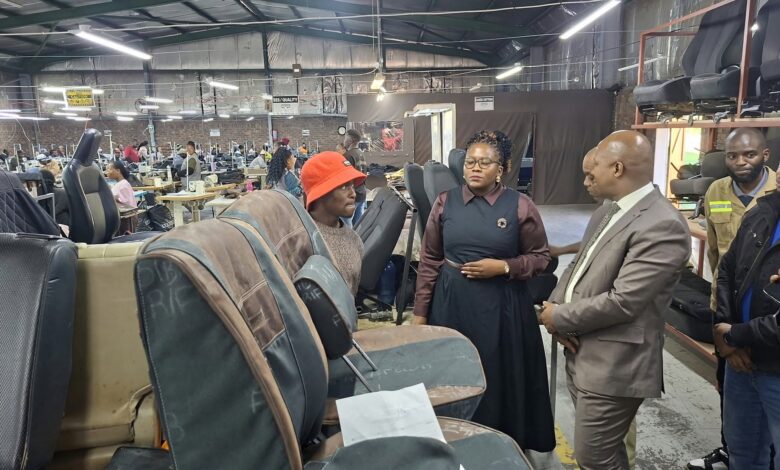
The Minister of Trade, Industry and Business Development, Honourable Motlatsi Maqelepo, yesterday visited three leather manufacturing factories at the Ha Thetsane Industrial Area in Maseru, Lesotho, to assess their operations and understand the challenges affecting their businesses. The visit forms part of the government’s efforts to strengthen local manufacturing, support investors and create sustainable employment opportunities. During the tour, the minister visited Adient Lesotho, Zeri Leather and Beesdam, three companies involved in manufacturing products for different markets. The engagement aimed to give the minister first-hand insight into the daily operations of the factories and identify areas where government intervention could improve their performance. The visit also reaffirmed the Ministry of Trade, Industry and Business Development’s commitment to promoting industrial development, expanding exports and creating a business environment that supports long-term economic growth.
The tour of the Ha Thetsane Industrial Area reflects the importance of direct engagement between government officials and businesses operating within Lesotho’s manufacturing sector. Factory visits allow policymakers to observe working conditions, understand production processes and listen to the concerns of business owners and management teams. This approach can help the government identify practical obstacles that may affect productivity, investment and employment. Challenges experienced by manufacturers can vary, including operational costs, access to markets, supply chain difficulties and the availability of suitable infrastructure. By gathering information directly from businesses, the ministry can better assess which interventions may be appropriate and how to respond to the needs of the industrial sector.
One of the factories visited was Adient Lesotho, which manufactures seat covers for Ford vehicles. Automotive component manufacturing forms part of a wider industrial supply chain that connects local production facilities with vehicle manufacturers and related industries. Producing components for the automotive sector requires attention to product specifications, quality standards and delivery schedules. Maintaining these requirements can help manufacturers remain competitive and sustain business relationships with customers. Adient Lesotho’s operations therefore highlight the role that specialised manufacturing can play in supporting industrial activity and providing employment opportunities in Lesotho.
The minister also visited Zeri Leather, a company that manufactures a range of high-quality leather bags. Leather goods production can create opportunities for skilled workers involved in material preparation, cutting, stitching, assembly and finishing. The quality of the final product is important in a competitive market where customers consider durability, design and workmanship when making purchasing decisions. Manufacturers in this sector may also benefit from developing distinctive products and identifying markets where their goods can compete effectively. Supporting businesses such as Zeri Leather can contribute to the development of local manufacturing capabilities and create opportunities for further growth in Lesotho’s leather goods industry.
Another factory included in the minister’s tour was Beesdam, which manufactures a wide range of car seat covers. Its operations demonstrate another application of manufacturing expertise within the automotive accessories market. Producing car seat covers requires suitable materials, consistent workmanship and attention to the needs of customers. The ability to deliver reliable products can help manufacturers build customer confidence and strengthen their position in the market. The visit provided the minister with an opportunity to learn more about the company’s activities and consider the operating conditions that may influence its continued development.
During the visit, Honourable Maqelepo reiterated that the Ministry of Trade, Industry and Business Development is mandated to create jobs, attract investment and drive economic growth. He emphasised the ministry’s commitment to ensuring that investors operate in a conducive business environment where they can establish, maintain and expand their operations. This commitment is important because manufacturing businesses require stable operating conditions to plan production, invest in equipment and develop their workforce. A supportive investment environment can also encourage businesses to explore new products, improve efficiency and expand into additional markets. Government engagement with existing manufacturers can help identify barriers to growth and inform measures intended to support business development.
Job creation remains a key consideration in Lesotho’s industrial development efforts. Manufacturing businesses can provide employment across different skill levels, from production workers and technicians to supervisors, administrators and managers. These jobs can also support wider economic activity through household spending and demand for goods and services from other businesses. However, the long-term contribution of manufacturing depends on the ability of factories to remain productive, respond to market conditions and maintain sustainable operations. By engaging directly with companies in Ha Thetsane, the ministry is seeking a clearer understanding of the conditions needed to support industrial employment and business continuity.
Attracting investment is another important priority for the government as it seeks to strengthen Lesotho’s economy. Investors assess several factors when deciding whether to establish or expand manufacturing operations, including infrastructure, labour availability, operating costs, market access and the reliability of public services. Addressing barriers in these areas can help businesses make long-term plans and improve their ability to compete. Existing factories also provide valuable insight into the practical conditions that influence investment decisions. The minister’s tour therefore created an opportunity to examine business concerns and reinforce the government’s intention to work towards a more supportive environment for industrial activity.
Expanding exports is also central to the ministry’s stated commitment to industrial development. Manufacturing companies that produce goods for wider markets can help increase the value of locally produced products and strengthen connections with regional and international supply chains. Export growth can also encourage manufacturers to improve quality, increase production capacity and develop more efficient processes. However, accessing export markets often requires compliance with product standards, reliable logistics and the ability to meet customer demand. Government support that responds to manufacturers’ actual needs can help businesses identify opportunities and address obstacles that limit their competitiveness.
The visit to Adient Lesotho, Zeri Leather and Beesdam also highlights the importance of understanding the different needs of individual manufacturers. Although the three companies operate within related areas of production, their products, customers and operational requirements may differ. Effective government support must take these differences into account rather than assume that every factory faces the same challenges. First-hand engagement can help officials distinguish between issues that require immediate attention and those that need longer-term policy or infrastructure improvements. The effectiveness of the tour will ultimately depend on how the information gathered informs practical action and whether any identified challenges receive appropriate follow-up.
Honourable Motlatsi Maqelepo’s visit to the three manufacturing factories at Ha Thetsane Industrial Area reinforces the Ministry of Trade, Industry and Business Development’s focus on industrial growth, investment promotion and sustainable job creation. The operations of Adient Lesotho, Zeri Leather and Beesdam demonstrate the range of products manufactured in Maseru, from automotive seat covers to leather bags and car accessories. The tour provided an opportunity to examine business operations, understand potential constraints and strengthen communication between government and industry. Continued engagement, combined with effective and timely interventions, can help create better conditions for manufacturers to grow, compete and contribute to the national economy. By supporting local businesses, expanding export opportunities and encouraging responsible investment, Lesotho can continue working towards a stronger manufacturing sector and more inclusive economic growth.
Join 'Lesotho News' WhatsApp Channel
Get breaking Lesotho news — delivered directly to your WhatsApp.
CLICK HERE TO JOIN