Lesotho and Iceland Strengthen Diplomatic Relations Following Ambassador Nts’ebo Moshoeshoe’s Accreditation

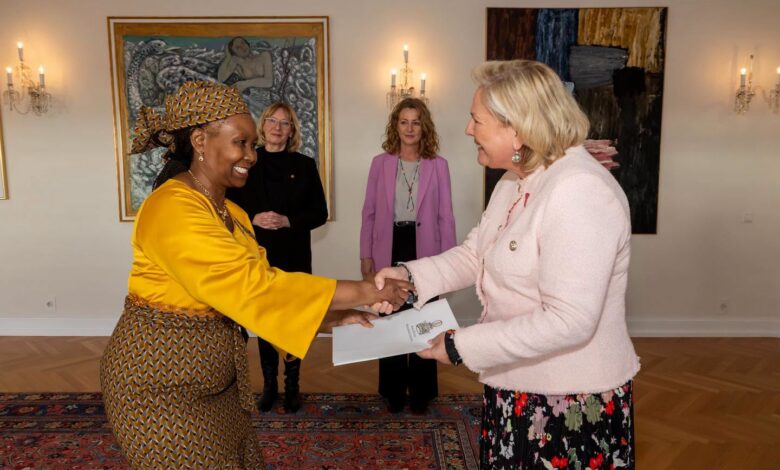
The Kingdom of Lesotho and the Republic of Iceland have reaffirmed their commitment to strengthening diplomatic relations following the formal presentation of Letters of Credence by Her Excellency Ambassador Nts’ebo Moshoeshoe to Her Excellency Halla Tómasdóttir, President of the Republic of Iceland, on 21 October 2026. The occasion marked an important step in advancing bilateral cooperation between the two countries and creating opportunities for deeper engagement across areas of shared interest. Building on diplomatic relations established in 1983, Lesotho and Iceland continue to recognise the value of international partnerships in promoting economic development, social progress and environmental sustainability. Ambassador Moshoeshoe’s accreditation represents the Kingdom of Lesotho’s renewed commitment to strengthening ties with Iceland and expanding cooperation for the mutual benefit of both nations. The engagement also provided an opportunity to discuss practical ways to develop a more structured and dynamic partnership that responds to the changing priorities of both countries.
Lesotho and Iceland have maintained diplomatic relations since 1983, establishing a foundation for cooperation across several important sectors. Over the years, their relationship has encompassed areas such as education, healthcare, agriculture, forestry, soil conservation and climate resilience. These sectors reflect shared interests in improving livelihoods, strengthening communities and promoting sustainable development. For Lesotho, cooperation with international partners can support national efforts to address development challenges, build institutional capacity and improve access to opportunities for its people. Iceland’s experience in areas such as renewable energy, environmental management and sustainable resource use also offers potential avenues for knowledge exchange and technical collaboration. Continued diplomatic engagement can help both countries identify areas where their experience, expertise and development priorities complement one another.
The presentation of Letters of Credence is an important diplomatic procedure through which an ambassador receives formal recognition as a representative of their head of state to another country. This accreditation enables the ambassador to carry out official diplomatic responsibilities and support communication between the two governments. In the case of Lesotho and Iceland, Ambassador Moshoeshoe’s presentation of credentials provides an opportunity to reinforce existing relations and identify new areas for cooperation. Effective diplomatic representation helps governments maintain regular dialogue, address shared concerns and explore opportunities for mutually beneficial partnerships. It can also strengthen connections between public institutions, businesses, educational organisations and other stakeholders in both countries. The accreditation therefore represents more than a formal diplomatic occasion, as it creates a foundation for continued engagement on bilateral and international priorities.
Strengthening economic relations is one area in which Lesotho and Iceland could explore additional opportunities. Potential areas of cooperation include trade, investment, tourism, education, agriculture and technology. Stronger diplomatic engagement can help identify potential business partners, improve the exchange of information and create opportunities for discussions on investment and economic development. For Lesotho, broader international partnerships can contribute to efforts to diversify economic activity, support enterprise development and create employment opportunities. Iceland, meanwhile, can engage with Lesotho in areas where shared priorities and complementary expertise provide a basis for cooperation. Realising these opportunities will depend on identifying practical projects, understanding each country’s regulatory environment and encouraging sustained engagement between relevant institutions and private-sector stakeholders.
Education and skills development also offer important opportunities for closer cooperation between the two countries. Access to quality education, technical training and knowledge exchange can help strengthen human capital and prepare young people for changing economic conditions. Partnerships between educational institutions could create opportunities for academic collaboration, professional development and the exchange of expertise in fields relevant to both countries. Agriculture, forestry and environmental management are particularly relevant areas for potential cooperation because they contribute to livelihoods, food security and the sustainable use of natural resources. Knowledge sharing in soil conservation and climate-resilient farming could also support efforts to protect agricultural productivity and strengthen rural communities. By exploring these possibilities, Lesotho and Iceland could further develop a partnership that links education and innovation with practical development needs.
Gender equality, youth empowerment and support for women-owned businesses were among the important themes discussed by Ambassador Moshoeshoe and President Tómasdóttir. These issues are central to inclusive economic growth because development is more sustainable when women and young people have meaningful opportunities to participate in economic and social life. Supporting women entrepreneurs can help expand business activity, encourage innovation and strengthen household and community livelihoods. Youth empowerment can also contribute to economic resilience by improving access to skills, employment and entrepreneurship opportunities. Cooperation in these areas could include the exchange of policy experiences, capacity-building initiatives and the identification of programmes that support women-led enterprises and youth participation in economic development. Continued attention to equality and inclusion can help ensure that the benefits of economic growth reach a wider section of society in both countries.
Renewable energy and sustainable development were also key areas of discussion during the diplomatic engagement. Iceland is widely recognised for its use of geothermal energy and hydropower, which play major roles in its electricity and heating systems. Its experience in developing and managing renewable energy resources creates potential opportunities for technical exchange and cooperation with countries seeking to strengthen their energy systems. For Lesotho, renewable energy development could support efforts to improve energy access, strengthen infrastructure and reduce vulnerability to climate-related challenges. Cooperation could involve sharing technical knowledge, exploring investment opportunities and examining approaches to sustainable energy planning that suit Lesotho’s geographical and economic conditions. Any future initiatives would need to account for local needs, financial feasibility and the technical requirements of individual projects, but the potential for knowledge exchange makes clean energy a relevant area for continued bilateral dialogue.
Climate resilience and environmental sustainability provide further common ground between Lesotho and Iceland. Both countries must consider how environmental conditions affect natural resources, economic activity and the well-being of their populations. Soil conservation, forestry and sustainable agriculture are particularly important for Lesotho, where protecting land and water resources supports rural livelihoods and long-term development. Iceland’s experience in renewable energy and aspects of environmental management could provide useful lessons for discussions on sustainable resource use and climate action. Through diplomatic cooperation, the two countries can explore opportunities to exchange expertise, strengthen institutional capacity and identify approaches that support environmental protection alongside economic progress. Such cooperation would complement broader international efforts to address climate change and advance the Sustainable Development Goals.
Tourism and cultural exchange could also contribute to stronger relations between Lesotho and Iceland. Both countries have distinctive natural landscapes and cultural identities that can provide a foundation for tourism promotion and people-to-people connections. Greater awareness of each country’s tourism offerings could encourage travel, cultural learning and opportunities for cooperation between relevant organisations. Educational exchanges and professional engagement could further strengthen mutual understanding while building lasting connections between their populations. Diplomatic missions can help facilitate these relationships by sharing information, supporting official contacts and encouraging dialogue among interested stakeholders. Although specific tourism or cultural initiatives would require further development, these areas offer additional ways to broaden the relationship beyond traditional government-to-government engagement.
Ambassador Moshoeshoe’s accreditation also provides an opportunity for Lesotho and Iceland to strengthen coordination on international issues of common concern. Both countries have expressed commitments to peace, stability, sustainable development and the well-being of their people. Continued dialogue can help them exchange perspectives on multilateral cooperation, equality, climate action and the implementation of international development commitments. Working together in international forums can also provide opportunities to support shared priorities and contribute to constructive diplomatic engagement. Strong bilateral relations can make it easier to identify common positions while respecting the distinct interests and circumstances of each country. Sustained communication between their governments will therefore remain important in turning shared principles into practical cooperation.
The future of Lesotho-Iceland relations will depend on how effectively both countries translate diplomatic goodwill into concrete initiatives. Regular consultations, stronger institutional links and engagement with relevant public and private stakeholders can help identify projects with clear development benefits. Cooperation in renewable energy, education, agriculture, technology, trade and investment could provide opportunities to expand the partnership over time. Attention to gender equality, youth empowerment and women-owned businesses can further ensure that future initiatives promote inclusive growth. The accreditation of Ambassador Nts’ebo Moshoeshoe offers a renewed platform for pursuing these priorities while building on more than four decades of diplomatic relations. By maintaining constructive dialogue and focusing on shared interests, Lesotho and Iceland can strengthen their partnership in ways that support national development and international cooperation.
The formal presentation of Letters of Credence by Ambassador Nts’ebo Moshoeshoe to President Halla Tómasdóttir on 21 October 2026 represents an important moment in the continuing diplomatic relationship between the Kingdom of Lesotho and the Republic of Iceland. Since establishing diplomatic relations in 1983, the two countries have developed a foundation for cooperation in education, healthcare, agriculture, forestry, soil conservation and climate resilience. Their renewed engagement creates opportunities to explore additional areas of mutual interest, including renewable energy, trade, investment, tourism and technology. The emphasis on gender equality, youth empowerment and support for women-owned businesses also highlights the importance of making future development more inclusive. Through sustained diplomatic engagement and practical cooperation, Lesotho and Iceland can build on their longstanding relationship, pursue shared development priorities and contribute to a more sustainable and prosperous future for their peoples.
Join 'Lesotho News' WhatsApp Channel
Get breaking Lesotho news — delivered directly to your WhatsApp.
CLICK HERE TO JOIN