Global Partnership for Education Mission Visits Sion Primary School to Strengthen Early Childhood Education in Lesotho

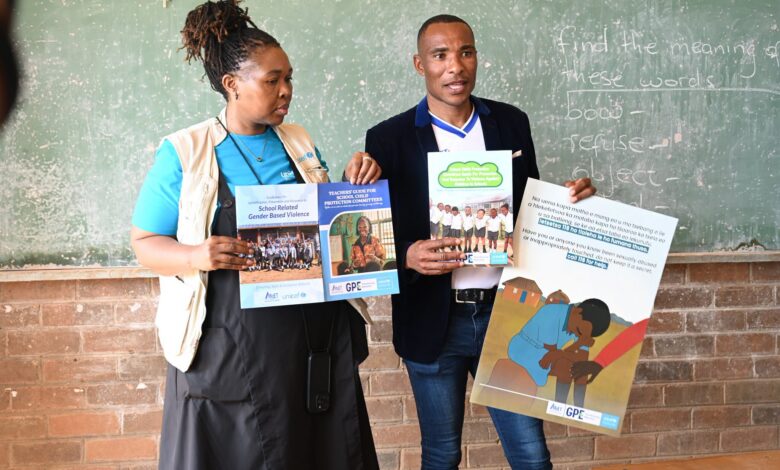
The Global Partnership for Education Mission to Lesotho has visited Sion Primary School in Berea, highlighting ongoing efforts to strengthen early childhood education and foundational learning in the country. The visit brought attention to investments designed to give young learners a stronger start to their education through improved school readiness, teacher preparation and community involvement. At Sion Primary School, these efforts include the establishment of a reception class, training for the reception class teacher and initiatives aimed at strengthening literacy and numeracy among learners in the early grades. The focus on the first years of education reflects the importance of building strong learning foundations before children progress to more advanced levels of schooling. The GPE mission’s engagement at the school provides an opportunity to observe how targeted education investments can support learners, teachers and families at community level.
One of the key investments at Sion Primary School has been the establishment of a reception class. Reception classes can provide young children with an important transition between early childhood and formal primary education by helping them develop basic skills, routines and confidence in a structured learning environment. For children entering school for the first time, this transition can influence how comfortably they adapt to classroom expectations and how prepared they are to begin formal learning. Creating an appropriate reception class therefore provides an opportunity to introduce age-appropriate learning while supporting children’s social, emotional and cognitive development. The investment at Sion Primary School reflects a broader effort to strengthen early childhood education as an important part of the education system in Lesotho.
Teacher preparation is another important part of the work taking place at Sion Primary School. The reception class teacher received training on the National Early Childhood Education curriculum as well as the School Readiness Initiative. This type of training is important because teachers need a clear understanding of how young children learn and how classroom activities can support their development. A well-prepared teacher can use appropriate teaching approaches to help children develop early language, communication, numeracy and social skills. Strengthening teacher capacity also helps ensure that investments in classrooms and learning materials are supported by the professional knowledge needed to use them effectively.
The School Readiness Initiative adds another important dimension to early childhood education by focusing on the preparation of children for their transition into formal schooling. School readiness involves more than knowing letters and numbers because young children also need communication skills, social development, confidence and the ability to participate in classroom activities. Supporting these areas can help children enter primary school with a stronger foundation for learning. The initiative can also help teachers and communities understand the different needs of young learners as they move into formal education. At Sion Primary School, linking teacher training with the School Readiness Initiative creates a more structured approach to supporting children during the early stages of their education.
Community engagement is also central to the investments being made at Sion Primary School. Parents and families play an important role in supporting children’s education, particularly during the early years when children rely heavily on adults for encouragement and guidance. Strengthening parental support for early childhood education can help families understand how they can contribute to learning both at home and at school. Engagement between schools and communities can also help identify challenges that may affect children’s participation and development. By involving parents in early childhood education, schools can build stronger connections between classroom learning and the experiences children have at home.
The focus on parental support is particularly important because children’s early learning does not take place only inside the classroom. Simple activities at home, such as reading, talking, counting and encouraging children to ask questions, can complement what teachers do at school. Parents who understand the importance of early learning can create environments that encourage children to practise and develop new skills. Schools can support this process by communicating with families and providing practical guidance on ways to encourage learning. Community engagement at Sion Primary School therefore forms part of a wider effort to create stronger support systems around young learners.
Another major area of investment at Sion Primary School is the strengthening of foundational literacy and numeracy in Grades 1 to 3. These early grades are critical because children develop basic reading, writing and mathematics skills that they will use throughout their education. If learners experience difficulties with these foundational skills, they may face challenges when they encounter more advanced subjects and concepts. Strengthening literacy and numeracy at an early stage can help teachers identify learning gaps and provide additional support before those difficulties become more difficult to address. The focus on Grades 1 to 3 therefore reflects the importance of ensuring that children develop essential academic skills during the early years of primary school.
Foundational literacy allows children to understand written information, communicate through reading and writing and participate more effectively in classroom learning. Numeracy gives children the ability to understand numbers, quantities, patterns and basic mathematical concepts that support later learning. Both areas are closely connected to a child’s ability to progress through school and engage with different subjects. Teachers need appropriate training, learning resources and classroom strategies to help children develop these skills effectively. The investments at Sion Primary School demonstrate a focus on strengthening these basic competencies rather than waiting until learners reach higher grades before addressing learning difficulties.
The combination of early childhood education and foundational literacy and numeracy creates a continuous approach to supporting children as they move through the first stages of schooling. A child can begin with a reception class designed to build school readiness, progress into the early primary grades and receive continued support in reading, writing and mathematics. This continuity can help reduce gaps between early childhood education and primary education. It also allows schools to consider the development of children as a gradual process rather than treating each grade as completely separate from the previous one. The approach at Sion Primary School shows how different education interventions can work together to strengthen the learning journey from early childhood through the first years of primary school.
The visit by the Global Partnership for Education Mission also highlights the importance of monitoring how education investments affect schools and communities. Visits to schools allow education stakeholders to see how programmes are being implemented and to engage with teachers, learners and communities. These interactions can provide useful insight into the progress being made as well as the challenges that schools may face. Direct engagement can also help ensure that education programmes remain connected to the realities experienced by learners and teachers. The visit to Sion Primary School therefore provided an opportunity to observe the practical side of investments in early childhood education and foundational learning in Lesotho.
Education development in Lesotho depends on strong foundations that begin well before learners reach higher grades. Early childhood education can help children develop the basic abilities they need to participate successfully in formal schooling. Teacher training can strengthen the quality of classroom instruction, while parental engagement can provide additional support outside the school environment. Investments in literacy and numeracy can then help ensure that children develop the academic skills required for continued learning. Together, these areas provide a comprehensive approach to improving the early education experience for children in communities such as Berea.
The work at Sion Primary School demonstrates the value of focusing on children during the earliest stages of their educational journey. The establishment of a reception class, teacher training on the National ECE curriculum and School Readiness Initiative, community engagement and support for foundational literacy and numeracy all address different aspects of early learning. These investments are connected by a common objective of giving children stronger foundations for future education. The involvement of teachers, parents and education stakeholders also shows that improving learning outcomes requires cooperation across the wider school community. As Lesotho continues to strengthen its education system, initiatives such as those at Sion Primary School can contribute to creating better opportunities for young learners and supporting stronger educational outcomes in the years ahead.
Join 'Lesotho News' WhatsApp Channel
Get breaking Lesotho news — delivered directly to your WhatsApp.
CLICK HERE TO JOIN