King Letsie III Urges World Leaders to Support School Meals for the Future at UN General Assembly Side Event

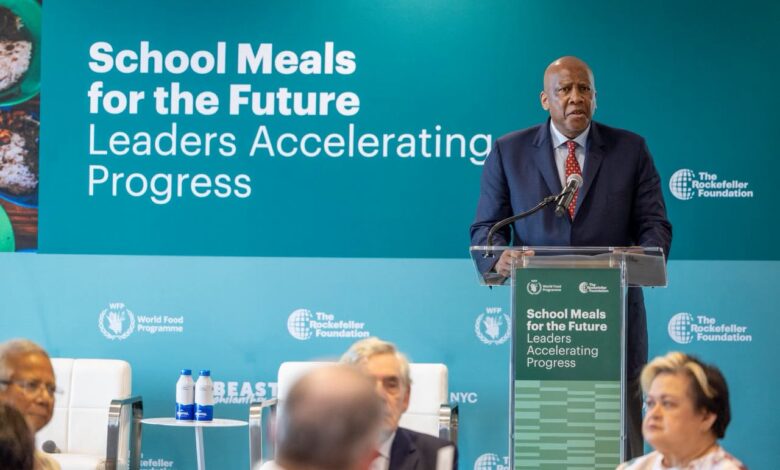
His Majesty King Letsie III of Lesotho has called on world leaders to strengthen their commitment to school meals, describing nutritious school feeding programmes as an important investment in children, human capital and the long-term development of nations. The King made the appeal in New York, USA, at the Rockefeller Foundation School Meals for the Future High-level Side Event held on the margins of the 81st Session of the United Nations General Assembly. According to the Government of Lesotho, the event brought attention to the need to place school meals at the centre of global development discussions. King Letsie III urged the international community to view school meals not simply as social welfare or food procurement programmes, but as strategic investments in the future prosperity of countries.
The intervention comes as global leaders continue to examine practical ways to improve nutrition, education and economic resilience. King Letsie III has served as a prominent advocate for nutrition, including in his role as the Food and Agriculture Organization Goodwill Ambassador for Nutrition and African Union Nutrition Champion. His message in New York focused on the connection between adequate nutrition during childhood and the ability of young people to learn, develop and contribute productively to their communities later in life. The Government of Lesotho said the King highlighted the transformative potential of nutritious school meals for learning outcomes, economic productivity and long-term national development. This approach places school feeding within a broader discussion about human capital rather than treating it as an isolated education or food security intervention.
The Rockefeller Foundation School Meals for the Future event also reflected growing international interest in resilient and locally sourced school meal programmes. The Rockefeller Foundation describes its approach as one that connects nutritious school meals with local food systems, public procurement and regenerative agriculture. Its regenerative school meals model seeks to connect local farmers with procurement systems so that school feeding can support children while also strengthening rural economies and food production systems. This means that the benefits of school meals can extend beyond the classroom, reaching farmers, food producers and communities. The model also places climate resilience and sustainable agriculture alongside nutrition and education as interconnected development priorities.
King Letsie III’s call is particularly relevant because school meals can address several challenges at the same time. A nutritious meal at school can help children meet some of their daily nutritional needs while also supporting their participation in education. The Rockefeller Foundation states that school meals can improve attendance and academic performance and reports a long-term return of approximately nine dollars for every dollar invested. These figures illustrate why governments and development partners increasingly consider school feeding a form of investment rather than simply a recurring social expense. The wider argument is that spending on children’s nutrition can contribute to healthier communities and stronger human capital over time.
The discussion also connects directly with the need for stronger and more sustainable food systems. School meal programmes require reliable supplies of nutritious food, which creates an opportunity for governments to use public procurement to support local producers. When programmes source suitable food from local and regional farmers, public spending can potentially contribute to agricultural markets while providing children with regular meals. The Rockefeller Foundation has promoted regenerative school meals as a way to combine child nutrition with climate-conscious agriculture and stronger local economies. This approach gives school feeding a wider role in building resilient food systems while maintaining its core purpose of ensuring that children receive nutritious food.
The call from King Letsie III also builds on his previous advocacy for expanding school feeding across Africa. In September 2024, he joined the African Development Bank Group and philanthropic organisations at a high-level roundtable focused on ending school-age hunger. That meeting included a commitment by the Children’s Investment Fund Foundation to provide an initial $50 million toward an End School-Age Hunger Fund, designed to support African countries pursuing universal school feeding through grants and loans. The initiative targeted support for countries seeking to expand school feeding programmes and was presented as part of broader efforts to improve health, education and economic outcomes. The African Development Bank reported that participants also called for financing from development banks, charities, pension funds and private investors.
The Rockefeller Foundation has also announced significant resources for expanding school meal programmes. In March 2025, the foundation announced a five-year commitment of US$100 million aimed at supporting efforts in more than a dozen countries and reaching 100 million children with more nutritious, locally and regeneratively grown school meals. The initiative builds on work in countries including Brazil and Kenya and seeks to strengthen food systems while improving the nutritional quality of school meals. This commitment demonstrates the scale of investment that international organisations are considering as governments work to expand access to school feeding. It also reinforces the argument that school meals can serve several development objectives when programmes receive adequate financing and are designed around local conditions.
For Lesotho and other African countries, the discussion carries particular significance because school meals can connect nutrition policy with education, agriculture and economic development. Strong programmes require more than food deliveries, since governments also need reliable financing, procurement systems, nutritional standards, monitoring and coordination between relevant institutions. Local production can add another layer of impact when farmers have dependable markets and children receive diverse and nutritious meals. International partnerships can provide technical expertise and financial resources, but national governments remain central to programme design and implementation. King Letsie III’s message therefore places political commitment and sustained investment at the heart of efforts to ensure that school meals reach more children.
The 81st Session of the United Nations General Assembly provides a significant international platform for this discussion because leaders and institutions use the gathering to address issues that affect global development. King Letsie III’s participation gives school nutrition visibility within a wider conversation about the future of nations and the wellbeing of children. His appeal asks world leaders to consider the long-term consequences of underinvestment in child nutrition and the potential gains from making nutritious school meals more widely available. The message is also consistent with his broader public advocacy for placing children’s nutrition at the centre of national development decisions. In September 2026, the King wrote that well-nourished children can become better educated and more productive adults, linking nutrition directly with the strength of future economies.
The concept of “School Meals for the Future” therefore extends beyond providing food to children during the school day. It raises questions about how countries can build programmes that remain financially sustainable, nutritionally effective and resilient to economic and climate pressures. It also highlights the role of agriculture and public procurement in creating reliable food supply chains that benefit both children and producers. When governments treat school meals as part of national development planning, they can connect education policy with nutrition, agriculture, social protection and economic development. The approach promoted at the New York event places these connections at the centre of the conversation about how school meals can contribute to the next generation.
King Letsie III’s appeal in New York ultimately places children at the centre of a broader global development agenda. His message was that nutritious school meals should receive sustained political attention because they can influence learning, health, economic productivity and the resilience of food systems. The Rockefeller Foundation’s work and previous partnerships involving the African Development Bank and philanthropic organisations show that there is already significant international interest in expanding and improving school feeding. The challenge now involves turning political commitments into adequately financed programmes that governments can deliver consistently and measure effectively. As world leaders consider the future of human capital and food systems, the call from King Letsie III reinforces the importance of treating school meals as a long-term investment in children and the future prosperity of nations.
Join 'Lesotho News' WhatsApp Channel
Get breaking Lesotho news — delivered directly to your WhatsApp.
CLICK HERE TO JOIN