Lesotho Calls for Greater Global Support to Help Developing Countries Thrive in the AI Era

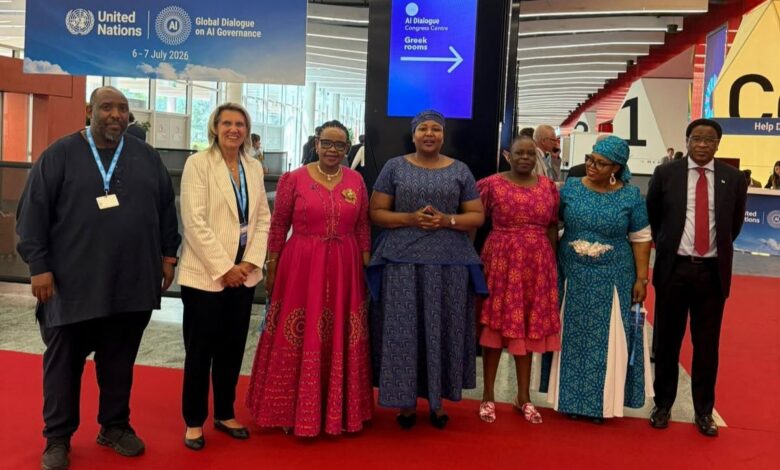
Lesotho has urged the international community to strengthen efforts aimed at ensuring developing countries are fully included in the rapidly evolving world of artificial intelligence. Addressing global leaders and technology experts during discussions under Cluster 2, Bridging AI Divides, Capacity-Building, Access and Digital Foundations, the country emphasized that meaningful participation in AI requires much more than internet connectivity. Lesotho argued that developing nations must be empowered to contribute not only as users of artificial intelligence technologies but also as active partners in shaping AI policies, platforms and innovation. The country’s intervention highlighted the importance of building the necessary foundations that allow all nations to benefit from technological progress. This message formed part of Lesotho’s broader contribution to international discussions on creating a more inclusive and balanced approach to global AI governance.
The remarks were delivered by Mr. Kanono Ramashamole, Principal Secretary in the Ministry of Information, Communications, Science, Technology and Innovation. He is part of the delegation led by the Honourable Deputy Prime Minister, Justice Nthomeng Majara, attending the United Nations Global Dialogue on AI Governance, the World Summit on the Information Society Forum and AI for Good in Geneva, Switzerland. The Honourable Minister of Information, Communications, Science, Technology and Innovation is also participating in the high-level meetings. The sessions began this week and will continue until Friday, bringing together governments, international organizations, researchers and technology leaders from around the world. These events provide an important platform for countries to discuss how artificial intelligence can be governed responsibly while ensuring that its benefits are shared more equitably.
During his intervention, Mr. Ramashamole stressed that broadband infrastructure, while essential, is only one component of successful digital transformation. He explained that many countries have expanded network coverage but continue to face challenges that prevent citizens from fully participating in the digital economy. Lesotho serves as a practical example of this reality, having achieved 100 percent broadband coverage across the country. Despite this achievement, only about half of the population regularly accesses the internet. According to Mr. Ramashamole, this demonstrates that expanding network availability alone does not automatically translate into widespread digital participation.
Affordability emerged as one of the central issues highlighted by the Lesotho delegation. Even where internet services are technically available, many individuals and families remain unable to access them consistently because of the cost of connectivity, devices and related digital services. This financial barrier limits opportunities for education, entrepreneurship, innovation and participation in artificial intelligence initiatives. Mr. Ramashamole explained that reducing these costs should become a priority for governments and international development partners seeking to close the global AI gap. Without affordable digital access, millions of people risk being excluded from the opportunities created by emerging technologies.
The Principal Secretary also drew attention to another fundamental challenge that often receives less attention during discussions about digital transformation, reliable access to electricity. He explained that dependable energy supplies are essential for people to participate in the digital economy and make use of online services. In some communities, individuals still travel long distances simply to charge their mobile phones because electricity remains limited or unavailable. Such circumstances create significant obstacles to digital inclusion and make it difficult for people to benefit from modern technologies. Mr. Ramashamole noted that without stable energy infrastructure, participation in the artificial intelligence economy remains out of reach for many communities.
Another important issue raised during the discussions was the challenge of fragmented and unstructured data. Mr. Ramashamole reinforced points previously made by the Honourable Deputy Prime Minister regarding the need for an international framework that supports countries in preparing data for responsible AI development. Many developing nations possess large volumes of public-sector information, but much of it remains scattered across different institutions or stored in formats that cannot easily support artificial intelligence systems. Weak governance structures and inconsistent data management practices further complicate the situation. Lesotho believes that addressing these challenges will allow countries to unlock the full value of their existing data while supporting ethical and effective AI innovation.
Lesotho also highlighted Digital Public Infrastructure as a practical solution for strengthening national AI readiness. Investment in digital identity systems, secure data exchange platforms, electronic government services and other public digital infrastructure can create a strong foundation for responsible artificial intelligence deployment. These systems improve efficiency across government while making public services more accessible to citizens. At the same time, they establish trusted digital environments that enable innovation without compromising security or accountability. Lesotho believes that strengthening Digital Public Infrastructure is an important step toward creating sustainable digital economies across developing countries.
Open-source technology was presented as another valuable tool for expanding access to artificial intelligence. Mr. Ramashamole explained that open-source software and collaborative development models reduce dependence on expensive proprietary systems while encouraging local innovation. By adopting open technologies, countries can adapt digital solutions to meet their own national priorities and development goals. Lesotho’s participation in the recent Open Source Week was highlighted as an example of the country’s ongoing investment in digital skills development and capacity building. These initiatives help prepare local professionals to contribute to AI research, software development and digital policy formulation.
The country’s long-term vision extends beyond simply adopting artificial intelligence technologies developed elsewhere. Mr. Ramashamole emphasized that Lesotho is taking practical steps to become a co-creator of AI policies, platforms and digital foundations that will shape the future of artificial intelligence. This approach reflects the country’s determination to actively participate in international technology development while strengthening its own domestic capabilities. By investing in skills, infrastructure, governance and collaboration, Lesotho aims to position itself as an active contributor to the global AI ecosystem. This strategy also supports broader national development goals by encouraging innovation and building digital resilience.
The discussions taking place in Geneva are expected to influence future international efforts to reduce AI divides between developed and developing countries. As governments continue shaping global AI governance, Lesotho has called for greater international cooperation that addresses affordability, infrastructure, trusted data, energy access and capacity building alongside technological advancement. The country’s message reinforces the idea that artificial intelligence should create opportunities for all nations rather than widening existing inequalities. Through its contributions at the United Nations Global Dialogue on AI Governance and related international forums, Lesotho has demonstrated its commitment to ensuring that developing countries have a meaningful voice in determining the future of artificial intelligence. Its proposals offer practical solutions that can help build a more inclusive, responsible and sustainable global AI ecosystem where every country has the opportunity to participate and benefit.
Join 'Lesotho News' WhatsApp Channel
Get breaking Lesotho news — delivered directly to your WhatsApp.
CLICK HERE TO JOIN