Twenty-Four Women From 11 Belt and Road Countries Complete AI and Digital Media Training in China

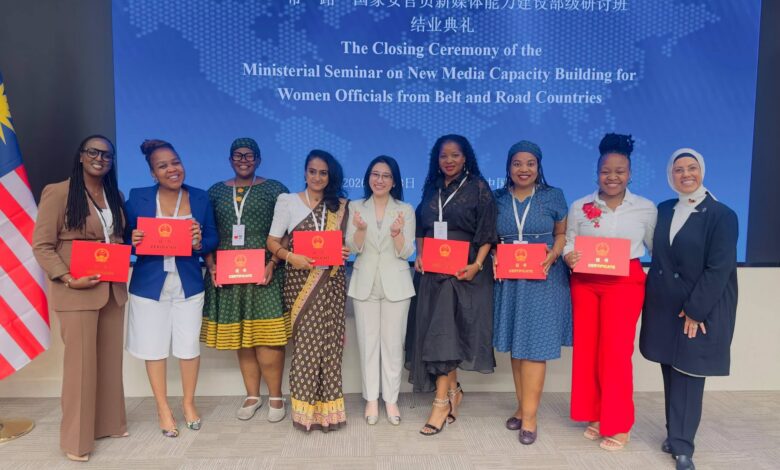
Twenty-four women officials and media professionals from 11 Belt and Road countries have successfully completed a 10-day Ministerial Seminar on New Media Capacity Building for Women, marking another important step in strengthening international cooperation in digital communication and women’s leadership. The programme focused on equipping participants with practical skills in artificial intelligence, digital journalism and modern communication technologies that are increasingly shaping the global media landscape. As governments, media organisations and institutions continue to embrace digital transformation, initiatives such as this seminar are becoming essential for building the knowledge and expertise needed to keep pace with rapid technological change. The training also created an opportunity for women from diverse cultural and professional backgrounds to exchange ideas, share experiences and develop lasting partnerships. The successful conclusion of the seminar reflects China’s continued commitment to supporting capacity building and promoting innovation among Belt and Road partner countries.
Speaking during the closing ceremony, Deputy Secretary of the Party Committee of China Women’s University, XING Huili, praised the participants for their dedication throughout the programme. She expressed confidence that the knowledge, practical skills and professional experience gained during the seminar would have a lasting impact once participants returned to their respective countries. According to Ms. Xing, the seminar was carefully designed to empower women by providing them with the confidence and technical expertise needed to embrace emerging technologies, particularly artificial intelligence. She highlighted that digital transformation presents significant opportunities for women to contribute to innovation, public communication and national development. Her remarks underscored the importance of ensuring that women are actively involved in shaping the future of technology and media.
Ms. Xing also emphasized that the seminar extended beyond technical training by promoting international cooperation and mutual understanding among participants from different regions. She noted that the friendships and professional relationships developed during the programme would continue well beyond the ten-day training period. These networks, she explained, would encourage future collaboration, knowledge sharing and joint initiatives across Belt and Road countries. Such partnerships can contribute to stronger communication between nations while supporting women in leadership positions across government, media and technology sectors. She encouraged every participant to become an ambassador for digital transformation and inclusive development within their institutions, workplaces and local communities.
Artificial intelligence formed one of the central themes of the seminar, reflecting its growing influence across industries worldwide. Participants explored how AI technologies are transforming journalism, communication strategies and public information systems. The training introduced delegates to practical applications of artificial intelligence while encouraging responsible and ethical use of these emerging technologies. Discussions also examined how digital tools can improve efficiency, expand access to information and enhance communication between governments and citizens. By focusing on both innovation and responsibility, the seminar prepared participants to make informed decisions as AI continues to reshape the modern workplace.
On behalf of the participants, Ms. Isheja Sandrine Butera delivered remarks highlighting the value of the programme and its impact on everyone who attended. She said the seminar significantly broadened participants’ understanding of the transformative potential of artificial intelligence and digital media. According to Ms. Butera, the training provided practical knowledge, fresh perspectives and innovative approaches that participants could immediately apply within their professional environments. She explained that the newly acquired skills would support efforts to improve communication, strengthen public service delivery and promote the responsible use of digital technologies. Her remarks reflected the shared appreciation among delegates for the quality of the programme and the opportunities it created.
Ms. Butera also expressed sincere gratitude to the Government of China, China Women’s University and the organisers for hosting the seminar and creating an environment that encouraged both learning and collaboration. She acknowledged that the programme offered far more than classroom instruction by bringing together professionals from different countries to exchange ideas and experiences. Cultural exchange activities and networking opportunities enabled participants to gain a broader understanding of one another’s perspectives while building valuable professional relationships. These interactions strengthened the overall learning experience and reinforced the importance of international cooperation in addressing common challenges. She added that the experiences gained during the seminar would inspire participants to promote women’s empowerment and digital innovation after returning home.
Throughout the programme, participants attended lectures delivered by experienced experts in artificial intelligence, digital communication and modern media practices. These sessions combined theoretical knowledge with practical demonstrations, giving delegates the opportunity to explore how emerging technologies are being integrated into real-world communication strategies. Participants also took part in hands-on training that strengthened their technical skills and increased their confidence in using new digital tools. The practical nature of the seminar ensured that attendees gained experience that could be directly applied in their daily professional responsibilities. This balanced approach helped bridge the gap between academic learning and practical implementation.
The seminar also included educational visits to leading Chinese media organisations, technology companies and cultural landmarks. These visits allowed participants to observe China’s digital transformation firsthand while learning how innovation is being integrated into journalism, communication infrastructure and technological development. Exposure to advanced media operations and technology enterprises provided valuable insights into how artificial intelligence and digital platforms are supporting economic growth and public communication. Cultural visits complemented the technical training by helping delegates better understand China’s history, traditions and development journey. Together, these experiences created a comprehensive programme that combined professional development with cultural understanding.
As digital technologies continue to evolve at an unprecedented pace, the need for skilled professionals capable of adapting to these changes is becoming increasingly important. Women play a vital role in ensuring that technological innovation remains inclusive, ethical and responsive to the needs of diverse communities. Programmes such as the Ministerial Seminar on New Media Capacity Building for Women help bridge knowledge gaps while encouraging greater female participation in technology, journalism and leadership. They also contribute to stronger international partnerships by creating opportunities for collaboration across borders. Building digital skills among women strengthens institutions, improves communication systems and supports sustainable development goals.
The completion of the ten-day seminar represents another milestone in China’s ongoing efforts to strengthen cooperation with Belt and Road partner countries through knowledge sharing, professional development and capacity building. By investing in women’s leadership and digital education, the programme has equipped participants with valuable skills that can benefit their organisations, communities and nations. The combination of artificial intelligence training, media education, cultural exchange and international networking has created a strong foundation for continued collaboration among the delegates. As participants return home, they carry not only practical expertise but also new professional relationships and a shared commitment to innovation. Their experiences are expected to contribute to more inclusive digital transformation while advancing responsible communication and women’s leadership across the Belt and Road network.
Join 'Lesotho News' WhatsApp Channel
Get breaking Lesotho news — delivered directly to your WhatsApp.
CLICK HERE TO JOIN