Country Statement of the Kingdom of Lesotho at the United Nations Global Dialogue on Artificial Intelligence Governance Highlights Inclusive AI Development

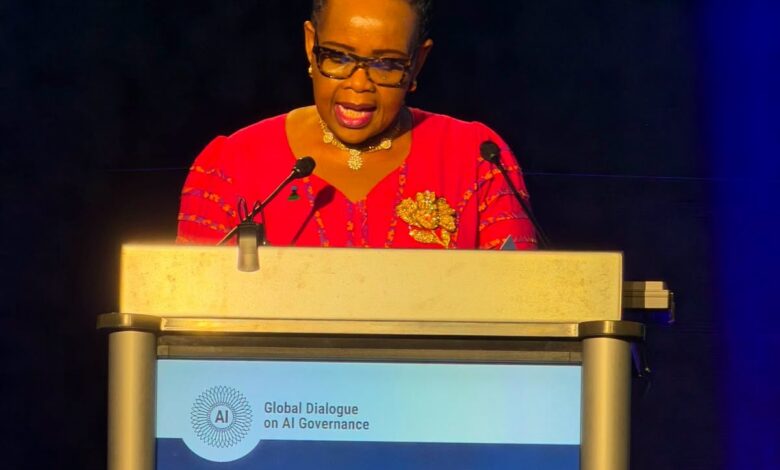
The Kingdom of Lesotho used the platform of the United Nations Global Dialogue on Artificial Intelligence Governance to present its vision for responsible, inclusive and development-focused artificial intelligence. Speaking at the Palexpo International Exhibition and Convention Centre in Geneva, Switzerland, on 6 and 7 July 2026, the Honourable Deputy Prime Minister addressed delegates from across the world on behalf of the country. The statement reflected Lesotho’s commitment to ensuring that artificial intelligence becomes a tool for shared progress rather than a source of greater inequality. It also demonstrated the country’s intention to actively participate in shaping global AI governance despite the challenges often faced by smaller developing nations. By focusing on practical priorities such as capacity building, open technologies, trusted data and human oversight, Lesotho presented a clear roadmap for how emerging technologies can support sustainable development across Africa and beyond.
Opening the address, the Deputy Prime Minister expressed appreciation for the opportunity to participate in the first United Nations Global Dialogue on Artificial Intelligence Governance. Lesotho aligned itself with the positions presented by the Group of 77 and China, as well as the Africa Group, while also providing additional national perspectives. This alignment highlighted the country’s commitment to working alongside developing nations in advocating for equitable AI governance. The statement acknowledged that artificial intelligence is becoming one of the defining technologies of the modern era and that international cooperation will play a crucial role in determining its future impact. Lesotho emphasized that every nation, regardless of its size or level of economic development, deserves an opportunity to benefit from AI innovation.
The country welcomed the dialogue as a timely and necessary platform for discussing the future governance of artificial intelligence. Lesotho stressed that AI should serve the interests of all countries and all people instead of benefiting only technologically advanced economies. The statement also welcomed the preliminary report of the United Nations Independent International Scientific Panel on Artificial Intelligence. According to Lesotho, the report provides valuable evidence showing that policy decisions made today will shape whether AI contributes to inclusive development or widens existing inequalities. This evidence-based approach reinforces the importance of building governance systems that place human development at the centre of technological progress.
A significant part of the statement focused on the unique challenges facing small states as they seek to participate in the rapidly evolving AI landscape. Lesotho explained that meaningful participation requires more than access to technology alone. Countries also need strong institutions, skilled professionals, reliable digital infrastructure and high-quality data systems. Without these foundational elements, nations risk becoming passive users of AI technologies developed elsewhere instead of active contributors to innovation and governance. Lesotho argued that international AI governance frameworks should therefore include targeted support for developing countries to strengthen their technical and institutional capacities.
The Deputy Prime Minister highlighted Lesotho’s Artificial Intelligence Policy of 2025 as evidence of the country’s proactive approach to preparing for the AI era. The policy aligns closely with many of the principles discussed during the global dialogue, particularly those related to capacity building, AI-ready data, openness, human oversight and inclusive development. By establishing a national AI policy, Lesotho has positioned itself among countries seeking to responsibly integrate artificial intelligence into public administration, economic development and service delivery. The policy reflects an understanding that successful AI adoption depends on careful planning and strong governance rather than technology alone. It also demonstrates Lesotho’s commitment to ensuring that AI supports national development goals while protecting the rights of its citizens.
The first major priority outlined by Lesotho was capacity building. The country stressed that no nation can effectively regulate artificial intelligence, adopt AI technologies safely or contribute meaningfully to international rule-making without investing in education, skills and institutional development. Building local expertise enables governments to understand both the opportunities and the risks associated with AI systems. Skilled professionals are needed to develop policies, oversee implementation and ensure compliance with ethical standards. Lesotho therefore called on the international community to prioritize knowledge sharing, technical assistance and training programmes that help developing countries build sustainable AI capabilities.
The second priority focused on openness as a foundation for inclusive innovation. Lesotho advocated for the expanded use of open-source software, open data, open standards and open AI models. These approaches reduce dependence on expensive proprietary technologies while lowering barriers to innovation for developing countries. Open technologies also enable local developers, researchers and institutions to adapt AI solutions to meet national and regional needs. By encouraging openness, Lesotho believes countries can foster greater collaboration, accelerate innovation and create more affordable pathways to digital transformation. This approach supports technological independence while promoting broader participation in the global AI ecosystem.
Interoperability and digital infrastructure formed the third key priority presented during the address. Lesotho emphasized that responsible public-sector AI requires modern digital systems capable of securely exchanging information across government institutions. Reliable digital identity systems, electronic government services, secure data exchange mechanisms and strong cybersecurity frameworks are all essential components of effective AI implementation. Without these foundational systems, governments may struggle to deploy AI solutions that improve public services while maintaining public trust. Lesotho argued that investments in digital infrastructure should accompany AI policy development to ensure that technological innovation delivers meaningful benefits to citizens.
The fourth priority centred on sector-led, risk-based governance supported by existing regulatory institutions. Lesotho proposed that AI oversight should be tailored to the specific risks associated with different sectors rather than relying on a single universal regulatory model. Existing regulators with expertise in areas such as healthcare, education, finance and public administration should play leading roles in overseeing AI applications within their respective fields. Where artificial intelligence affects fundamental rights or the delivery of public services, human oversight must remain central to decision-making. The country also stressed the importance of providing accessible mechanisms for redress when AI systems produce harmful or unfair outcomes, ensuring that accountability remains an essential feature of AI governance.
One of the most notable proposals presented by Lesotho was the development of a Framework for AI-Ready Unstructured and Fragmented Data. The country observed that many African nations already possess large volumes of public-sector data but often lack the systems needed to organise, clean and prepare that information for AI applications. Rather than focusing solely on generating new data, Lesotho called for international efforts to help countries transform existing datasets into secure, high-quality and locally relevant AI resources. Such a framework would strengthen evidence-based policymaking, improve public service delivery and support locally developed AI solutions that reflect the realities of African communities. This proposal addresses one of the practical barriers that many developing countries face when attempting to benefit from artificial intelligence.
Throughout the statement, Lesotho consistently promoted an approach to AI governance that balances innovation with responsibility. The country acknowledged the enormous opportunities presented by artificial intelligence while also recognising the importance of protecting human rights, promoting transparency and maintaining public trust. By advocating for practical governance measures rooted in capacity building, openness and trusted data, Lesotho demonstrated that smaller nations can make meaningful contributions to global technology policy discussions. Its proposals reflected the broader goal of ensuring that AI supports sustainable development rather than increasing global disparities. This balanced perspective aligns technological progress with social inclusion and responsible governance.
Lesotho concluded its country statement by calling for artificial intelligence governance that is practical, inclusive and focused on development. The country urged the international community to build future AI frameworks around stronger national capacities, open technologies, trusted data systems and meaningful human oversight. These priorities reflect the belief that every country should have an opportunity to participate in the AI revolution regardless of its size or level of economic development. As global discussions on artificial intelligence continue to evolve, Lesotho’s contribution offers valuable insights into how international cooperation can support fair and responsible innovation. The statement delivered in Geneva reinforces the country’s commitment to working with global partners to ensure that artificial intelligence becomes a force for inclusive growth, stronger public institutions and sustainable development for present and future generations.
Join 'Lesotho News' WhatsApp Channel
Get breaking Lesotho news — delivered directly to your WhatsApp.
CLICK HERE TO JOIN