Dairy Farmers in Berea Gain Milk Processing Skills Through LNDB Training to Strengthen Rural Livelihoods

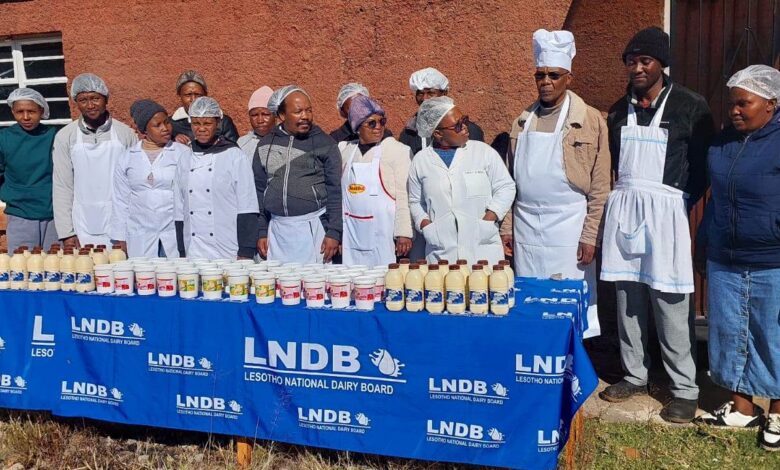
At least 10 dairy farmers under the Pilot Resource Centre in Berea district have completed a four day training focused on processing fresh milk into yoghurt and sour milk, marking an important step in improving rural dairy skills and income opportunities. The training was delivered by the Lesotho National Dairy Board (LNDB) following an invitation from the Department of Agriculture, Food Security and Nutrition through the Pilot Resource Centre. The programme aimed to equip farmers with practical knowledge that allows them to move beyond selling raw milk and instead create value-added dairy products. This initiative comes at a time when livestock farmers in Lesotho are facing growing challenges linked to animal diseases and market disruptions. By introducing milk processing skills, the training seeks to reduce waste, increase income potential, and strengthen food security in farming communities.
Pilot Resource Centre Area Technical Officer Nutrition Mrs. Matseleng Khits’ane Hloaele explained that many communities still consume milk only in its raw or sour form without realising its wider processing potential. She highlighted that milk can be transformed into a variety of products that offer longer shelf life and higher economic value. Her remarks reflected the urgent need to diversify dairy production, especially in rural areas where farmers depend heavily on livestock for daily survival. She also pointed out that the recent Foot and Mouth Disease emergency created serious setbacks for dairy producers after restrictions prevented milk from being sold to storage facilities. As a result, thousands of litres of milk went to waste, exposing the vulnerability of farmers who rely on limited market access.
Mrs. Hloaele said the crisis triggered by Foot and Mouth Disease became the main reason for inviting the LNDB to train farmers on milk processing techniques. She stressed that turning fresh milk into yoghurt, sour milk and other products can significantly reduce losses during emergencies. She also noted that processed milk products improve nutrition, especially for children aged zero to five years and elderly people who require nutrient-rich diets. The training therefore addressed both economic and health needs in the community. It also promoted resilience by helping farmers adapt to disruptions in the livestock sector.
From the LNDB processing department, Mr. Sechaba-se-maketse Qobolo explained that milk processing is a straightforward but highly sensitive procedure that requires strict hygiene and patience. He said milk must undergo ultra-high temperature treatment to eliminate bacteria before it is converted into products such as yoghurt or sour milk. He warned that any small mistake in handling can damage an entire batch, which makes quality control essential at every stage. Mr. Qobolo added that the training was conducted in response to urgent challenges faced by farmers after the Foot and Mouth Disease outbreak disrupted normal milk sales. He emphasised that the initiative was also designed to strengthen awareness of proper milk handling from farm to storage.
Mr. Qobolo further highlighted the importance of youth participation in the training, noting that young people who acquire such skills early can build sustainable livelihoods. He said LNDB normally charges M1000 per person for similar training sessions, but the crisis situation required an immediate and accessible response to support farmers. The outreach programme also gave the board an opportunity to educate farmers on contamination prevention and safe milk handling practices. He added that all products intended for market must go through official testing at LNDB offices to ensure they meet safety standards for public consumption. This process is crucial in maintaining consumer trust and protecting public health.
One of the trainees, Mr. Khothalang Tsikoane from Ha-Lekhafola, described the training as an eye-opening experience that changed how he views dairy farming. He said farmers can now produce multiple products from milk at home instead of relying only on raw milk sales. He explained that his dairy farming activities were initially meant to sustain his household, but disease outbreaks such as Lumpy Skin Disease and Foot and Mouth Disease caused significant losses, including up to 20 litres of milk wasted daily. With the new skills acquired, he plans to help establish a community-based group focused on mass production of dairy products. This would allow farmers to meet market demand more effectively and reduce dependence on unstable raw milk markets.
Youth representative Nthati Tau from Ha-Tebeli said the training renewed her confidence in dairy farming as a viable economic activity. She noted that many young people are actively searching for employment, and dairy farming presents a real opportunity if managed properly. She explained that her family currently relies on a single dairy cow that previously supported them through milk sales to the dairy, but operations became difficult during the Foot and Mouth Disease outbreak. Attending the training helped her identify new ways to turn milk into valuable products and explore business opportunities. She said the experience has opened her mind to potential projects that can generate income and improve household stability.
Pilot Resource Centre Area Technical Officer Livestock Mr. Teboho Marole encouraged farmers to focus on improving milk quality through proper supplementary feeding of dairy cows. He explained that higher quality feed directly contributes to increased milk production and better product outcomes. He also confirmed that additional training programmes are planned to help farmers develop fodder production skills to support livestock nutrition. He stressed that consistent capacity building remains essential for long term agricultural development in the region. The Pilot Resource Centre, located within Malimong constituency, continues to serve communities where livestock and crop farming remain the main sources of livelihood. The centre’s ongoing initiatives are expected to strengthen rural economies and improve resilience against agricultural challenges in Berea district and beyond.
Join 'Lesotho News' WhatsApp Channel
Get breaking Lesotho news — delivered directly to your WhatsApp.
CLICK HERE TO JOIN