Lesotho Law Reform Commission Leads Major Legal Review to Modernise Outdated Laws

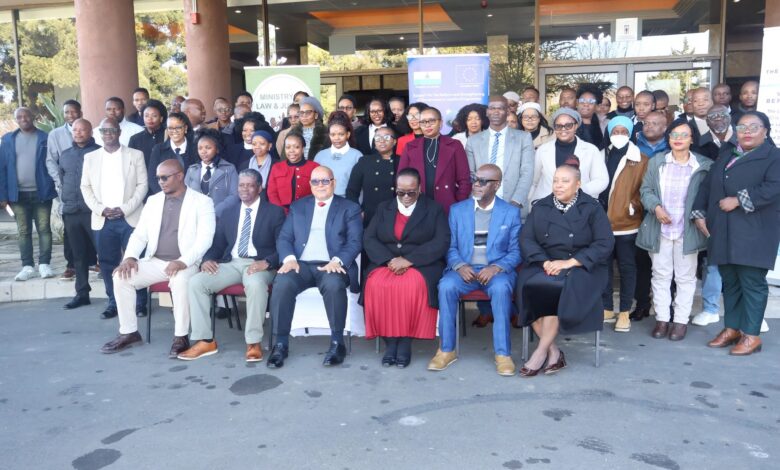
The Ministry of Justice and Law in Lesotho, working through the Lesotho Law Reform Commission, has taken a major step toward modernising the country’s legal framework by hosting a Stakeholder Consultative Engagement Workshop on Monday. The workshop focused on reviewing laws that may be outdated, discriminatory or no longer aligned with present-day social and economic realities. This initiative reflects a growing national effort to ensure that Lesotho’s legal system remains relevant, fair and consistent with constitutional values. The engagement brought together key legal experts, government representatives and civil society stakeholders who contributed to discussions on reform priorities. It also highlighted the importance of inclusive dialogue in shaping laws that affect all citizens.
Speaking at the workshop, Minister of Law and Justice Mr. Richard Ramoeletsi said the consultation is taking place at a critical moment in Lesotho’s legal and constitutional development. He explained that the country’s legal system has developed through a complex history that combines customary law, Roman-Dutch law and colonial-era statutes. While this blend has contributed to the structure of Lesotho’s jurisprudence, it has also created a body of laws that no longer reflect current realities. Mr. Ramoeletsi emphasized that some of these laws are outdated, obsolete and in certain cases discriminatory. He stressed that legal reform is necessary to align the justice system with constitutional principles such as equality, human dignity, non-discrimination and access to justice.
The Minister further highlighted concerns that several existing laws continue to negatively affect vulnerable and marginalised groups. These include women, persons with disabilities and members of minority communities who may face unequal treatment under outdated legal provisions. He noted that such inconsistencies undermine efforts to build a fair and inclusive society. According to him, the review process is not only about updating legislation but also about correcting structural inequalities that persist within the legal system. He called for continued collaboration among stakeholders to ensure that reforms are practical, inclusive and responsive to the needs of all Basotho.
Deputy Principal Secretary in the Ministry of Justice and Law, Ms. Thato Masiloane, commended the Lesotho Law Reform Commission for its extensive work in identifying problematic legal areas. She noted that the Commission had conducted in-depth research into laws, policies and legal practices that may have negative effects on vulnerable groups. The research process included consultations with government ministries, public institutions, civil society organisations and community representatives. This wide engagement ensured that a variety of perspectives were considered in assessing the impact of existing laws. Ms. Masiloane explained that the outcome of this work was a draft report containing key findings and recommendations for reform.
She further explained that the purpose of the workshop was to provide stakeholders with an opportunity to critically review the draft report. Participants were encouraged to identify gaps, raise concerns and contribute additional recommendations before the report is finalised. This consultative process is designed to strengthen the quality and legitimacy of the final reform proposals. Ms. Masiloane emphasized that inclusive participation is essential in ensuring that legal reforms are both practical and widely accepted. She expressed confidence that the input gathered during the workshop would play a significant role in shaping a more responsive legal system.
Chairperson of the Lesotho Law Reform Commission, Dr. Letzadzo Kometsi, provided further insight into the scope and methodology of the legal review process. He explained that the Commission focused on identifying laws that are archaic, obsolete or no longer relevant to current societal needs. To guide this process, the Commission developed criteria to assess whether laws remain effective in addressing modern challenges. These criteria also examined whether the laws are consistent with international legal standards and human rights principles. Dr. Kometsi stressed that the goal was not simply to remove old laws but to ensure that all legislation serves a meaningful and functional purpose.
He noted that the review covered a wide range of legal sectors, including laws affecting vulnerable groups, education systems, social welfare programs and disability rights frameworks. Each sector was examined to determine whether current legal provisions adequately respond to the needs of society. Dr. Kometsi emphasized that the age of a law was not the primary concern, but rather its relevance and effectiveness in today’s context. He explained that some older laws may still remain useful, while newer ones may require revision if they fail to meet current standards. The Commission’s approach aimed to strike a balance between legal continuity and necessary reform.
Dr. Kometsi further stated that the review also considered how existing laws support economic development and align with international legal developments. He pointed out that modern legal systems must not only protect rights but also create an enabling environment for growth and innovation. Laws that hinder development or fail to reflect global standards can place a country at a disadvantage. The Commission therefore assessed whether current legislation supports national priorities and long-term development goals. This broader perspective ensures that legal reform contributes to both justice and national progress.
The Stakeholder Consultative Engagement Workshop represents an important milestone in Lesotho’s ongoing efforts to modernise its legal system. It reflects a commitment to building a justice framework that promotes equality, protects human rights and responds effectively to the needs of all citizens. The collaboration between government institutions, legal experts and civil society demonstrates the importance of shared responsibility in law reform processes. As the draft report moves toward finalisation, the input gathered from stakeholders is expected to strengthen its recommendations. This process marks a significant step toward a more inclusive, transparent and responsive legal system in Lesotho.
Join 'Lesotho News' WhatsApp Channel
Get breaking Lesotho news — delivered directly to your WhatsApp.
CLICK HERE TO JOIN