Lesotho Pushes for Action on Climate Security and Child Protection at African Union Council

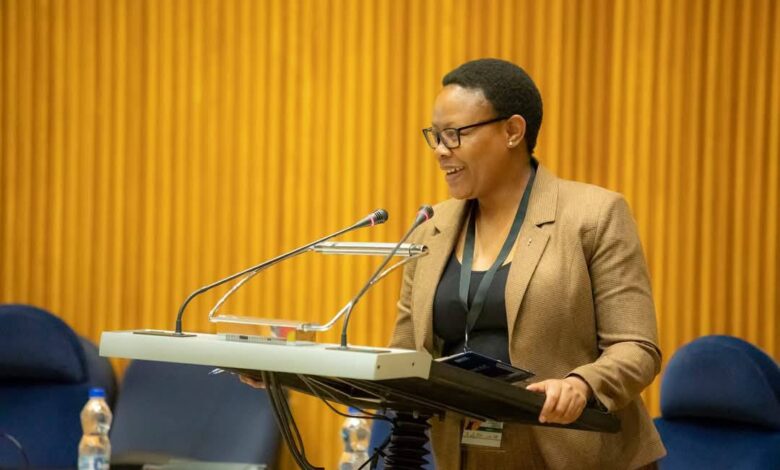
At the 1344th Session of the African Union Peace and Security Council, Lesotho delivered a direct and urgent message that Africa must move beyond repeated analysis of the climate and security link and start implementing real solutions. The intervention reflected growing concern across the continent that discussions have not translated into meaningful change for vulnerable communities. Lesotho’s position focused on practical, people-centred action, with a strong emphasis on protecting children who face the harshest consequences of climate shocks. The country’s representative highlighted that policies alone cannot address the scale of the crisis without clear execution on the ground. This approach signals a shift toward accountability and measurable outcomes in Africa’s climate security agenda.
Speaking on the worsening situation in the Lake Chad Basin and the Sahel, Lesotho’s Permanent Representative to the African Union, Ntšiuoa Sekete, described climate change as a threat multiplier that intensifies existing risks. She explained that climate pressures worsen poverty, weaken governance systems, and create conditions that allow violent extremism to grow. Her remarks made it clear that climate change does not act alone but amplifies already fragile environments. In regions where resources are limited and institutions are under strain, even small environmental shifts can trigger large-scale instability. This reality places additional pressure on governments and communities that are already struggling to maintain stability.
Across the affected regions, climate shocks continue to drive food insecurity, displacement, and the collapse of essential services. Children face the most severe impact, with rising levels of malnutrition, interrupted education, and increased exposure to exploitation, including recruitment into armed groups. Sekete stressed that for many children, climate change is not a distant issue but a daily survival challenge. She warned that malnutrition should be treated not only as a humanitarian crisis but also as a long-term security threat. A generation weakened by poor nutrition reduces future economic potential and weakens community resilience, which can deepen cycles of instability and conflict.
Lesotho called for nutrition and child protection to be placed at the centre of climate resilience and peacebuilding strategies. The country also emphasized the need to operationalise the Common African Position on Climate, Peace and Security, which aims to integrate climate risk analysis into continental security frameworks. Sekete pointed to gaps between early warning systems and actual response mechanisms, noting that alerts often fail to trigger timely action. She also raised concerns about limited access to predictable climate financing, which slows down response efforts in vulnerable regions. Without reliable funding, even well-designed strategies struggle to deliver results.
To address these challenges, Lesotho proposed strengthening early warning systems by incorporating climate data and improving coordination between institutions. The country also advocated for African-led climate financing solutions that prioritize food security and child nutrition. These proposals focus on practical steps that can be implemented within existing frameworks, rather than creating new policies that may face delays. The emphasis remains on ensuring that commitments translate into visible improvements for affected communities. This approach aligns with broader calls across Africa for solutions that are both locally driven and results-oriented.
Lesotho’s intervention has added urgency to the ongoing climate and security debate within the African Union. It reflects a growing demand for action that delivers measurable impact, especially for children who remain the most vulnerable. The key issue now is whether continental frameworks will move from planning to execution in a timely and effective way. If implemented, the proposed measures could strengthen resilience and reduce the long-term risks associated with climate-driven instability. The outcome will depend on sustained political will, coordinated action, and the ability to turn commitments into real change on the ground.
Join 'Lesotho News' WhatsApp Channel
Get breaking Lesotho news — delivered directly to your WhatsApp.
CLICK HERE TO JOIN