Lesotho Strengthens Climate Resilience as Ha Mohlakoana Community Advances Food Security Through Adaptation Fund Project

The Ministry of Environment and Forestry, led by Honourable Minister Thabo Mofosi, has intensified efforts to strengthen climate resilience and improve food security through ongoing community-based interventions in Lesotho. A recent monitoring visit to Ha Mohlakoana in Quthing, conducted in collaboration with the Adaptation Fund, highlighted measurable progress under the Improving Adaptive Capacity of Vulnerable and Food Insecure Population in Lesotho (IAVoC) project. The visit formed part of the second phase of the initiative, which focuses on supporting vulnerable communities to better respond to climate change impacts. The programme aims to enhance sustainable livelihoods while building long-term resilience in areas most affected by environmental challenges. The engagement demonstrated government commitment to ensuring that development projects deliver practical and lasting benefits at community level.
During the visit, Minister Thabo Mofosi and representatives from the Adaptation Fund assessed the progress made by beneficiaries in Ha Mohlakoana. The community initially consisted of 103 members, but currently operates with 42 active participants, including two men, according to a community representative. This shift reflects both challenges and adjustments within the group, while also highlighting the continued commitment of active members to sustain the project. The Minister encouraged stronger participation from young people, stressing the importance of youth involvement in agriculture as a pathway to economic empowerment and sustainable livelihoods. He emphasised that agriculture remains a key sector for addressing unemployment and food insecurity in rural communities across Lesotho.
The delegation engaged directly with beneficiaries to observe the impact of the project on daily livelihoods. Various income-generating activities were showcased, including the production of green vegetables, egg farming, and sewing initiatives. These activities have played a critical role in improving household food security and reducing dependence on external assistance. Community members demonstrated how small-scale agricultural production and skills-based enterprises can create stable income streams even in areas affected by climate variability. The visit highlighted how practical interventions can empower households to adapt to changing environmental conditions while strengthening local economies. Beneficiaries expressed that these activities have improved their ability to meet basic needs and support their families.
In addition to production activities, the delegation observed several key support systems provided through the IAVoC project. These included cold storage facilities, sewing equipment, shade houses, solar-powered water systems, and improved storage infrastructure. Each of these components plays a specific role in strengthening resilience and increasing productivity. Cold storage facilities help reduce post-harvest losses, while shade houses support year-round vegetable production. Solar-powered water systems ensure reliable access to water for irrigation, especially during dry periods. Storage infrastructure helps communities preserve produce and manage resources more efficiently. These investments collectively contribute to building a more sustainable and self-reliant community.
Women beneficiaries played a central role in the success of the project and shared their experiences during the visit. Many highlighted how access to tools, training and infrastructure has strengthened their skills and enabled them to generate income. Sewing activities, in particular, have provided opportunities for women to develop entrepreneurial skills while supporting household needs. Agricultural activities have also allowed them to improve food production and reduce reliance on external food sources. The empowerment of women within the project has had a direct impact on household stability and community development. Their participation reflects the broader goal of ensuring inclusive development that benefits all members of society.
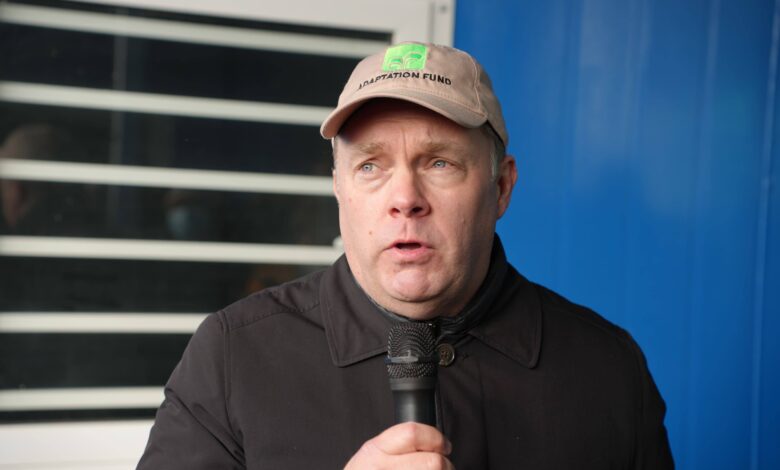
Head of the Adaptation Fund, Mikko Ollikainen, commended the Ha Mohlakoana community for their dedication and effective use of project resources. He noted that the progress achieved demonstrates resilience, innovation and a strong commitment to sustainable development. His remarks highlighted the importance of community ownership in ensuring the long-term success of climate adaptation initiatives. Ollikainen also acknowledged that the visible results in Ha Mohlakoana serve as an example of how targeted support can transform vulnerable communities. He emphasised that continued collaboration between local communities and development partners is essential for scaling up successful interventions.
The monitoring visit reinforced the importance of integrating climate adaptation strategies into local development planning. Lesotho continues to face increasing climate-related challenges, including droughts and irregular rainfall patterns that directly affect agricultural production. Projects like IAVoC provide practical solutions by equipping communities with tools, knowledge and infrastructure needed to adapt effectively. The involvement of the Ministry of Environment and Forestry ensures that these interventions align with national climate policies and long-term development goals. Strengthening food security and livelihoods remains a key priority for the government as it seeks to build resilience at grassroots level.
The visit to Ha Mohlakoana demonstrated clear progress in improving adaptive capacity among vulnerable households while also highlighting areas for continued growth. The combination of agricultural production, small-scale enterprises and supportive infrastructure has created a foundation for sustainable development within the community. Encouraging youth participation and strengthening community engagement will be essential for maintaining momentum in the second phase of the project. As Lesotho continues to confront climate change challenges, initiatives like IAVoC offer practical pathways toward resilience, food security and economic empowerment.
Join 'Lesotho News' WhatsApp Channel
Get breaking Lesotho news — delivered directly to your WhatsApp.
CLICK HERE TO JOIN