Ministry of Information, Communications, Science, Technology and Innovation and World Bank Partner to Transform Youth Employment and Infrastructure in Lesotho


Lesotho is taking an important step towards a digitally connected and economically resilient future as the Ministry of Information, Communications, Science, Technology and Innovation strengthens its collaboration with the World Bank. The partnership focuses on addressing youth unemployment, improving urban planning and expanding digital infrastructure to support sustainable national development. Through strategic discussions, both institutions are exploring opportunities to use technology, geospatial data and digital public services to improve the lives of Basotho. A key priority is the proposed nationwide Digital Address system, which could help close a significant gap in Lesotho’s digital transformation efforts. By bringing together government leadership, technical expertise and development support, this collaboration aims to create new opportunities for young people while improving service delivery and strengthening the country’s digital economy.
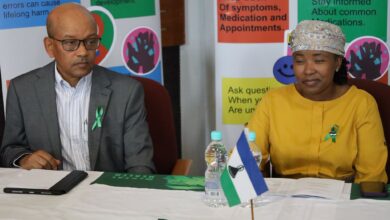
The Honourable Minister of Information, Communications, Science, Technology and Innovation, Nthati Moorosi, alongside Principal Secretary Mr. Kanono Ramashamole and the Ministry’s management team, held a strategic meeting with a high-level delegation from the World Bank’s Urban, Resilience, Disaster Risk Management and Land unit. The meeting provided an opportunity to discuss how urban planning, digital technology and national development priorities can work together to address some of Lesotho’s pressing challenges. Both parties explored areas for future cooperation, with particular attention to the role of digital infrastructure in supporting economic growth, efficient governance and inclusive development. The discussions also highlighted the importance of building stronger links between spatial planning and the country’s digital transformation agenda. This approach could help the government make better-informed decisions, coordinate development projects more effectively and improve access to essential services across the country.
The World Bank delegation was co-led by Megha Mukim, Lead Urban Specialist, and Collen Masango, Senior Urban Economist. The team also included Edward Anderson, Senior Disaster Risk Management Specialist, Sheenagh Bruce, Urban Specialist, Tjark Gall, Urban Specialist, and Bradley Riley, Disaster Risk Management Analyst. Their participation brought together expertise in urban development, economic planning, disaster risk management and spatial analysis. These areas are closely connected to the challenges facing countries seeking to build resilient infrastructure while expanding access to digital services. Through engagement with the Ministry, the delegation explored how technical knowledge and digital tools could support more effective national planning and create a foundation for future development initiatives.
A central theme of the discussions was the use of geospatial data and digital technologies to strengthen planning and decision-making in Lesotho. Geospatial data provides information about the location and distribution of people, buildings, roads, public facilities and other important features of the physical environment. When governments combine this information with reliable digital systems, they can identify infrastructure gaps, assess service needs and make more informed decisions about where to invest public resources. These tools can also support disaster risk management by helping authorities identify vulnerable areas and plan appropriate responses to potential hazards. For Lesotho, integrating geospatial information into national development planning could improve coordination between institutions and support more efficient infrastructure delivery. The discussions created an opportunity to explore how these capabilities could complement the government’s wider digital transformation objectives.
Youth unemployment remains a major development concern in Lesotho, making employment creation an important part of the potential partnership. During the meeting, the World Bank highlighted its interest in supporting initiatives that could help address this challenge through innovative digital public works programmes and practical digital skills development. Digital public works can provide employment opportunities through projects that use technology to support public services, information management and community development. Depending on programme design, such initiatives could give young Basotho opportunities to gain practical experience while contributing to projects that benefit their communities. The emphasis on digital skills is equally important because businesses and public institutions increasingly rely on technology to communicate, manage information and deliver services. By connecting employment initiatives with digital capacity building, the partnership could help prepare young people for emerging opportunities in the modern economy.
Developing digital skills among young Basotho could also contribute to broader economic participation. Skills in digital administration, data management, online service delivery and other technology-related areas can help workers respond to changing labour market needs. However, successful programmes require more than training alone. They also depend on access to suitable technology, relevant learning opportunities and employment pathways that allow participants to apply their skills. Cooperation between government institutions, development partners and potential employers could help align training programmes with practical needs. If designed to address local conditions and labour market demand, these initiatives could support youth employment while strengthening Lesotho’s digital capabilities.
One of the most significant developments emerging from the meeting was the World Bank delegation’s strong interest in supporting the government, through the Ministry, in implementing a nationwide Digital Address system. A standardized digital address system could provide a consistent way to identify locations across Lesotho, helping individuals, businesses and public institutions communicate location information more accurately. Reliable addressing is an important part of modern digital infrastructure because many services depend on knowing where people live, where businesses operate and where goods or public services need to be delivered. A nationwide system could help address difficulties associated with inconsistent or incomplete location information. Although the discussions indicate a strong interest in supporting the initiative, the final design, implementation arrangements and rollout would need to be established through the appropriate government processes.
The proposed Digital Address system could have important implications for e-commerce and business development in Lesotho. Online businesses often depend on accurate delivery information to transport products to customers, manage orders and coordinate logistics. Where addresses are difficult to identify or standardize, deliveries can become more complicated and costly for businesses and consumers. A reliable digital addressing framework could help improve delivery coordination, support business operations and make online shopping more accessible. It could also help service providers identify customer locations more efficiently, subject to appropriate privacy and data protection safeguards. By improving the way locations are identified, the initiative could strengthen the foundations needed for a more connected and competitive digital economy.
Digital addressing could also complement Lesotho’s broader efforts to develop digital identity systems and expand electronic public services. A digital address and a digital identity serve different purposes, but they can support each other when designed to work together securely. Digital identity systems help establish who a person is, while address information can help identify a relevant location for service delivery and communication. Integrating these capabilities appropriately could help public institutions improve administrative processes and make certain services easier to access. For example, reliable location information may assist with planning service coverage, coordinating emergency responses and directing resources to communities that need them. These benefits would depend on effective system design, accurate data, secure information management and clear rules governing access to personal information.
The relationship between digital infrastructure and urban planning is another important aspect of the proposed collaboration. Effective urban development requires reliable information about settlements, transport networks, public facilities and areas exposed to environmental risks. Digital tools can help planners analyse these factors together and identify where infrastructure investments may have the greatest impact. Geospatial systems and standardized addressing could also improve coordination between departments responsible for land management, public services and development planning. Better information can support more consistent planning decisions, although technology must be combined with local knowledge, adequate resources and strong institutional cooperation. For Lesotho, this integrated approach offers an opportunity to connect digital transformation with practical improvements in infrastructure planning and public administration.
Resilience and disaster risk management also form part of the World Bank delegation’s areas of expertise. Reliable spatial information can help authorities understand which communities and infrastructure assets face particular risks from natural hazards. Digital mapping can support preparedness by improving the identification of vulnerable locations and helping emergency services plan their operations. When combined with coordinated public information systems, accurate addresses may also help responders locate households, businesses and public facilities more effectively. These capabilities are particularly valuable when government agencies need to coordinate their actions during emergencies. Any future initiatives would need to reflect Lesotho’s specific geographic conditions, institutional capacity and disaster management priorities.
Successful implementation of these initiatives will require sustained cooperation between the government and its development partners. Establishing a nationwide Digital Address system involves more than introducing a new technology platform. It requires consistent addressing standards, reliable location data, clear institutional responsibilities and processes for updating information as communities and infrastructure change. Public awareness and accessibility will also matter because residents and businesses need to understand how to use the system and how it may affect their interactions with public and private services. The government will also need to consider data security, privacy, system maintenance and equitable access for communities with limited digital connectivity. Addressing these requirements from the beginning could help ensure that future digital infrastructure delivers lasting public value.
The Ministry of Information, Communications, Science, Technology and Innovation has an important role to play in coordinating Lesotho’s digital transformation priorities. Working with the World Bank could provide opportunities to draw on international technical expertise while ensuring that proposed initiatives respond to national development needs. The Ministry’s engagement with specialists in urban planning, economics and disaster risk management also creates scope for stronger collaboration across areas that are often treated separately. Connecting these fields can help ensure that investments in digital systems support wider objectives, including employment creation, infrastructure development and improved public services. The next stages will depend on how the discussions translate into agreed programmes, technical plans and implementation arrangements. Clear priorities, measurable objectives and continued stakeholder engagement will be important in turning the partnership’s potential into practical results.
The collaboration between Lesotho’s Ministry of Information, Communications, Science, Technology and Innovation and the World Bank represents a promising opportunity to advance digital development, youth employment and infrastructure planning. The discussions have highlighted the potential of digital public works programmes, skills development, geospatial data and a nationwide Digital Address system to support the country’s long-term development goals. If these initiatives progress successfully, they could help young Basotho access new opportunities, enable businesses to operate more efficiently and strengthen the government’s ability to plan and deliver services. Their impact will depend on effective implementation, inclusive access, strong safeguards and sustained cooperation between all relevant stakeholders. By aligning digital transformation with employment creation and resilient infrastructure, Lesotho can work towards a more inclusive, efficient and digitally connected future for its people.
Join 'Lesotho News' WhatsApp Channel
Get breaking Lesotho news — delivered directly to your WhatsApp.
CLICK HERE TO JOIN