Lesotho Urges African Countries to Prioritise Disaster Prevention and Climate Resilience Investment

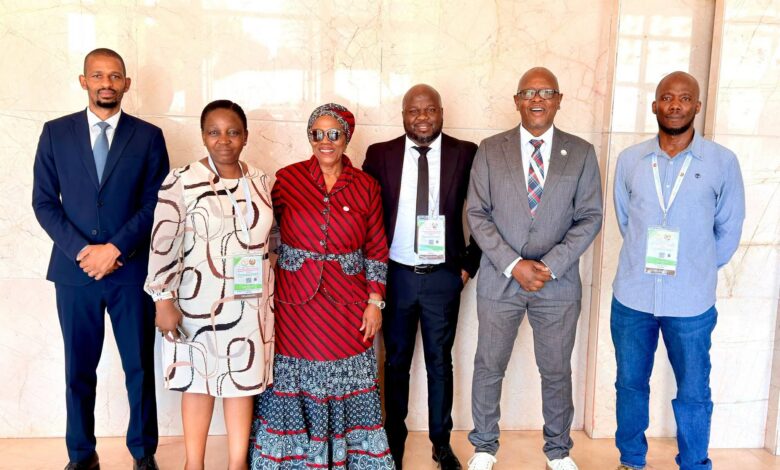
Lesotho has called on African countries to increase investment in disaster prevention and preparedness, urging governments to focus on reducing risks before disasters strike rather than spending most of their resources on emergency response. Minister in the Prime Minister’s Office, Mrs. ’Makatleho Motsoasele, delivered the message during the ongoing International Conference on Disaster Risk Reduction in Africa in Mozambique on Thursday. She stressed that proactive investment in resilience is essential to protecting lives, strengthening food security and safeguarding economic development across the continent. Her remarks highlighted the growing impact of droughts, unpredictable rainfall and environmental degradation on vulnerable communities, particularly in countries that depend heavily on agriculture. She called for a fundamental change in disaster risk financing, with prevention, early intervention and long-term resilience placed at the centre of national development strategies.
Motsoasele explained that recurrent droughts and changing rainfall patterns continue to undermine agricultural productivity, livelihoods and sustainable economic development in Lesotho. Agriculture remains important to rural households, many of which depend on farming for food, income and other basic needs. When rainfall becomes unreliable or prolonged dry conditions affect crops and livestock, families can face declining production, reduced earnings and greater difficulty securing sufficient food. Environmental degradation can worsen these challenges by weakening the ability of land and natural resources to support agricultural activity. These interconnected risks make disaster preparedness a critical part of Lesotho’s development planning and efforts to protect vulnerable communities.
Speaking at the conference, Motsoasele said African governments needed to transform how they financed disaster risks. She argued that disaster risk reduction should be treated not only as a humanitarian responsibility but also as a strategic national development priority. This approach recognises that preparing for disasters can protect infrastructure, reduce economic disruption and limit the long-term consequences of climate-related emergencies. Governments that invest before a crisis may be better positioned to protect vulnerable households and maintain essential services when conditions deteriorate. Motsoasele emphasised that resilience must become a measurable national investment priority rather than an expense considered only when emergencies occur.
“Our collective responsibility, therefore, is to move decisively beyond financing disaster response towards institutionalising proactive, predictable and sustainable investments in risk reduction and resilience,” Motsoasele said. Her statement reflects the need to move away from systems that depend heavily on emergency assistance after damage has already occurred. Disaster response remains necessary when communities face immediate threats, but relying on it alone can leave governments struggling to find resources at short notice. Preventive investment can help reduce exposure to hazards, strengthen preparedness and improve the speed of assistance when risks increase. A more balanced financing system would combine prevention, readiness, emergency response and recovery within a coordinated national strategy.
Lesotho’s participation in the African Risk Capacity sovereign drought insurance mechanism provides an example of how financial planning can support disaster response. Motsoasele said approximately US$2.8 million was disbursed following the drought declared in June 2025, benefiting more than 30,700 farms and vulnerable households. The payment illustrates the potential value of pre-arranged financial protection when drought creates serious pressure on agricultural livelihoods and food security. Sovereign drought insurance can help governments access funds when specified conditions under an insurance arrangement are met. Such funding can support timely interventions, although its effectiveness also depends on appropriate coverage, clear implementation plans and the ability to reach affected communities.
Motsoasele said this experience demonstrated the importance of combining sovereign insurance with contingency funds and anticipatory financing. These mechanisms serve different but complementary purposes in disaster risk management. Insurance can provide financial support when covered events meet the conditions of a policy, while contingency funds allow governments to set aside resources for unexpected needs. Anticipatory financing enables authorities to release funding when forecasts or early warning information indicate that a hazard is likely to cause serious harm. Together, these tools can help governments act sooner, reduce delays and lessen dependence on emergency assistance after a disaster has already intensified.
The minister also called on African governments to integrate disaster resilience into national development plans and public financing frameworks. She urged countries to provide dedicated budget allocations for prevention and include climate risk assessments in public investment decisions. This would help governments identify potential hazards before committing resources to infrastructure, agriculture, housing and other development projects. For example, roads, bridges, water systems and public facilities need to be designed with relevant climate and environmental risks in mind. Incorporating these considerations during planning can help reduce future repair costs and protect the long-term value of public investments.
For Lesotho, Motsoasele said this approach was anchored in the Second National Strategic Development Plan for 2024 to 2028, the United Nations Sendai Framework for Disaster Risk Reduction covering 2015 to 2030 and the African Union’s Agenda 2063. These frameworks provide a basis for connecting national development objectives with disaster preparedness, climate adaptation and long-term resilience. Integrating disaster risk reduction into such plans can help ensure that resilience is considered across government departments rather than treated as the responsibility of a single institution. It can also improve coordination between national policies, public spending and community-level preparedness. The challenge is to translate these commitments into practical programmes with clear budgets, measurable targets and sustained implementation.
Private sector investment was another major issue raised by the minister. Motsoasele called for greater investment in climate-smart agriculture, sustainable water management, resilient infrastructure and affordable agricultural insurance. These areas can help communities and businesses manage climate-related risks while supporting economic activity. Climate-smart agriculture, for example, can include farming practices designed to improve productivity and strengthen resilience to changing weather conditions. Sustainable water management can help communities make better use of limited supplies, while resilient infrastructure can reduce the risk of damage during extreme weather events. Affordable agricultural insurance can also help farmers manage financial losses when drought or other covered hazards affect production.
Motsoasele stressed that governments needed to create conditions that encourage private businesses to invest in disaster resilience. She proposed favourable regulatory environments, appropriate fiscal incentives and targeted guarantees to reduce investment risks. Such measures can help attract private capital to projects that might otherwise struggle to secure financing because of high initial costs or uncertain returns. However, public support must be carefully designed to ensure that investments deliver genuine development benefits and do not place unnecessary pressure on government budgets. As the minister noted, public resources should be used strategically to encourage private investment while protecting vulnerable communities and supporting sustainable outcomes.
Early warning systems also featured prominently in Motsoasele’s address. She highlighted the need to ensure that warnings lead to timely action before climate shocks intensify and cause greater damage. An effective early warning system requires reliable weather and climate information, clear communication channels and practical procedures that allow authorities and communities to respond. Information alone cannot prevent losses if people do not receive warnings in time or lack the resources to act on them. Governments therefore need to connect forecasts with financing arrangements, emergency planning and community preparedness measures. This can help farmers, households and public institutions take protective action before droughts, floods or other hazards cause severe disruption.
Motsoasele referred to Lesotho’s anticipatory interventions during the 2023 to 2024 El Niño-induced drought as an example of the importance of preparing and financing action before a disaster fully develops. El Niño can influence rainfall patterns in parts of Southern Africa, increasing the risk of drought under certain conditions. When authorities act on credible forecasts, they may have more time to protect livelihoods, support vulnerable households and reduce the effects of deteriorating agricultural conditions. Early action can include measures suited to the expected hazard and the needs of affected communities. Motsoasele called for further investment in multi-hazard early warning systems, reliable climate information and community preparedness, backed by funding arrangements that allow timely intervention.
The minister also highlighted the financial challenges facing Least Developed Countries and Landlocked Developing Countries. She said domestic financing alone could not adequately address escalating climate risks in these countries. Governments with limited fiscal resources may struggle to fund disaster prevention while also meeting demands for healthcare, education, infrastructure and other essential services. International financial institutions and development partners therefore have an important role in helping vulnerable countries strengthen resilience. Motsoasele urged these institutions to provide accessible, predictable and concessional financing, simplify funding procedures and strengthen national capacity to develop bankable resilience projects.
Improving access to international resilience financing requires both adequate funding and practical systems for using it effectively. Complex application procedures, lengthy approval processes and demanding technical requirements can make it difficult for countries with limited institutional capacity to secure support when they need it. Predictable financing would help governments plan long-term projects rather than depend on uncertain funding after emergencies occur. Building national capacity to prepare bankable projects can also help countries present clear investment proposals with defined objectives, realistic costs and measurable benefits. These improvements could support greater investment in climate adaptation, disaster prevention and infrastructure capable of withstanding future hazards.
Motsoasele underscored the urgency of action by referring to figures cited in her address, which indicated that disaster-related mortality had exceeded 65,000 lives and economic losses had reached US$9.8 billion. These figures illustrate the serious human and financial consequences associated with disasters across Africa. Beyond immediate deaths and physical damage, disasters can interrupt education, disrupt businesses, damage agricultural production and force families to use savings to meet basic needs. Recovery can take years, particularly where communities have limited access to insurance, financial services or reliable public infrastructure. Reducing these losses requires sustained investment in risk assessment, prevention, preparedness and effective response systems.
Lesotho’s message at the International Conference on Disaster Risk Reduction in Africa reflects a broader need to make resilience a central part of development policy. Preventive financing can help governments manage climate risks more systematically, while insurance and contingency funding can provide additional protection when emergencies occur. Private sector participation, stronger early warning systems and accessible international financing can further improve the ability of countries to prepare for future hazards. These measures must also reach vulnerable households and communities that face the greatest exposure to drought, food insecurity and environmental pressures. Coordinated action across governments, businesses, development partners and local communities will be essential to turning policy commitments into practical results.
Motsoasele concluded her message with a call for Africa to move from financing the consequences of disasters to financing the resilience of its nations. She argued that the future of disaster risk financing must be defined by prevention rather than reaction, investment rather than expenditure and resilience rather than recovery. Her remarks reinforce the importance of acting before disasters cause widespread damage, rather than waiting until lives and livelihoods are already at risk. For Lesotho and other African countries facing growing climate pressures, sustained investment in preparedness can help protect development gains and strengthen food security. Making disaster prevention a core national and regional priority is therefore essential to building safer communities, stronger economies and a more resilient future for Africa.
Join 'Lesotho News' WhatsApp Channel
Get breaking Lesotho news — delivered directly to your WhatsApp.
CLICK HERE TO JOIN